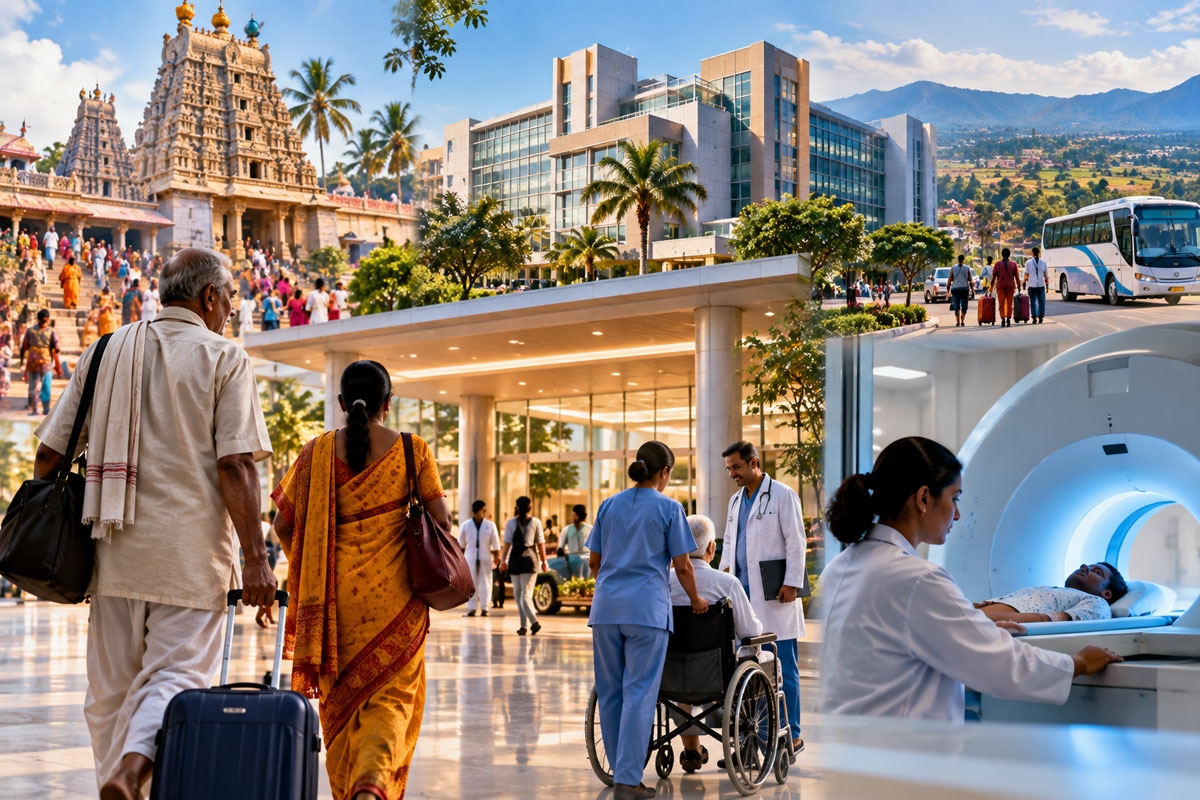

National plans aim to connect medical expertise, traditional medicine, natural resources and hospitality in a more integrated health tourism ecosystem
Vietnam is developing a national health and wellness tourism strategy through 2030, seeking to transform a fragmented range of spa, resort, traditional medicine and healthcare services into a more integrated tourism sector. The initiative is intended to increase the value generated by international tourism while establishing clearer standards for activities ranging from conventional wellness stays to medical travel.
The country already has many of the resources associated with health and wellness tourism, including beaches, forests, mineral springs, mineral mud and medicinal plants. These are complemented by traditional medicine and health practices associated with Vietnam's different regions and ethnic communities.
However, tourism authorities and researchers acknowledge that these assets have not yet been fully translated into coherent products and economic value.
From individual services to a health tourism ecosystem
Ha Van Sieu, Deputy Director General of the Vietnam National Authority of Tourism, described health and wellness travel as a growing high-value segment capable of increasing both visitor spending and length of stay.
“This isn't just a passing trend. It's becoming a high-value segment that extends visitor stays, lifts spending and pulls related industries along with it,” he said.
Wellness services have already expanded at hotels and resorts in Vietnam's coastal and mountain regions, while destinations with hot mineral springs have developed higher-end resort and wellness products. Yet many existing offers remain isolated, ranging from individual spa services to standalone resorts.
Connections between tourism, healthcare, traditional medicine, medicinal plants, nutrition, sport, culture and technology are still limited. The sector also faces shortages of specialised personnel and requires further development of regulatory standards, quality management and coordination between authorities and destinations.
Three levels from wellness to medical tourism
One of the most significant proposals is a clearer distinction between different forms of health-related travel.
Dr. Nguyen Anh Tuan, Director of the Institute for Tourism Development Research, has proposed a framework consisting of one ecosystem, three product tiers and six policy pillars.
The three-tier structure would distinguish between pure wellness tourism, wellness services requiring specialised medical expertise and medical tourism. Such differentiation could allow authorities to apply regulation according to the level of medical risk involved rather than treating all health-related tourism products in the same way.
The proposed six policy areas cover institutions and standards; resources and destinations; products and value chains; investment, businesses and communities; workforce and science and technology; and markets, branding and data.
The approach reflects Vietnam's ambition to develop health tourism as a value chain rather than as a collection of individual services.
Traditional medicine could become a distinctive element
Traditional Eastern medicine is expected to play an important role in the development of Vietnamese wellness products. Combining resorts and other hospitality facilities with herbal treatments and traditional health practices could provide a way of differentiating Vietnam from competing destinations.
This also creates potential links with agriculture and local communities through the cultivation and use of medicinal plants and the preservation of indigenous knowledge.
The proposed tiered system is designed to match regulatory oversight to the level of specialised expertise and risk involved, while providing clearer distinctions between general wellness services and medical tourism.
Vietnam targets a stronger position in Southeast Asia
Medical tourism forms the most specialised end of the planned health tourism ecosystem. Vietnam sees scope to expand this segment as part of the broader growth of medical travel in Southeast Asia, although researchers acknowledge that the country is competing with destinations that already have mature medical tourism industries.
The strategy therefore goes beyond attracting more visitors. It seeks to establish the infrastructure, workforce, standards and cooperation between industries required to support health-related travel on a larger scale.
If implemented as planned, the 2030 framework could bring wellness resorts, traditional medicine providers, healthcare facilities, tourism businesses and local communities into a more closely connected system. For Vietnam, the central challenge will be turning its considerable natural and cultural resources into consistent, professionally managed health tourism products while maintaining appropriate distinctions between wellness and medical care.
Image Credit: © AI generated illustration