More than 65,000 international patients underwent medical check-ups in 2025, while Korea Medical Institute reports further strong growth in 2026
South Korea is attracting growing numbers of foreign patients seeking preventive health examinations, according to new figures released by the country's Ministry of Health and Welfare. A total of 65,228 international patients underwent health screenings in 2025, representing an increase of 17 percent compared with the previous year. The figures indicate that medical check-ups are becoming an increasingly visible segment of South Korea's international healthcare market.
The upward trend appears to be continuing in 2026. Korea Medical Institute (KMI), a major provider of comprehensive health examinations, reported that the number of foreign patients attending its screening centres increased by approximately 44 percent between January and November compared with the corresponding period in 2025. Although this figure relates only to KMI and cannot be interpreted as a nationwide growth rate, it suggests sustained demand for preventive medical services among international patients.
The development comes as South Korea experiences strong growth in international tourism. According to the Ministry of Culture, Sports and Tourism, foreign visitor arrivals surpassed 20 million in November 2026, reaching that milestone for the first time. The combination of international accessibility, established medical infrastructure and specialised screening services provides opportunities for healthcare providers seeking to attract patients who wish to combine medical examinations with travel.
North America emerges as an important source market
According to Korea Medical Institute, North America accounts for a substantial proportion of its international screening patients, particularly visitors from the United States and Canada.
The organisation is also reporting increasing demand from China, Mongolia and countries belonging to the Commonwealth of Independent States.
These source markets demonstrate that demand for preventive healthcare in South Korea extends beyond neighbouring Asian countries.
KMI attributes the growth to several factors, including the quality of medical examinations, the possibility of completing multiple tests at a single location, relatively rapid availability of results and language assistance for international patients.
For people travelling specifically for medical examinations, the organisation of services can be particularly important.
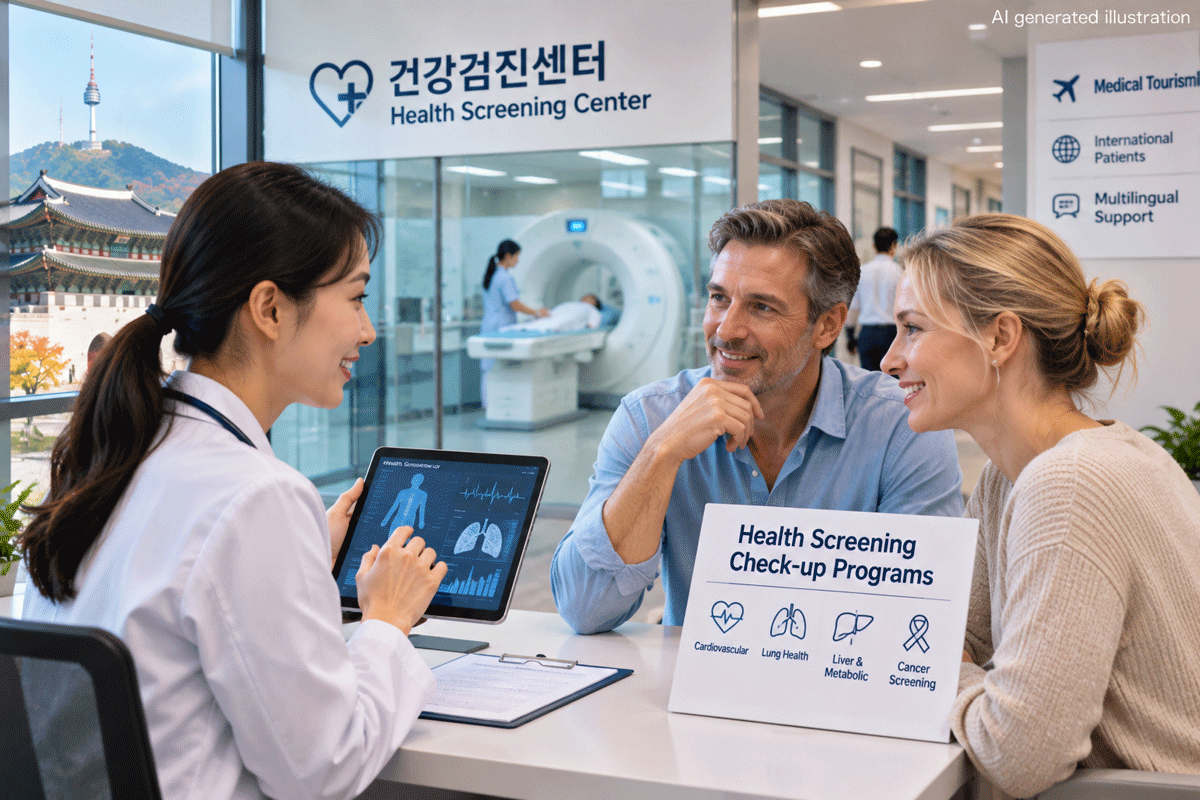
Comprehensive screening programmes may involve consultations, laboratory tests, diagnostic imaging and specialist assessments. Coordinating these services within a limited period can reduce the time patients need to spend arranging separate appointments.
Language support also plays an important role in helping international visitors understand examination procedures, medical findings and recommendations for further care.
However, the available figures do not establish how many foreign patients travelled to South Korea primarily for health screenings and how many underwent examinations while visiting for other purposes.
Preventive healthcare becomes part of medical tourism
South Korea's international healthcare industry is frequently associated with cosmetic surgery, dermatology and specialist hospital treatment.
The latest screening figures highlight another dimension of the market: preventive medical examinations for patients who may not have an immediate need for surgery or treatment.
This segment is particularly relevant to international travellers interested in assessing their health status, monitoring existing risk factors or obtaining specialist medical opinions.
The development also reflects wider interest in preventive healthcare and personalised health services within the international medical wellness industry.
Nevertheless, comprehensive screening packages should not automatically be regarded as medically beneficial for every patient.
The value of individual examinations depends on factors such as age, medical history, symptoms and established risk factors. Tests conducted without appropriate clinical indications can produce incidental findings, unnecessary follow-up investigations and additional costs.
For international patients, the quality of a screening programme therefore depends not only on the number of tests performed or the speed at which results become available.
Appropriate medical interpretation, evidence-based recommendations and arrangements for further assessment are equally important.
Patients receiving findings that require additional investigation may also need to coordinate follow-up care with healthcare providers in their home countries.
Tourism growth creates opportunities for healthcare providers
South Korea's expanding international visitor market provides a favourable environment for healthcare services aimed at foreign patients.
The country has developed extensive transport connections, modern medical facilities and a tourism industry capable of supporting international visitors with different language and service requirements.
For medical screening providers, these conditions can make it easier to offer health examinations as part of a wider travel experience.
Unlike complex surgical procedures, many routine diagnostic assessments do not necessarily require lengthy hospital stays. However, the time needed for examinations, results and follow-up consultations varies according to the programme and individual findings.
Healthcare providers seeking to attract international screening patients must therefore balance convenience with appropriate clinical standards.
The relationship between tourism growth and demand for medical examinations also requires careful interpretation.
The record number of international visitors does not demonstrate that a corresponding proportion are travelling for healthcare. Similarly, growth in screening appointments does not necessarily indicate increased demand for other medical tourism services.
The two developments nevertheless illustrate the potential interaction between South Korea's international tourism infrastructure and its healthcare sector.
For destinations competing in preventive medical tourism, the ability to provide coordinated examinations, multilingual communication and reliable follow-up arrangements may become an increasingly important factor.
The Ministry of Health and Welfare's figures establish that foreign participation in health screenings increased substantially in 2025, while KMI's preliminary data indicate further growth at its facilities during 2026.
More detailed information about patient expenditure, treatment packages and the proportion of visitors travelling specifically for preventive examinations would help clarify the economic importance of this segment.
For South Korea, the emerging opportunity lies in developing health screening services that combine efficient organisation with medically appropriate examinations and continuity of care.
As international interest in preventive healthcare grows, the country's experience suggests that comprehensive medical check-ups could become a more prominent component of cross-border healthcare, alongside its established specialist treatment services.
Image Credit: AI generated illustration