
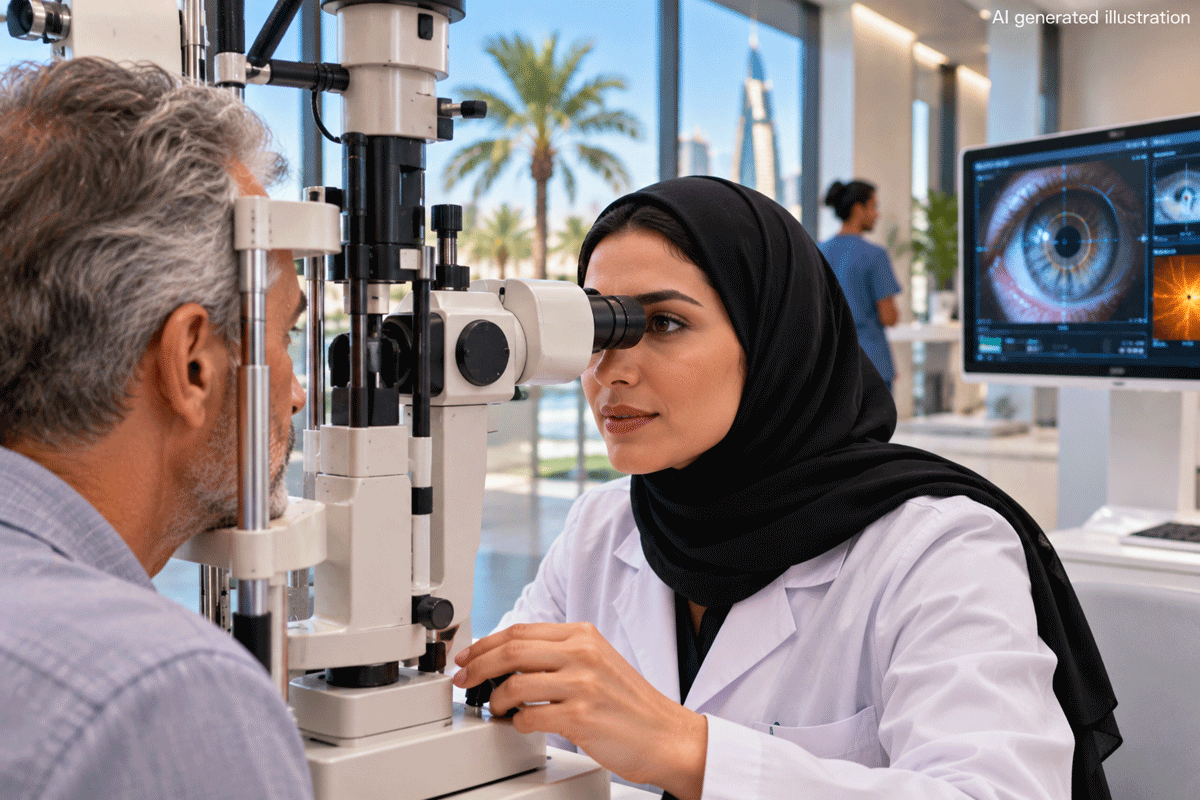
Newsweek and Statista include three ophthalmology facilities in Jeddah and Makkah in their 2027 medical tourism ranking, highlighting Saudi Arabia's ambitions in specialised healthcare
Three facilities operated by Saudi healthcare group Magrabi Health have been included in Newsweek's World's Best Hospitals & Clinics for Medical Tourism 2027 ranking, developed in partnership with data research company Statista. The recognition places the facilities among 175 hospitals and clinics listed in the ophthalmology category, drawing international attention to specialised eye care services in Saudi Arabia.
The recognised institutions are Magrabi Health Eye – North Jeddah, Magrabi Health Eye and Dental – Makkah, and Magrabi Health Eye and Ear – Madina Road in Jeddah. Their inclusion reflects the growing visibility of Saudi specialist healthcare providers in international medical tourism assessments. The announcement, made on November 10, 2026, comes as the Kingdom continues to develop its healthcare infrastructure and expand services intended to attract patients from abroad.
Unlike rankings based primarily on clinical reputation or hospital performance, the medical tourism assessment also considers factors directly affecting international patients. These include the availability of language assistance, treatment coordination, remote consultations, follow-up arrangements and transparent information about costs. The methodology therefore addresses both medical services and the practical requirements of travelling internationally for treatment.
Ophthalmology gains international visibility
Magrabi Health specialises in ophthalmology and related healthcare services, operating facilities in several Saudi cities.
The inclusion of three institutions in the 2027 ranking gives the group additional international visibility in a medical specialty that plays an established role in cross-border healthcare.
Patients seeking ophthalmological treatment abroad may require services ranging from diagnostic consultations to surgical procedures and the management of complex eye conditions. For such patients, access to appropriate specialists, reliable clinical information and postoperative care can be particularly important.
International travel for eye treatment also creates specific logistical considerations. Depending on the procedure, patients may need follow-up examinations, temporary restrictions on flying or arrangements for continued treatment after returning home.
The availability of coordinated international patient services can therefore influence the suitability of a destination alongside the medical expertise of individual specialists.
Magrabi Health says it is continuing to develop services intended to simplify access to treatment and improve coordination before, during and after medical procedures.
However, the announcement does not provide figures for international patient volumes, the proportion of overseas patients treated at the recognised facilities or the specific procedures most frequently requested by medical travellers.
The ranking also does not establish that the three institutions achieve superior clinical outcomes compared with facilities outside the list.
Ranking examines patient services and reputation
The World's Best Hospitals & Clinics for Medical Tourism 2027 assessment covers healthcare providers across 13 destinations, including Saudi Arabia.
It examines six medical specialties: bariatric surgery, cancer care, cardiac care and surgery, ophthalmology, orthopaedics, and plastic and reconstructive surgery.
According to the published description of the methodology, the evaluation combines recommendations from healthcare professionals and medical tourism facilitators with information about accreditations, certifications, patient experiences and international patient services.
The Statista Medical Tourism Facility Survey provides another component of the assessment.
Patient experience is evaluated partly through reviews published on international healthcare platforms, including WhatClinic, MedicalTourism.review and Bookimed. The methodology also incorporates analysis of public sentiment and digital reputation across online news sources, blogs and social media.
International patient support represents a separate area of evaluation.
Relevant services include remote medical consultations, administrative and language assistance, travel and accommodation coordination, follow-up care and pricing transparency.
These criteria reflect the complexity of international medical travel, where patients must often organise treatment across different healthcare, insurance and regulatory systems.
The assessment additionally incorporates a Global Recognition Score drawing on Newsweek and Statista's World's Best Hospitals 2026 and World's Best Specialized Hospitals 2027 rankings.
Nevertheless, reputation-based indicators and patient reviews should be distinguished from independently comparable clinical outcome measures. International rankings can provide useful information when researching healthcare providers, but they cannot replace an individual assessment of medical suitability, professional qualifications and treatment risks.
The announcement identifies the three Magrabi facilities as included among the 175 listed institutions in ophthalmology but does not specify their individual positions.
Saudi Arabia expands its medical tourism ambitions
The recognition comes as Saudi Arabia continues implementing its Vision 2030 economic and healthcare reforms.
The national Health Sector Transformation Program seeks to improve healthcare quality, efficiency and accessibility while strengthening patient experience and developing the country's medical infrastructure.
International medical tourism forms part of the broader opportunity to expand the role of Saudi healthcare providers beyond the domestic market.
Jeddah is particularly relevant in this context because of its international airport, established healthcare infrastructure and position as a major commercial and transport centre on the Red Sea.
Makkah also receives substantial international visitor flows, although religious travel and planned medical tourism represent distinct markets with different healthcare requirements.
For specialist providers, attracting international patients requires more than advanced medical facilities. Clear information about treatment options, clinical qualifications, costs, travel requirements and postoperative arrangements is essential.
Mutasim Alireza, CEO of Magrabi Health, described the recognition as an important achievement for the group and its employees.
“This is an exceptional achievement that we are all proud of.”
The company links its international recognition to efforts to strengthen specialised healthcare and medical tourism services in Saudi Arabia.
For the wider Saudi health tourism sector, the inclusion of three ophthalmology facilities in an international assessment demonstrates growing visibility in a specific medical discipline.
Its commercial significance will depend on whether this recognition translates into greater international patient demand, stronger cross-border referral relationships and continued investment in patient support services.
As Saudi Arabia develops its position in international healthcare, specialist providers such as Magrabi Health may play an increasingly important role in differentiating the country's medical tourism offering.
The challenge will be to combine international recognition with transparent clinical information, accessible services and reliable continuity of care for patients travelling from abroad.
Image Credit: AI generated illustration