With more than a thousand geothermal springs, Türkiye combines centuries-old bathing traditions with contemporary thermal resorts, rehabilitation services and growing opportunities for international wellness travel
Türkiye is home to one of the world's richest geothermal landscapes, with more than a thousand natural thermal springs distributed across Anatolia. From the ancient bathing complexes of Hierapolis and the historic hot springs of Bursa to the thermal resorts of Afyonkarahisar, Yalova and the Aegean coast, mineral-rich waters have influenced the country's culture, architecture and approaches to health for thousands of years. Today, this remarkable natural heritage forms the foundation of a diverse thermal tourism sector that combines traditional bathing experiences with modern spa facilities and medically supervised rehabilitation programmes.
The origins of thermal bathing in Anatolia extend deep into antiquity. Greek and Roman communities established settlements around natural hot springs, recognising their importance for bathing, social life and practices associated with physical well-being. The Byzantine period preserved many of these traditions, while the Ottoman Empire developed an elaborate bathing culture in which public bathhouses became central institutions of urban life. The Turkish hamam, although distinct from naturally heated mineral springs, contributed to a broader cultural understanding of bathing as both a physical and social experience.
In contemporary Türkiye, thermal tourism connects this historical legacy with modern hospitality and healthcare services. Hotels and specialised facilities offer mineral baths, mud treatments, spa experiences and, where appropriate, medically supervised balneotherapy and physical rehabilitation. The country's geographical diversity also allows visitors to combine thermal stays with cultural attractions, coastal holidays, gastronomy and nature-based activities, creating opportunities for year-round health and wellness tourism.
Ancient Hierapolis and the Origins of Thermal Tourism
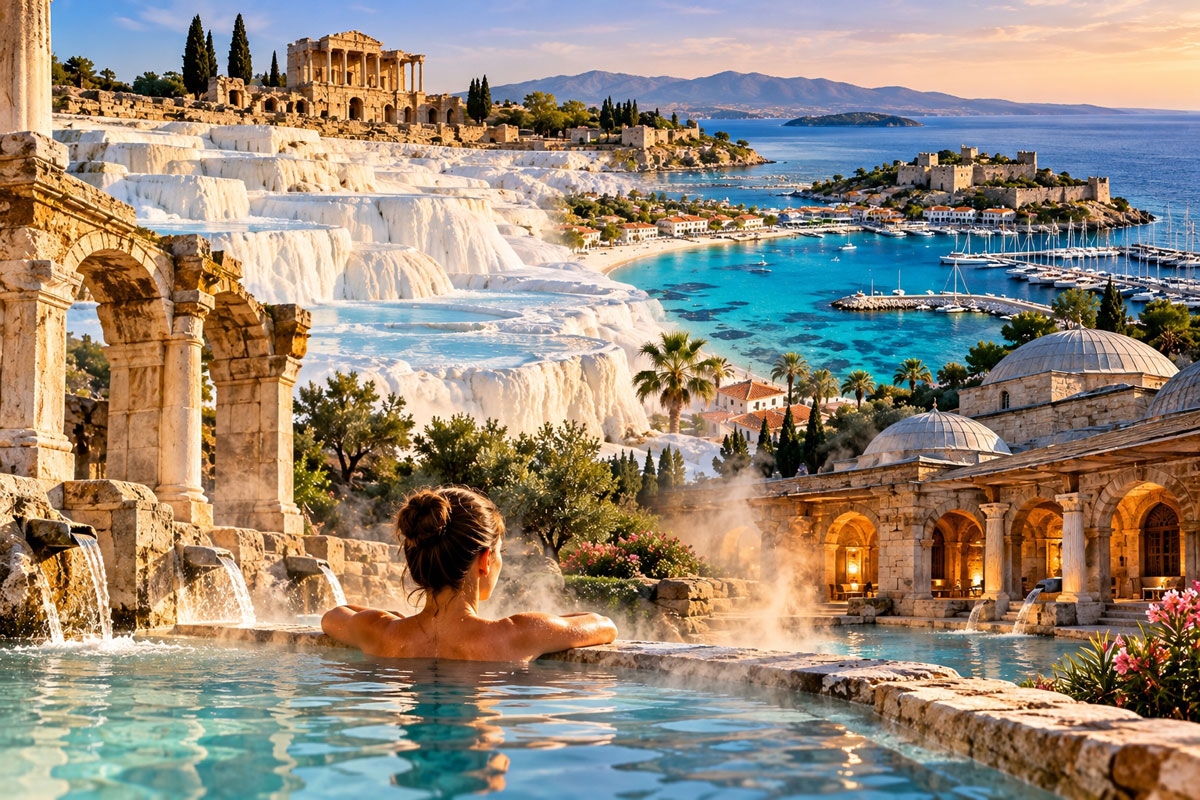
Among Türkiye's most celebrated thermal destinations is Pamukkale, in Denizli province, where mineral-rich geothermal waters have formed spectacular white travertine terraces.
Above the terraces stand the ruins of Hierapolis, an ancient city whose development was closely associated with the area's natural hot springs. During Roman times, the settlement became an important centre for bathing and activities connected with health and well-being.
The combination of archaeological heritage and geothermal formations continues to attract international visitors. Pamukkale illustrates how thermal resources can support both cultural tourism and contemporary wellness experiences.
The relationship between natural springs and settlement development can also be observed elsewhere in western Anatolia, where geothermal waters have been used for centuries.
İzmir and Çeşme: Thermal Wellness on the Aegean Coast
The province of İzmir occupies a particularly important position in Türkiye's thermal heritage. Its geothermal resources extend from the metropolitan area to the Çeşme Peninsula, creating an unusual combination of urban rehabilitation facilities, traditional mineral baths and coastal wellness resorts.
One of the best-known thermal centres is Balçova, located close to İzmir's city centre. Its historic Agamemnon Springs are associated with ancient legends concerning the treatment of wounded warriors during the Trojan War.
Although these stories belong to the region's traditional heritage rather than documented medical history, they reflect the longstanding reputation of Balçova's thermal waters.
Today, Balçova has developed into an established thermal tourism and rehabilitation destination, with facilities offering mineral bathing and physical therapy services. Its proximity to İzmir Adnan Menderes Airport and the city's wider hospitality infrastructure makes it accessible to international visitors.
The Çeşme Peninsula, west of İzmir, offers a different thermal experience by combining geothermal springs with beaches, coastal resorts and the Aegean climate.
Ilıca is particularly notable for its hot mineral waters, which emerge close to the shoreline. In some coastal areas, naturally heated water mixes with seawater, creating a distinctive environment in which thermal bathing and seaside recreation exist side by side.
The area's geothermal springs reach temperatures of approximately 58 degrees Celsius at source, while bathing facilities provide water at suitable temperatures for guests.
Nearby Şifne, in the northeastern part of the peninsula, is known for its mineral springs and traditional mud baths. Its thermal waters have long been associated with local bathing practices, and the area offers facilities for visitors seeking spa and wellness experiences.
The wider Çeşme region combines these natural resources with modern accommodation, beaches, restaurants and recreational activities. Nearby Alaçatı, internationally recognised for its windsurfing conditions and distinctive architecture, adds another dimension to the peninsula's tourism appeal.
This combination creates opportunities for wellness packages incorporating thermal bathing, coastal recreation, physical activity and regional gastronomy.
For international health tourism operators, İzmir and Çeşme demonstrate how geothermal resources can complement an established leisure destination rather than function exclusively as specialised spa resorts.
Afyonkarahisar: A Major Centre for Thermal Rehabilitation
Afyonkarahisar, in western Central Anatolia, has established itself as one of Türkiye's leading thermal tourism destinations.
The province is known for its extensive geothermal resources and developed accommodation infrastructure, ranging from thermal hotels to specialised facilities offering physical therapy and rehabilitation services.
Its thermal centres include areas such as Gazlıgöl, Sandıklı, Ömer and Gecek, where mineral springs support different forms of bathing and wellness tourism.
Some establishments combine thermal pools with physiotherapy and medically supervised programmes, while others focus primarily on relaxation, spa treatments and recreational wellness.
The region's concentration of facilities makes it particularly relevant for travellers interested in longer thermal stays.
Afyonkarahisar also illustrates the economic potential of thermal tourism beyond traditional summer holiday destinations, since indoor bathing and rehabilitation services can operate throughout the year.
Yalova and Bursa: Thermal Traditions Near Istanbul
The Marmara region offers some of Türkiye's most historically significant thermal destinations.
Yalova, situated south of Istanbul across the Sea of Marmara, has a longstanding reputation for its natural hot springs. The Termal district combines historic bathing buildings, mineral pools and landscaped surroundings.
The area developed further during the early Republican period and remains an important destination for domestic visitors and travellers seeking thermal experiences within reach of Istanbul.
Its forested environment and relatively convenient access make it suitable for short wellness breaks as well as longer stays.
Bursa offers another example of the connection between thermal bathing and Ottoman urban culture.
The city developed around natural mineral springs and became known for its historic baths, some of which remain part of its contemporary tourism offering.
Modern hotels and spa facilities complement the traditional bathing infrastructure, allowing visitors to combine thermal experiences with Bursa's architectural heritage, gastronomy and surrounding mountain landscapes.
Together, Yalova and Bursa demonstrate the continuing relevance of traditional thermal destinations within a modern regional tourism economy.
Balneotherapy Between Wellness and Medical Rehabilitation
Thermal tourism occupies a distinctive position between recreational wellness and healthcare.
Balneotherapy involves the use of mineral waters and related natural resources in structured bathing or therapeutic programmes. Depending on the facility, these services may be provided as recreational experiences or as part of medically supervised rehabilitation.
Thermal bathing is frequently associated with relaxation, while some rehabilitation programmes incorporate mineral baths alongside physiotherapy and other established interventions.
Research has investigated the potential benefits of balneotherapy for certain musculoskeletal conditions, including osteoarthritis and chronic pain. However, the quality and consistency of the clinical evidence vary, and thermal treatments should not be presented as cures or replacements for evidence-based medical care.
The distinction is particularly important for international health tourism.
Visitors seeking relaxation may be well served by conventional thermal hotels, while patients requiring rehabilitation need facilities with appropriate medical personnel, individual assessments and clearly defined treatment programmes.
The mineral composition and temperature of thermal waters also differ between destinations. Consequently, the suitability of particular bathing programmes depends on individual health circumstances and the facilities available.
Opportunities for International Health and Wellness Tourism
Türkiye's thermal tourism sector benefits from the geographical distribution of its geothermal resources and the diversity of its destinations.
The Aegean region combines thermal bathing with coastal tourism, while Central Anatolia offers established thermal hotel complexes and rehabilitation facilities. The Marmara region provides access to historic spa towns within reach of Istanbul and other major urban centres.
This diversity creates opportunities for specialised tour operators, hotels and healthcare providers to develop products aimed at different visitor groups.
Short wellness breaks, longer thermal holidays, cultural itineraries incorporating historic baths and professionally supervised rehabilitation programmes can all form part of the country's international offering.
Thermal tourism also has the potential to support travel outside the traditional summer season. Facilities operating throughout the year can contribute to more consistent hotel occupancy and tourism employment, particularly in destinations where coastal or outdoor tourism is seasonal.
For international markets, however, the development of competitive thermal tourism products requires more than access to natural mineral waters.
Service quality, qualified medical supervision where applicable, transparent information about treatments, accessibility and environmental management are essential factors.
Sustainable use of geothermal resources is equally important, particularly in areas where tourism development, residential heating and other applications compete for the same natural resources.
A Living Heritage with Modern Tourism Potential
Türkiye's thermal landscape represents a cultural and natural heritage extending from ancient Anatolian settlements through Roman bathing traditions and Ottoman hamams to contemporary wellness resorts.
Its destinations offer markedly different experiences. Pamukkale combines geothermal formations with archaeological heritage, İzmir and Çeşme bring thermal bathing to the Aegean coast, Afyonkarahisar specialises in thermal hospitality and rehabilitation, while Yalova and Bursa preserve important elements of the country's historic bathing culture.
Together, these regions demonstrate the breadth of Türkiye's thermal tourism offering and its potential to attract visitors interested in wellness, cultural experiences and medically supervised rehabilitation.
The country's long-term opportunity lies in connecting this heritage with internationally recognised service standards and carefully differentiated tourism products.
With its extensive geothermal resources, established hospitality infrastructure and centuries-old bathing traditions, Türkiye has the foundations to strengthen its position as an international destination for thermal health and wellness tourism.
Image Credit: © AI generated illustration