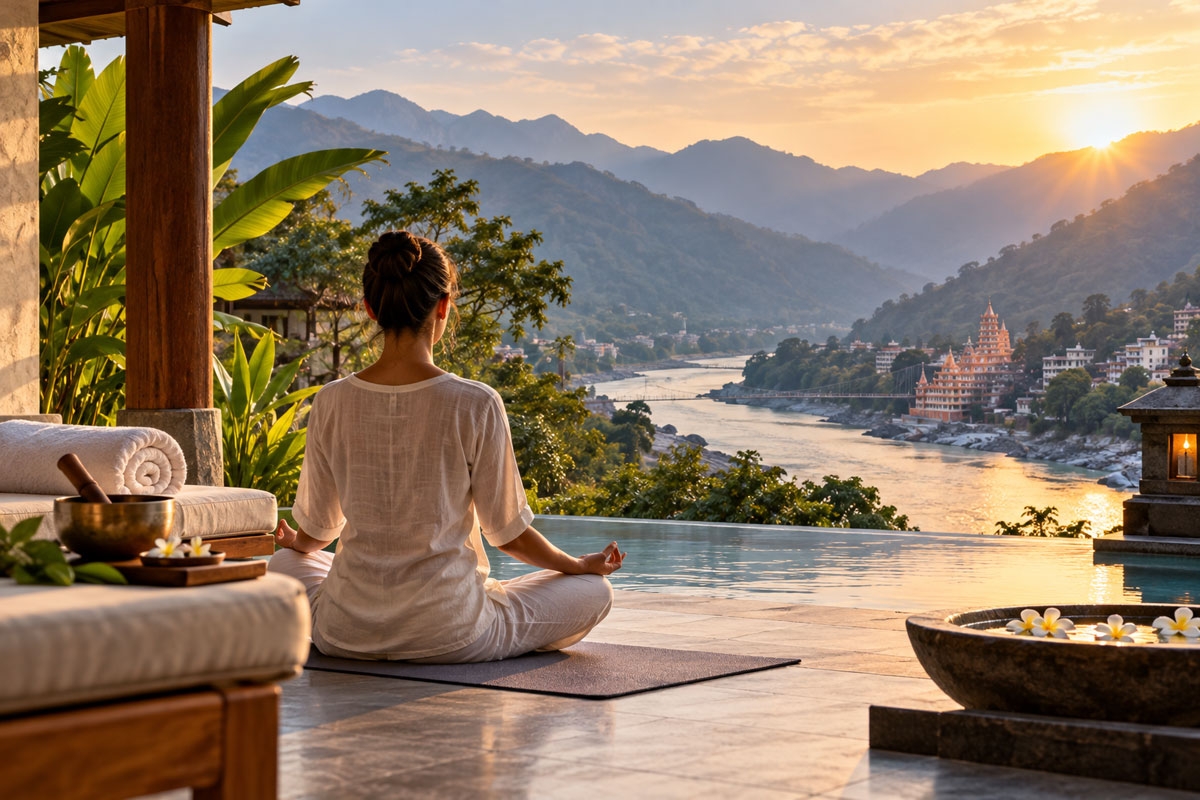
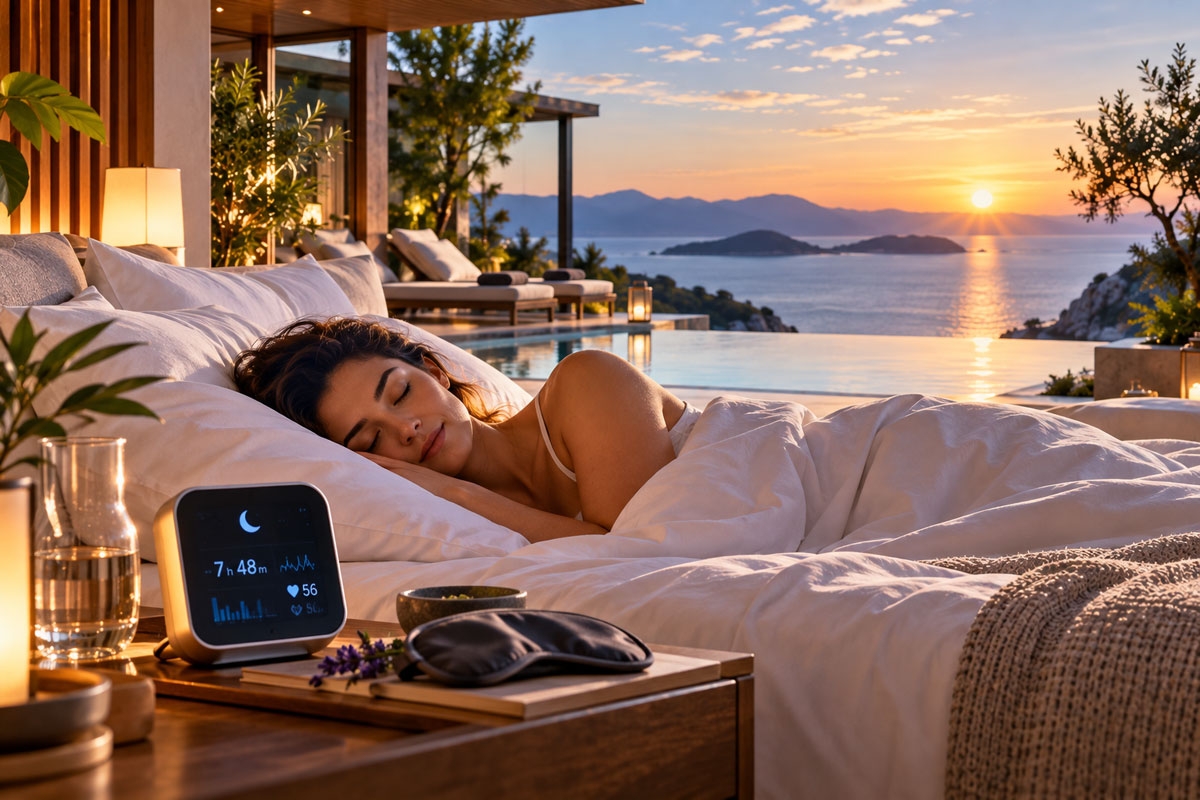
From medical sleep diagnostics in Germany to personalised recovery programmes in Mexico and high-tech sleep monitoring in Japan, restorative rest is becoming a major focus of international wellness travel
A holiday used to be an opportunity to escape everyday routines, explore unfamiliar places and return home with new experiences. Increasingly, however, travellers are choosing destinations for an entirely different reason: they want to sleep better. What began with premium mattresses, blackout curtains and pillow menus is developing into a specialised segment of international health tourism, bringing together sleep science, medical diagnostics, personalised wellness programmes and sophisticated hotel technology.
Known as sleep tourism, the trend reflects growing awareness of the relationship between sleep quality, physical health, mental wellbeing and long-term performance. Hotels and health resorts are responding with dedicated sleep retreats, circadian rhythm programmes, relaxation therapies and technology designed to monitor or improve sleeping conditions.
The development is particularly visible in luxury hospitality, where sleep is increasingly treated as a central element of the guest experience rather than a basic accommodation service. Yet the market is also moving beyond conventional wellness. Some providers now integrate clinical assessments, neurofeedback and individual consultations, creating a closer connection between hospitality and preventive healthcare.
Recent developments across Europe, Asia and the Americas illustrate how rapidly the concept is diversifying.
A market approaching $100 billion
Market research company Grand View Research estimates that the global sleep tourism market was worth approximately $74.5 billion in 2024.
According to its projections, the sector could reach $92.9 billion in 2026 and approximately $148.9 billion by 2030, representing compound annual growth of 12.4 percent between 2025 and 2030.
These figures reflect a broad definition of sleep-related travel, including holidays in which improved rest is a secondary motivation. They should therefore not be interpreted as revenue generated exclusively by specialised sleep retreats.
North America accounted for approximately 36 percent of the market in 2024, while international sleep tourism is expected to expand faster than domestic demand.
The underlying consumer motivation is becoming increasingly apparent.
In Hilton's 2026 travel trends research, 56 percent of respondents identified rest and recharging as their leading motivation for leisure travel. Spending time in nature and improving mental wellbeing were also prominent considerations.
The growing emphasis on sleep coincides with persistent sleep difficulties among the general population.
According to a report published by the US National Center for Health Statistics in April 2026, 30.5 percent of American adults slept fewer than seven hours per day in 2024.
These findings help explain why hotels are increasingly positioning restorative sleep as a distinctive component of their health and wellness offerings.
Germany introduces neurofeedback-based sleep retreats
One of the more medically oriented developments comes from Lanserhof Sylt in northern Germany.
The health resort has introduced Neuro Sleep Reset, a programme combining sleep-related assessment with intensive neurofeedback training.
The concept is designed as a three-day module within a seven-day stay and includes twelve biofeedback sessions.
During these sessions, participants train specific patterns of brain activity, with particular attention to theta-wave activity.
The resort presents the programme as a non-pharmacological approach intended to support relaxation and improve sleep regulation.
Unlike conventional spa treatments, neurofeedback involves measuring physiological activity and providing participants with feedback intended to help them develop greater control over certain responses.
However, the effectiveness of individual neurofeedback protocols for persistent sleep disorders remains an area of scientific investigation. The programme's advertised benefits should not be interpreted as independently established clinical outcomes.
The development nevertheless illustrates how specialised health resorts are attempting to distinguish themselves from conventional wellness hotels through technology-based interventions.
Mexico launches new sleep-focused wellness experiences
Mexico is among the destinations introducing dedicated sleep programmes into established luxury resort portfolios.
In September 2026, Velas Resorts announced a collection of sleep-focused experiences at properties in Riviera Maya, Riviera Nayarit and Los Cabos.
The programmes combine relaxation techniques, massage, breathing exercises, aromatherapy and selected recovery technologies.
At Grand Velas Riviera Maya, the Wellness Sleep Sunset Vitality experience incorporates a sequence of treatments intended to help guests unwind before bedtime.
The programme includes a foot-soaking ritual, mechanical lymphatic drainage using compression equipment, a scalp massage and guided breathing exercises.
Participants also receive a sleep kit containing products intended for use in their accommodation.
The experience is available through November 2026, with prices starting at $699 per couple.
At Grand Velas Riviera Nayarit, the Sleep Suite: Rest & Renewal concept focuses on personalised evening routines.
Guests can select sleeping masks with different materials and accompanying fragrances, while herbal infusions, aromatherapy and individual relaxation rituals form part of the experience.
The programmes demonstrate how established holiday resorts are transforming sleep from a standard hotel service into an additional wellness product.
They also highlight the commercial potential of relatively short sleep-focused experiences that can be integrated into conventional leisure stays.
Japan brings sleep monitoring into capsule hotels
Japan offers a different approach, combining compact accommodation with technology-based sleep analysis.
The Nine Hours capsule hotel group has developed its 9h sleep fitscan service, using sensors and monitoring technology to collect information about guests' sleeping patterns.
The system can record indicators such as breathing, heart rate, snoring and body movement during the night.
Infrared cameras, microphones and other sensors provide data intended to help guests understand aspects of their sleep.
This approach differs considerably from traditional wellness retreats.
Rather than relying primarily on massage, meditation or relaxation environments, the Japanese model integrates sleep-related measurement into an ordinary overnight stay.
It also demonstrates how sleep monitoring can be incorporated into accommodation formats outside the luxury resort sector.
However, consumer sleep-monitoring systems should not be confused with comprehensive clinical sleep studies.
Medical diagnosis of conditions such as obstructive sleep apnoea requires appropriate professional assessment and validated diagnostic procedures.
US hotels combine sleep science with room design
In the United States, Equinox Hotels has developed a hospitality concept in which sleep quality is closely connected with physical recovery and performance.
Its approach includes specially designed guestrooms, lighting environments intended to support circadian rhythms and routines for different times of day.
The company has also established a partnership with sleep scientist Matthew Walker of the University of California, Berkeley.
At its New York property, the Equinox Sleep Lab provides a setting for sleep-related research and monitoring.
The broader hotel concept reflects growing interest in the relationship between sleep, exercise recovery and everyday performance.
Lighting, temperature, noise reduction and bedding are increasingly being treated as components of a coordinated sleep environment.
This approach represents an important shift in hospitality design.
Instead of offering isolated sleep amenities, hotels are beginning to consider how the entire guest experience influences the body's natural sleep-wake cycle.
India combines sleep coaching with holistic wellness
Six Senses has incorporated sleep programmes into its international wellness offering, including at Six Senses Vana in India.
The Sleep With Six Senses concept combines individual consultations, sleep monitoring and lifestyle recommendations.
Depending on the guest's needs, programmes may include yoga nidra, meditation, relaxation treatments, nutrition advice and low-intensity physical activity.
Sleep-related information collected through tracking devices can contribute to the development of personalised recommendations.
The company has also worked with sleep specialist Michael J. Breus on its broader sleep standards.
Guestroom features include selected mattresses, temperature-regulating bedding and lighting adjustments.
Six Senses additionally offers access to a jet-lag management application designed to help travellers adjust their routines when crossing time zones.
The approach reflects a broader trend towards integrating sleep improvement into longer wellness stays rather than treating it as a standalone spa treatment.
Thailand focuses on relaxation and individual recovery
In Thailand, sleep-related wellness is developing alongside the country's established spa and holistic health tourism sector.
Banyan Tree Samui offers relaxation-oriented activities including sleep meditation, sound bath meditation and a 90-minute Sleep Essentials Massage Therapy.
Guests can also arrange an individual evening ritual in their villa.
These services concentrate on relaxation, stress reduction and creating favourable conditions for rest.
Elsewhere, the recently opened 1 Hotel Tokyo in Japan illustrates another approach to the same objective.
Rather than introducing a dedicated sleep programme, the property emphasises environmental design and a calmer overall guest experience.
The Standard Hua Hin in Thailand has adopted a more flexible wellness concept, allowing guests to combine activities such as yoga, spa treatments and contrast therapy according to personal preferences.
These different approaches demonstrate that sleep tourism is not developing around a single standardised product.
Some hotels emphasise scientific measurement, while others concentrate on reducing stimulation and encouraging more balanced daily routines.
From sleep optimisation to simpler routines
The Global Wellness Institute identifies sleep tourism as one of the major developments shaping the wellness sector in 2026.
Its latest sleep trends report also points to a change in consumer attitudes.
While technology-driven sleep optimisation continues to attract attention, there is growing interest in simpler approaches based on environmental conditions and regular routines.
The report highlights the importance of circadian alignment, appropriate lighting, reduced noise and individual sleep patterns.
This development reflects an important distinction between measuring sleep and improving it.
Wearable devices and smart mattresses can provide information about sleeping behaviour, but the availability of increasingly detailed data does not automatically lead to better rest.
For hotels, the challenge is therefore to translate sleep-related knowledge into practical experiences without turning relaxation into another demanding performance objective.
Medical sleep treatment and wellness require different standards
The expansion of sleep tourism also raises questions about the distinction between wellness services and medical treatment.
Relaxation rituals, comfortable bedding and guided meditation may help guests create conditions conducive to sleep.
However, they are not substitutes for medical assessment when sleep problems are persistent or associated with underlying health conditions.
Chronic insomnia, obstructive sleep apnoea and other sleep disorders may require specialist diagnosis and evidence-based treatment.
For chronic insomnia, cognitive behavioural therapy for insomnia is widely recognised as a first-line treatment.
Sleep tourism providers offering medical programmes therefore operate in a di
Image Credit: © AI generated illustration