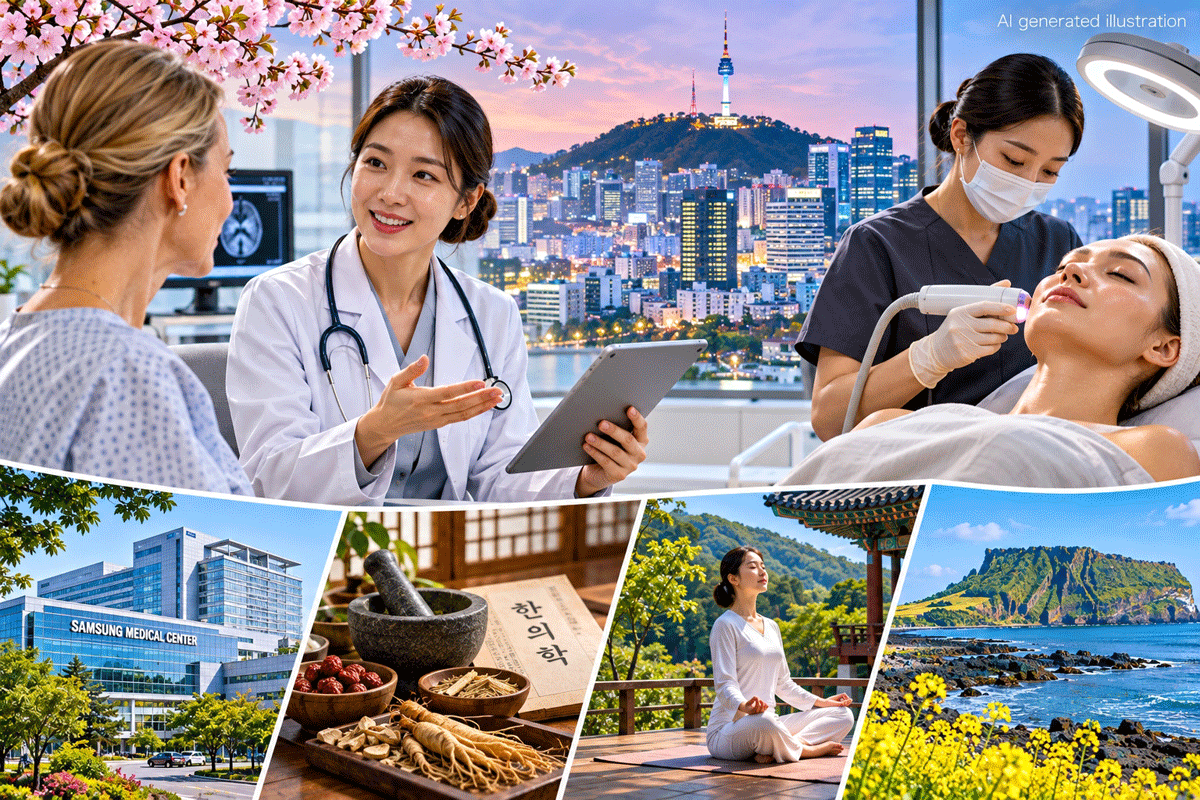
Record international patient numbers, world-class specialist hospitals and the global appeal of K-beauty have made South Korea one of Asia’s most dynamic medical tourism destinations
South Korea has emerged as a major international medical tourism destination, combining advanced hospital medicine with an exceptionally strong market for dermatology, aesthetic procedures and preventive health services. The country's appeal extends from specialist hospitals treating complex diseases to urban clinics offering minimally invasive cosmetic treatments. Supported by sophisticated transport infrastructure, digital healthcare services and the international influence of Korean popular culture, medical travel has become an increasingly visible component of the country's tourism economy.
The scale of this development is reflected in new government statistics. According to the Ministry of Health and Welfare, South Korea received 2,011,822 foreign patients from 201 countries in 2025, compared with 1.17 million in 2024 and approximately 606,000 in 2023. The 2025 figure represents the highest annual total since official recording began in 2009. The ministry also reported approximately 2.72 million patient visits, reflecting repeat use of medical services. These figures demonstrate rapid growth, although they encompass a broad range of healthcare encounters rather than exclusively major medical procedures.
South Korea's distinctive position rests on two different but complementary markets. Internationally recognised hospitals provide cancer treatment, cardiovascular medicine, organ transplantation and other specialist services, while private clinics attract large numbers of visitors seeking skin treatments, cosmetic surgery and health examinations. Seoul dominates international patient activity, but Busan, Daegu, Jeju and other destinations are developing their own medical and wellness tourism offerings. The country's challenge is to translate this demand into sustainable growth while maintaining clinical quality, transparent pricing and effective patient protection.
Dermatology and aesthetic medicine drive demand
The most striking characteristic of South Korea's medical tourism market is the dominance of dermatology and aesthetic medicine.
Government figures for 2025 show approximately 1.31 million foreign patients receiving dermatological services, representing 62.9 percent of the reported total by medical department. Plastic surgery accounted for another 233,000 patients, or 11.2 percent. Together, these specialties represented almost three-quarters of international patient activity measured by department.
Seoul's Gangnam district has become particularly associated with aesthetic medicine. Its concentration of dermatology clinics, plastic surgery practices, international patient coordinators and beauty-related businesses has created a highly visible medical tourism environment.
Popular services include laser-based skin treatments, procedures addressing pigmentation and scarring, injectable aesthetic treatments and facial cosmetic surgery. Some patients travel specifically for these services, while others incorporate appointments into broader holidays centred on shopping, entertainment and Korean culture.
The international influence of K-beauty and the Korean Wave has contributed to this demand. Korean skincare products, entertainment and celebrity culture have increased the visibility of the country's beauty industry, although commercial popularity should not be confused with clinical evidence of treatment effectiveness.
Medical risks also differ substantially between procedures. Non-surgical treatments can cause complications, while cosmetic operations involve anaesthesia, recovery periods and potentially serious adverse outcomes. International patients should verify practitioner qualifications, the licensing status of facilities and arrangements for complications before booking treatment.
Advanced hospitals offer complex medical care
Beyond aesthetic medicine, South Korea has developed a sophisticated hospital sector with internationally recognised capabilities in complex treatment.
Seoul's major tertiary hospitals include Asan Medical Center, Samsung Medical Center, Severance Hospital and Seoul National University Hospital. These institutions provide advanced services in fields such as oncology, cardiovascular medicine, neurosciences, transplantation and complex surgery.
Asan Medical Center is particularly associated with specialist hospital medicine and transplantation. Samsung Medical Center combines multidisciplinary clinical services with research and advanced medical technology, while Severance Hospital and Seoul National University Hospital have longstanding roles in medical education, research and specialist care.
International patient centres at major hospitals assist overseas visitors with appointments, interpretation, treatment coordination and practical arrangements. However, the availability of particular services, languages and treatment pathways must be confirmed with each institution.
Cancer treatment is an important part of the country's international medical offering. Major centres provide multidisciplinary assessment, surgery, radiotherapy and systemic treatment, including selected precision medicine approaches. Cardiovascular care, orthopaedics, neurosurgery and complex diagnostics also contribute to South Korea's medical reputation.
These services differ fundamentally from short-stay aesthetic tourism. Patients undergoing major treatment may require extensive medical records, longer hospital stays, specialist follow-up and coordination with physicians in their home countries.
Health screening, rehabilitation and preventive care
Preventive healthcare forms another important segment of South Korea's international medical market. Large hospitals and dedicated screening centres offer cardiovascular assessments, cancer screening, metabolic testing and other diagnostic services, often organised into coordinated appointments.
For international visitors, efficient scheduling and access to specialist consultations can be attractive. Nevertheless, extensive screening packages are not automatically medically beneficial. Appropriate examinations should be selected according to individual risk factors and established clinical recommendations, rather than the number of tests included.
Rehabilitation is less prominent in South Korea's international marketing than aesthetic medicine, but specialist hospitals provide neurological, orthopaedic and postoperative rehabilitation. Patients recovering from major surgery, stroke or other serious conditions may require multidisciplinary programmes involving physiotherapy, occupational therapy and medical supervision.
Technology-assisted rehabilitation and digital monitoring can support selected treatment programmes. Their clinical value depends on appropriate patient selection and integration into comprehensive care, rather than the sophistication of equipment alone.
Traditional Korean medicine meets modern wellness
South Korea's wellness tourism industry draws on traditions that differ from those of other major Asian health tourism destinations.
Traditional Korean medicine includes acupuncture, herbal preparations, manual therapies and other practices rooted in the country's medical history. These services are offered through specialised institutions and are increasingly incorporated into cultural and wellness tourism experiences.
The Seoul K-Medi Center introduces visitors to aspects of traditional Korean medicine, while Donguibogam Village in Sancheong combines cultural heritage with experiences associated with Korean medical traditions.
Traditional treatments require careful interpretation. Evidence supporting particular interventions varies, and herbal medicines may interact with prescription drugs. Cultural recognition and historical use do not establish the effectiveness of every treatment.
Beyond traditional medicine, South Korea offers forest-based wellness programmes, meditation retreats, hot springs and contemporary spa resorts.
The country's wellness landscape includes destinations such as PARK ROCHE Resort & Wellness in the mountain region of Jeongseon and WE Hotel Jeju, which combines resort accommodation with wellness facilities in a natural setting.
These properties appeal to visitors interested in relaxation, physical activity and recovery from everyday stress. They should not, however, be regarded as substitutes for specialist rehabilitation or medical treatment.
The government has strengthened this sector through its Wellness Korea programme. In 2025, the Korea Tourism Organization and the Ministry of Culture, Sports and Tourism identified 88 outstanding wellness destinations across categories including nature, spas, meditation, traditional medicine, accommodation and food.
A further development came in April 2026, when the Healing Tourism Industry Act took effect. The government subsequently selected 20 wellness destinations for additional international marketing and development support, seeking to connect regional tourism businesses with the expanding market for health-oriented travel.
Seoul dominates, but regional destinations are emerging
Seoul remains overwhelmingly dominant in South Korea's international medical tourism industry. According to government statistics, the capital accounted for approximately 87.2 percent of foreign patient activity in 2025.
Its concentration of specialist hospitals, aesthetic clinics, hotels and international transport connections gives it advantages that other Korean cities cannot easily replicate. Incheon International Airport provides extensive connections to Asia, North America, Europe and the Middle East, making Seoul accessible to both short-stay and long-distance medical travellers.
Nevertheless, regional diversification is becoming a policy priority.
Busan combines major hospitals with coastal tourism, hot springs and spa facilities. Daegu has developed a medical tourism identity supported by specialist healthcare infrastructure and a growing wellness offering. Jeju Island attracts visitors interested in natural landscapes, resort accommodation and health-oriented leisure experiences.
In March 2026, the government identified six regions for wellness tourism cluster development, including Busan, Daegu and Incheon. Busan and Daegu were specifically positioned to strengthen links between medical services and wellness tourism.
These initiatives could help distribute economic benefits beyond Seoul, although the capital's established clinical infrastructure and international reputation remain formidable competitive advantages.
International markets, costs and patient protection
South Korea's medical tourism market is strongly influenced by neighbouring Asian countries.
China accounted for 30.8 percent of foreign patients in 2025, followed by Japan with 29.8 percent and Taiwan with 9.2 percent. The United States contributed 8.6 percent, making it the largest major source market outside Asia.
Demand from China and Taiwan more than doubled compared with 2024, while American patient numbers increased by approximately 70 percent. Short travel distances support repeat visits from Asian markets, particularly for dermatological services requiring limited recovery time.
Treatment costs vary substantially by specialty and institution. South Korea may offer competitive prices for selected procedures compared with the United States, but it is not necessarily the cheapest medical tourism destination in Asia. Its competitive position is based more broadly on specialist expertise, technology, accessibility and the reputation of its medical services.
Patients should obtain detailed written quotations covering treatment, anaesthesia, medication, follow-up appointments and potential complications. Additional accommodation and travel expenses can significantly change the overall cost of treatment.
South Korea operates a registration system for institutions and agencies attracting foreign patients. Registered providers must meet specified requirements, including medical malpractice liability insurance. The Korean Accreditation Program for Hospitals Serving Foreign Patients evaluates participating institutions against patient safety and international service criteria.
Medical travel is also supported by dedicated visa categories, including the short-term C-3-3 medical tourist visa and the G-1-10 category for eligible longer treatment or recuperation stays. Requirements depend on nationality and individual circumstances.
These arrangements provide a regulatory framework, but they do not eliminate the need for independent assessment. Patients should verify registration, professional qualifications, current accreditation and arrangements for emergency treatment before committing to a provider.
South Korea's rapid expansion also raises questions about market concentration. The extraordinary growth of dermatology and cosmetic procedures has strengthened the country's international visibility, but it creates commercial pressures in a sector where advertising, patient expectations and clinical judgement must remain clearly separated.
For the country's long-term medical tourism development, the challenge is to maintain the success of its aesthetic medicine industry while strengthening international confidence in complex hospital treatment, rehabilitation and preventive care.
South Korea already possesses many of the necessary foundations: advanced hospitals, established international patient services, strong transport connections and a distinctive wellness culture. Its future competitiveness will depend increasingly on transparent treatment standards, reliable outcomes and the ability to turn exceptional visitor growth into sustainable, patient-centred healthcare services.
Image Credit: © AI generated illustration