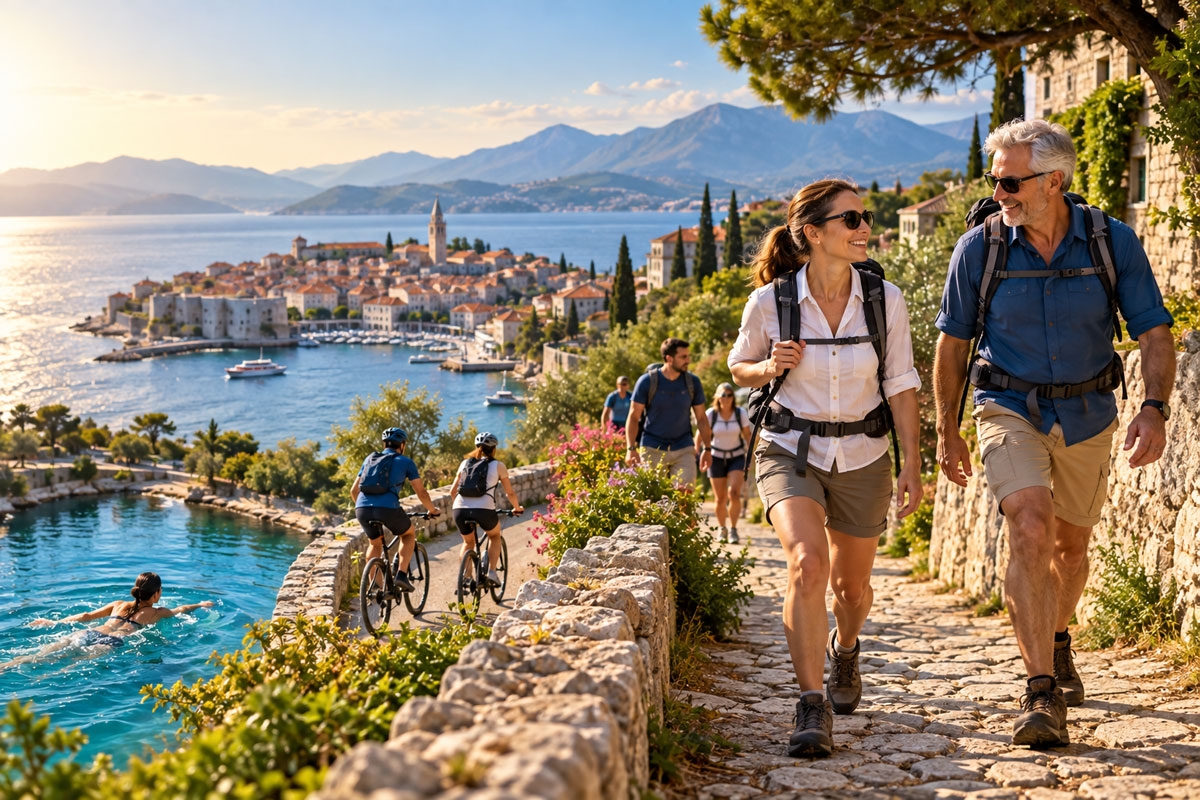
Walking, cycling, swimming and exploring destinations on foot can turn everyday travel activities into an opportunity to support long-term brain health
Travel often disrupts everyday routines, but it can also create opportunities for more physical activity. Walking through a city, exploring a historic district, swimming at a hotel or beach, hiking in the countryside or using a bicycle instead of a car can all contribute to the kind of movement associated with better brain health.
Research highlighted by specialists at Mass General Brigham suggests that physical activity can benefit sleep, memory, mental well-being and cardiovascular health. Importantly for travellers, achieving these benefits does not necessarily require a gym, intensive training or a rigid exercise schedule. Movement incorporated naturally into the day can make a difference.
Walking makes travel and exercise easy to combine
One of the simplest options is also one of the most common activities during a trip: walking.
A study published in JAMA Neurology examining daily step counts and dementia incidence found that around 3,800 steps per day were associated with a 25% lower risk of dementia. At approximately 9,800 daily steps, the observed reduction was 51%.
For travellers, such levels of activity may be easier to integrate into daily life than at home. Sightseeing on foot, walking between nearby attractions, exploring markets or parks and choosing stairs instead of elevators can increase daily movement without requiring a separate exercise programme.
“What's most important is to help people move more and integrate that movement into their daily lives,” said Dr. Jonathan Rosand, a neurologist at Mass General Brigham.
Active experiences can become part of the itinerary
Walking is not the only option. Aerobic activities associated with brain-health benefits include cycling, swimming, hiking, dancing and stair climbing.
Many of these activities can be incorporated directly into a holiday. A bicycle tour can replace a conventional sightseeing excursion, while swimming can become part of a beach or wellness stay. Hiking provides another option in rural and mountain destinations.
The principle is less about maintaining a demanding fitness regime while away and more about choosing forms of movement that fit naturally into the destination and the individual traveller's abilities.
Research has linked aerobic exercise in particular with benefits involving learning and memory, blood flow to the brain and the formation and preservation of neural connections.
Long journeys require a more conscious approach
Travel can also involve long periods of inactivity. Flights, train journeys, coach transfers and long drives may keep passengers seated for hours, while changes in routine can make regular exercise more difficult.
Building movement into the journey therefore becomes especially useful. Walking through an airport terminal, taking a longer route to a restaurant or exploring the surroundings of a hotel on foot can add activity without significantly changing the travel schedule.
For older travellers, maintaining mobility has another potential benefit. Stretching, yoga and strengthening exercises can support balance and proprioception, the body's ability to perceive its position and movement in space.
“As we age, we tend to lose proprioception—the system that tells you where you are in space and is so fundamental to balance and to gait,” Dr. Rosand explained.
Physical activity may also improve sleep while away
Sleep is another reason to remain active during a trip. According to Dr. Rosand, increased physical activity can help people fall asleep faster and improve sleep quality and duration.
That can be particularly relevant when travelling disrupts normal sleeping patterns through unfamiliar surroundings, altered schedules or long journeys. Quality sleep in turn supports functions including memory, attention and emotional regulation.
Even modest activity can be worthwhile
Research also challenges the idea that meaningful benefits require intensive exercise. People do not have to become runners or spend hours in a gym to support their brain health.
Dr. Christiane Wrann, who leads the Program in Neuroprotection in Exercise at Mass General Brigham, has studied how physical activity affects the brain at cellular and molecular levels. Research by her team indicates that exercise can influence processes associated with the preservation of neurons, brain inflammation and neural connections.
For travellers, the practical message is straightforward. Staying active does not have to compete with the purpose of a trip. Exploring a destination on foot, swimming, cycling or hiking can make physical activity part of the travel experience itself.
That makes travel potentially more than a break from everyday routines: it can also provide an opportunity to replace sedentary habits with movement that benefits both the journey and long-term health.
Image Credit: © AI generated illustration