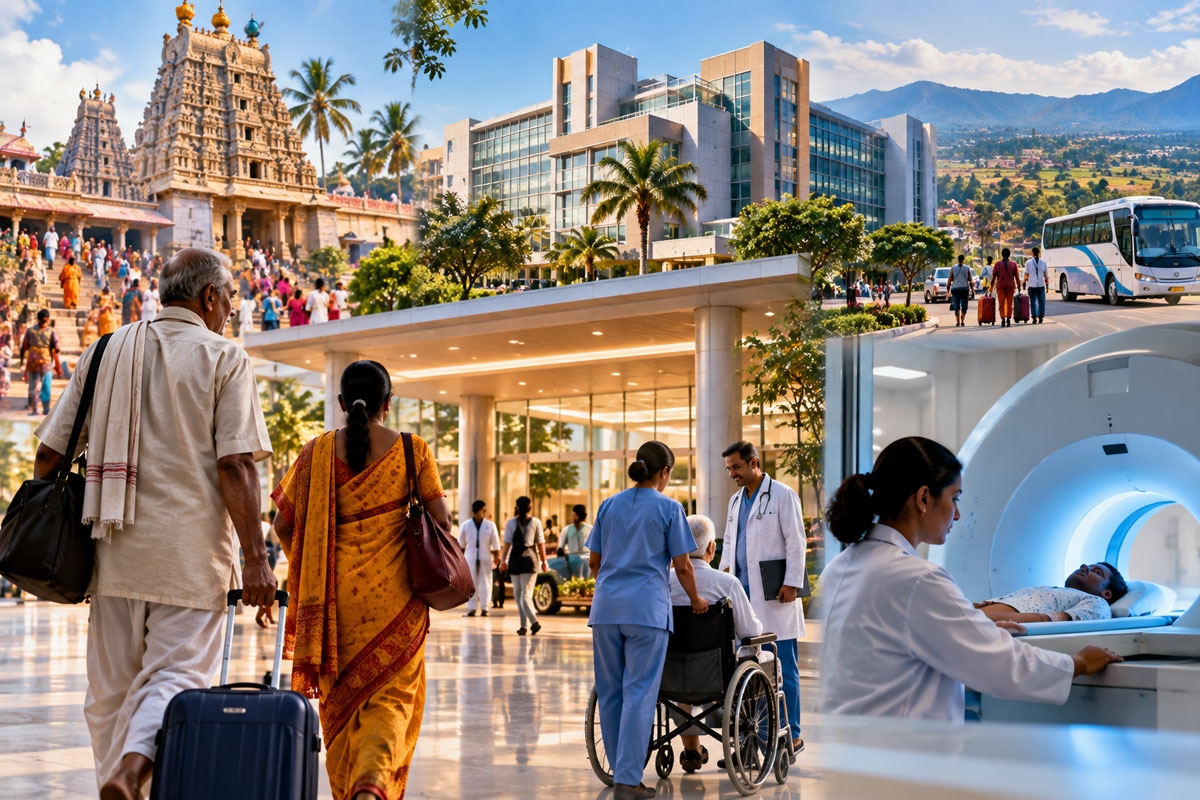

Advanced diagnostics, personalized medicine and new healthcare infrastructure could strengthen the Philippines’ position as an emerging Asian destination for preventive and wellness-focused medical travel
The Philippines is seeking a larger role in Asia’s expanding medical wellness market as healthcare providers and investors explore ways to combine advanced diagnostics and personalized medicine with the country’s established tourism and hospitality sector.
One of the companies looking at this potential is Malaysia-based biotechnology and healthcare group ALPS, which is working with local partners to establish a presence in the Philippines. Its plans include services such as genomic testing, precision diagnostics and cellular therapy, alongside the laboratories, clinical expertise and protocols required to support them.
The development reflects a broader shift in the Philippine healthcare market. Preventive medicine, biological age testing and genomic screening are increasingly moving beyond a small specialist niche, while the combination of medical services, recovery and hospitality is opening new possibilities for health tourism.
From wellness retreat to preventive medicine
The emerging model differs considerably from the traditional image of wellness tourism built primarily around spas, resorts and relaxation. The focus is increasingly moving towards medically supervised services that can identify health risks earlier and provide more individualized approaches to prevention and treatment.
ALPS Chief Operating Officer Amanda Low said the company wants to make advanced healthcare technologies more accessible while developing the necessary infrastructure locally.
“Our objective is to make these technologies more accessible and build the infrastructure locally so Filipinos do not necessarily have to travel abroad to access advanced health care,” Low said.
Among the technologies under consideration are genome sequencing, precision diagnostics, cellular therapies involving natural killer cells and stem cells, as well as mRNA research and biomarker development. Such technologies could support the assessment of genetic risks, biological ageing and individual responses to medical interventions.
ALPS already operates in areas including molecular diagnostics, genomic testing, medical services and cellular research in Malaysia.
A $47.3 billion wellness economy
The economic backdrop is significant. Figures from the Global Wellness Institute cited by ALPS’ Philippine partners put the country’s wellness economy at $47.3 billion in 2024, compared with $36 billion in 2019.
The changing market is being driven not only by international visitors. Local demand for preventive and personalized healthcare is also increasing, creating the possibility of medical infrastructure serving both domestic patients and health travellers.
This overlap could prove particularly important for the development of the Philippines as a medical wellness destination. Instead of creating facilities aimed exclusively at foreign patients, providers could build services around an existing domestic healthcare market and subsequently integrate them with tourism and hospitality products.
Medical care becomes part of the destination experience
ALPS’ local partners Paolo Castro and Jacob del Rosario see particular potential in the space between conventional healthcare and resort-based wellness.
“The interesting opportunity for the Philippines is the space between traditional health care and traditional resort wellness, where medically guided programs can be combined with recovery, hospitality and a destination experience,” Castro and Del Rosario said.
That approach could give the Philippines a different position from established Asian medical tourism hubs. Its tourism infrastructure and resort destinations could be combined with preventive diagnostics, personalized medical programs and medically supervised recovery rather than competing solely in conventional hospital treatment.
The strategy nevertheless depends on credible clinical infrastructure. ALPS and its partners have highlighted accredited laboratories, trained clinicians and established clinical protocols as essential components of the planned healthcare ecosystem.
Advanced medical infrastructure expands
Investment in diagnostic technology is already taking place. CJ Medical Innovations, headed by Del Rosario, has been working with hospitals to introduce advanced medical technologies in the Philippines.
Its cooperation with Makati Life Medical Center has brought an AI-powered PET/CT system from United Imaging Healthcare to the country. The technology is intended to support more precise cancer diagnosis and treatment planning.
At the same time, Philippine scientific institutions are examining how domestic genomic capacity can be expanded. Discussions led by the National Academy of Science and Technology Philippines in 2026 have focused on existing facilities, specialist expertise, regional healthcare networks and ways of reducing reliance on genomic testing performed abroad.
For the Philippines, the opportunity therefore extends beyond attracting wellness travellers. Developing advanced diagnostics and personalized medicine locally could strengthen healthcare for residents while creating the clinical foundation needed to attract international patients.
If these two markets develop together, the country could increasingly offer something between the traditional medical tourism centre and the tropical wellness retreat: a destination where diagnostics, preventive medicine, recovery and travel form part of the same healthcare journey.
Image Credit: © AI generated illustration