Oman’s mineral-rich coastal landscapes could provide the basis for a new generation of wellness and health destinations combining natural resources, rehabilitation and tourism
Oman’s extensive coastal salt flats could become an unusual new asset in the country’s growing wellness tourism sector, with Germany’s historic spa town of Bad Nauheim providing a possible model for transforming natural brine resources into integrated health destinations.
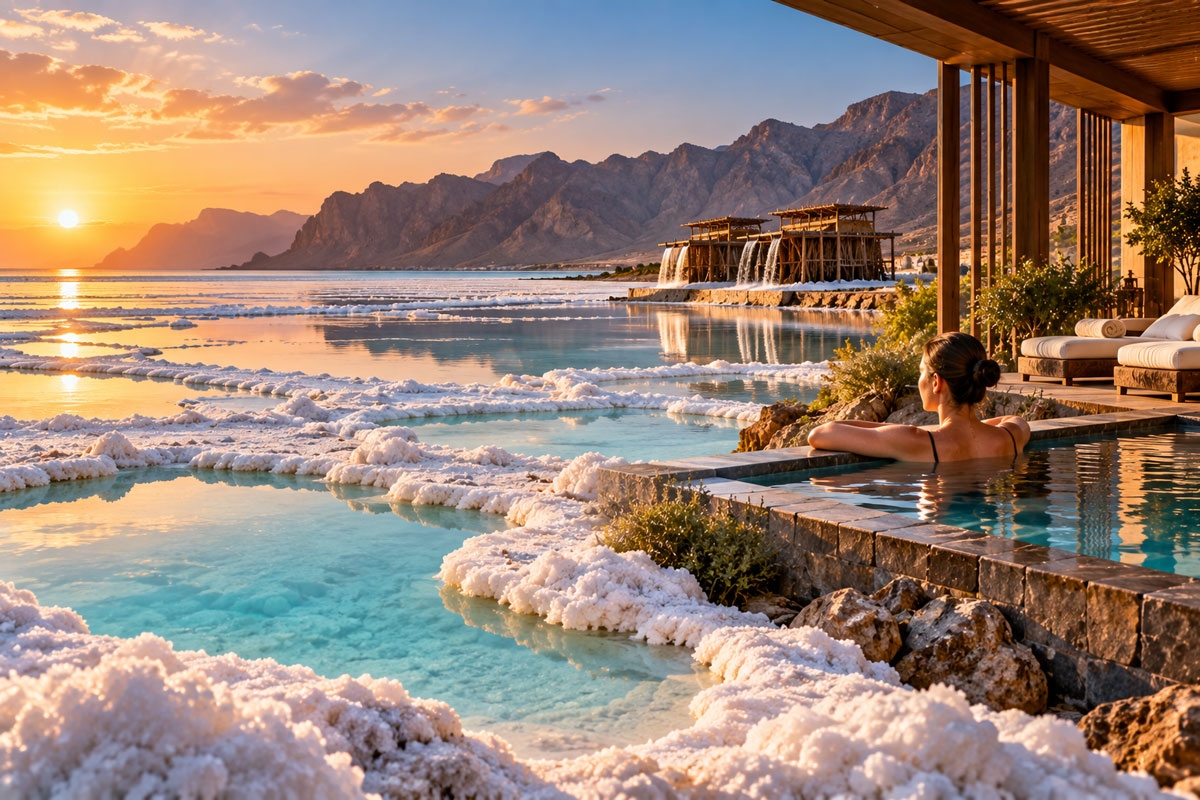
The concept focuses on salt-producing landscapes including Khoor Al Melh in Qurayat and the coastal salt pans of Shannah. While these areas have traditionally been valued primarily for salt production, their mineral resources and coastal setting could potentially support tourism concepts combining wellness, prevention, rehabilitation and hospitality.
The proposal comes as Oman seeks to expand higher-value tourism under Vision 2040 and as several wellness-oriented developments begin to emerge across the country.
Bad Nauheim provides a possible model
The idea has been advanced by Harald Hock, Managing Director of Bad Nauheim Stadtmarketing und Tourismus GmbH, who sees parallels between Oman’s natural salt resources and the foundations on which the German spa town developed its health economy.
Bad Nauheim has nine natural healing springs as well as 14 hospitals and specialist clinics. Its historic graduation towers, originally constructed as part of the salt-production process, are now used as open-air inhalation facilities, with brine flowing across blackthorn structures and creating a saline mist.
“What we have created in Bad Nauheim is unique – and at the same time transferable,” Hock said. “This interplay of nature, medicine, rehabilitation, and hospitality – that is our recipe for success.”
The German town has developed its health profile over more than two centuries, combining natural resources with medical facilities, rehabilitation services, spa infrastructure and hospitality.
From salt production to health tourism
Oman’s coastal sabkhas already have an economic function. The country produced approximately 40,000 tonnes of salt in 2025, while further expansion of the industry using sustainable evaporation technologies is being considered.
The tourism opportunity would represent a different use of the same natural environment.
Hock believes mineral-rich coastal areas could provide the foundation for what he describes as integrated health cities – destinations where prevention, rehabilitation, wellness services and tourism operate as interconnected components.
“The greatest investment opportunities lie in integrated health cities that bring together prevention, rehabilitation, wellness, and tourism in a holistic approach,” he said.
Such a concept would move beyond the conventional resort spa. Medical and rehabilitation services could potentially operate alongside wellness facilities and hospitality, with the surrounding landscape itself becoming part of the destination’s health proposition.
Oman expands its wellness tourism ambitions
The concept also fits into a broader shift in Oman’s tourism development.
The Ministry of Heritage and Tourism has explored wellness-oriented tourism experiences, including the potential therapeutic qualities associated with coastal environments and sea air. At the same time, Oman Vision 2040 places emphasis on developing higher-value and lower-impact tourism rather than relying exclusively on mass visitor growth.
Several projects already indicate this direction. Wellness-oriented resort development is emerging in Musandam, while another Santani wellness retreat is planned for the beaches of Dhofar. Development concepts for the Al Duqm coastal zone also include health, wellness and ecotourism.
These projects could eventually create a wider network of Omani destinations built around different combinations of landscape, climate, wellness and healthcare.
A concept rather than a confirmed project
Despite the potential, plans to develop the salt flats themselves as health tourism destinations remain at an early conceptual stage.
Hock has stressed that no formal discussions have yet taken place with Oman’s Ministry of Heritage and Tourism, Ministry of Health or the German Embassy in Muscat.
“I see in Oman’s mineral-rich coastal landscapes – from Qurayat to Shannah and beyond – and its Vision 2040 the perfect foundation for a new generation of health destinations,” he said.
“In Bad Nauheim, we have proven over centuries that natural brine is far more than a raw material – it is the foundation of a holistic health ecosystem. We are happy to share this knowledge.”
Whether Oman ultimately adopts such a model remains open. But the proposal illustrates how the country’s natural resources could support a form of tourism that increasingly brings together wellness, prevention, rehabilitation and destination development.
Image Credit: © AI generated illustration