
Manila summit links medical tourism, wellness, digital health and investment as Southeast Asia seeks a more integrated regional health economy
The Philippines is seeking a larger role in the development of Southeast Asia’s health tourism and longevity economy. At the ASEAN Health Tourism & Wellness Economy Summit in Manila, government representatives, healthcare executives, investors and tourism specialists discussed how medical tourism, preventive healthcare, wellness, traditional medicine and digital technologies could be brought together within a more integrated regional market.
Held at the SMX Convention Center Manila as an official ASEAN side event, the summit also placed considerable emphasis on investment and cross-border business. Its stated objective was to connect currently fragmented health services, investment frameworks and regional supply chains and develop them into a broader ASEAN health and longevity economy.
Philippines targets international health and longevity investment
One of the central themes was the development of infrastructure capable of attracting international patients, retirees and healthcare investors.
Roberto Z. Zozobrado, General Manager and CEO of the Philippine Retirement Authority, presented developments concerning the Special Resident Retiree Visa, or SRRV, as the country looks to strengthen its position in the international market for older long-stay residents.
Representatives of the Philippine Economic Zone Authority also outlined tax incentives and other benefits intended to encourage investment in health zones and regional sports and healthcare infrastructure.
The discussions illustrate how the Philippines increasingly views health tourism as part of a wider economic ecosystem rather than simply as the international marketing of hospitals or wellness resorts.
Digital health becomes part of the tourism strategy
Technology formed another important element of the discussions. Former Philippine government official Nora Terrado presented a roadmap aimed at strengthening the country's position as a digital health and global capability hub for international healthcare technology companies.
Experts from South Korea and Japan addressed the potential use of healthcare big data, predictive technologies and remote patient monitoring in developing modern longevity networks.
This approach broadens the conventional definition of medical tourism. Instead of focusing solely on patients travelling abroad for individual procedures, the emerging model combines physical travel with diagnostics, preventive care, long-term health monitoring and digital services.
Traditional medicine enters the wider health economy
The summit also explored ways of connecting medical tourism infrastructure with traditional and complementary healthcare. Representatives from investment, agriculture and healthcare institutions discussed the integration of local production and traditional medicine standards into the wider wellness value chain.
This is particularly significant in Southeast Asia, where traditional medicine, wellness retreats and locally produced health products already form part of the tourism economy. Bringing these sectors into investment and regulatory frameworks could create closer links between clinical services, preventive health programmes and destination-based wellness experiences.
From policy discussions to B2B business
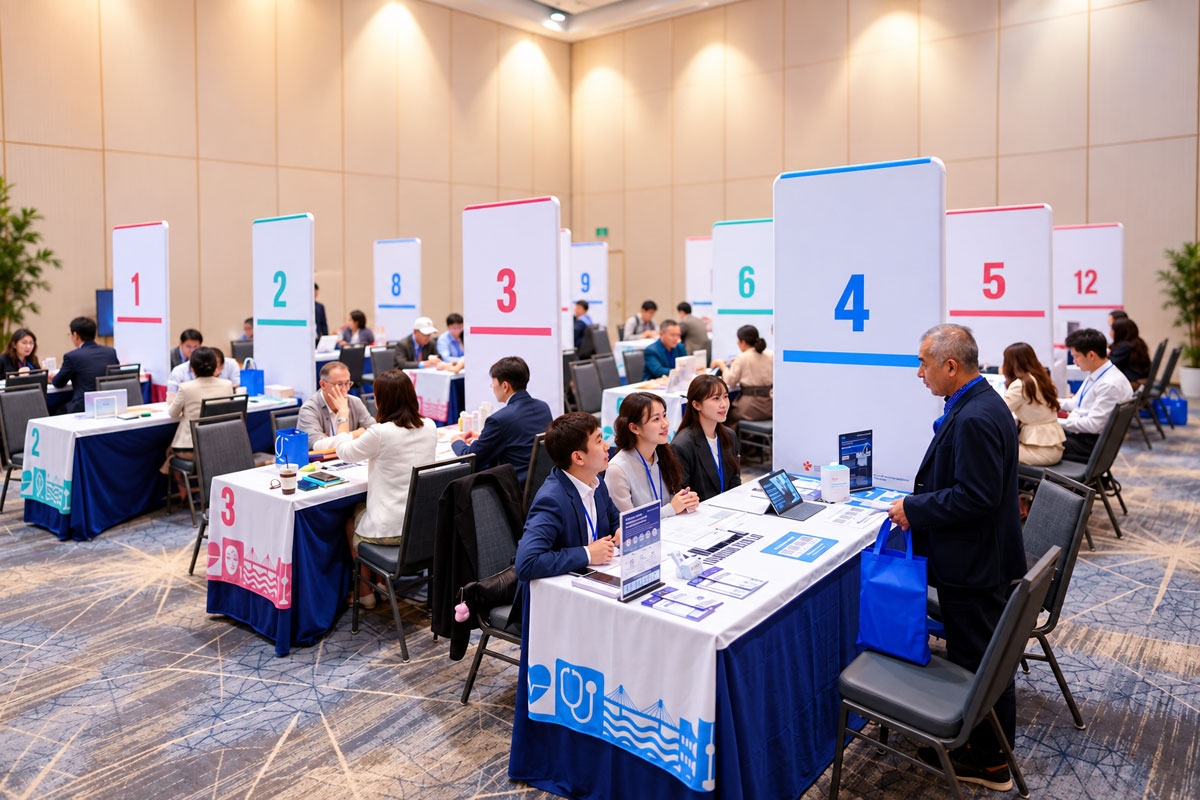
The commercial dimension of the summit was reinforced by B2B business matching sessions connecting international hosted buyers with regional suppliers.
The combination of public policy and private-sector matchmaking reflects the broader ambition behind the event: creating commercial structures around ASEAN's expanding health and wellness sector rather than treating medical tourism, wellness tourism and healthcare investment as separate markets.
The summit also linked the health economy to preventive care and social policy. DSWD Secretary Rexlon Ting Gatchalian argued that economic resilience requires a shift away from purely reactive healthcare.
“A resilient economy cannot be built on reactive healthcare; it must be anchored on proactive wellness and the systemic protection of human capital,” Gatchalian said.
For the Philippines and its ASEAN partners, the direction emerging from Manila is therefore considerably broader than traditional medical tourism. The developing model encompasses international patients and retirees, wellness travellers, healthcare technology, longevity services, traditional medicine and investment — increasingly treating them as interconnected parts of a regional health economy.
Image Credit: © AI generated illustration