Baku conference highlights international accreditation, patient safety and traditional therapeutic resources as priorities for health tourism development
Azerbaijan is seeking to strengthen its position in international medical and wellness tourism through a national development strategy that prioritises healthcare-related travel, service quality and international cooperation. The country's ambitions were highlighted at the third International Health Tourism Conference in Baku, organised by the State Tourism Agency and attended by healthcare and tourism representatives from several European and Asian countries.
The initiative forms part of Azerbaijan's State Programme for the Development of Tourism for 2026–2030. According to State Tourism Agency Chairman Fuad Naghiyev, the programme identifies health and wellness tourism as a priority, alongside improvements in service standards and expanded opportunities for international accreditation of medical tourism facilities. Azerbaijan aims to build on its existing medical infrastructure, natural therapeutic resources and cultural heritage to diversify its tourism economy.
The conference brought together representatives from Germany, Austria, the United Kingdom, Georgia, Hungary, Kyrgyzstan, Türkiye, Spain and the Czech Republic, among other countries. Discussions focused on developing international partnerships and strengthening Azerbaijan's competitiveness as a potential regional healthcare destination. However, the event announcement did not identify specific new hospital investments, confirmed international partnerships or additional treatment capacities.
International standards and patient safety
Azerbaijan's healthcare tourism ambitions reflect growing competition among destinations seeking to attract international patients through specialised medical services and wellness programmes.
Health Minister Anar Bayramov identified the country's geographical location, developing medical infrastructure and qualified healthcare professionals as potential advantages in building a regional medical tourism sector.
International accreditation is among the priorities highlighted in the national tourism strategy. Such recognition could help healthcare providers demonstrate compliance with defined quality and patient safety requirements, although accreditation applies to individual institutions and does not automatically guarantee treatment outcomes.
The conference also addressed the relationship between medical tourism development and national healthcare priorities.
World Health Organization Director-General Tedros Adhanom Ghebreyesus, speaking through a video message, emphasised the importance of patient safety, medical service quality and appropriate follow-up care after treatment.
He also stressed that medical tourism development should support the objectives of the national healthcare system rather than operate independently of domestic healthcare needs.
These considerations are particularly relevant for destinations seeking to expand international patient services. Attracting patients from abroad requires not only modern medical facilities but also transparent clinical standards, reliable communication, appropriate insurance arrangements and continuity of care.
For Azerbaijan, the development of internationally recognised quality systems could become an important component of its efforts to establish greater confidence among overseas patients and medical travel partners.
Naftalan and the modernisation of traditional health resorts
Beyond conventional medical treatment, Azerbaijan possesses distinctive natural resources associated with traditional therapeutic practices.
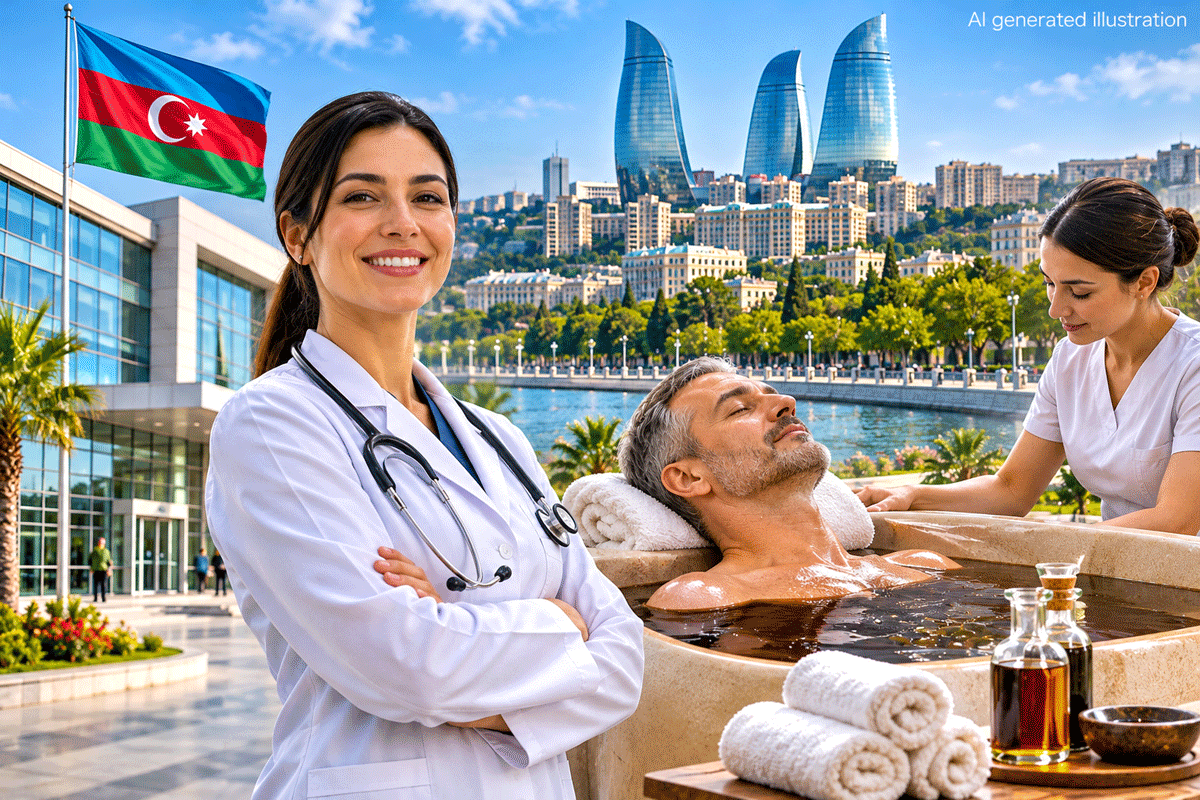
One of the most unusual is Naftalan oil, a petroleum-derived substance historically used in specialised bathing treatments. The town of Naftalan has developed a health resort tradition around these applications, which are promoted particularly in connection with musculoskeletal and certain skin conditions.
The second day of the Baku conference was scheduled to examine the characteristics, historical use and applications of Naftalan oil, alongside the development of personalised health tourism experiences and the changing position of sanatoriums in the international tourism market.
For Azerbaijan, these facilities represent an opportunity to develop wellness tourism products that differ from conventional spa offerings in competing destinations.
However, the historical use of a substance does not establish its clinical effectiveness or safety for particular medical conditions. Treatments involving Naftalan oil require careful consideration of potential risks, contraindications and the available scientific evidence.
The challenge for health resort operators is therefore to combine cultural and therapeutic heritage with appropriate medical oversight and transparent information for international visitors.
The modernisation of sanatoriums could also create opportunities to develop programmes incorporating relaxation, preventive health services and medically appropriate rehabilitation. Such developments would need to distinguish clearly between established medical treatments and traditional wellness practices.
Azerbaijan's strategy places these opportunities within a broader effort to improve tourism service quality and strengthen cooperation between healthcare institutions and the travel industry.
The country's ambitions remain at a developmental stage, with no investment figures or specific new international patient programmes announced during the conference.
Nevertheless, the inclusion of medical and wellness tourism in the 2026–2030 national strategy provides a policy framework for further development. Its effectiveness will depend on the implementation of quality standards, investment in healthcare infrastructure and the ability to translate Azerbaijan's distinctive health resort traditions into credible services for international visitors.
Image Credit: AI generated illustration