More than 70 experts will examine how medical wellness, hospitality and traditional healing are converging as the global industry prepares for its next phase of growth
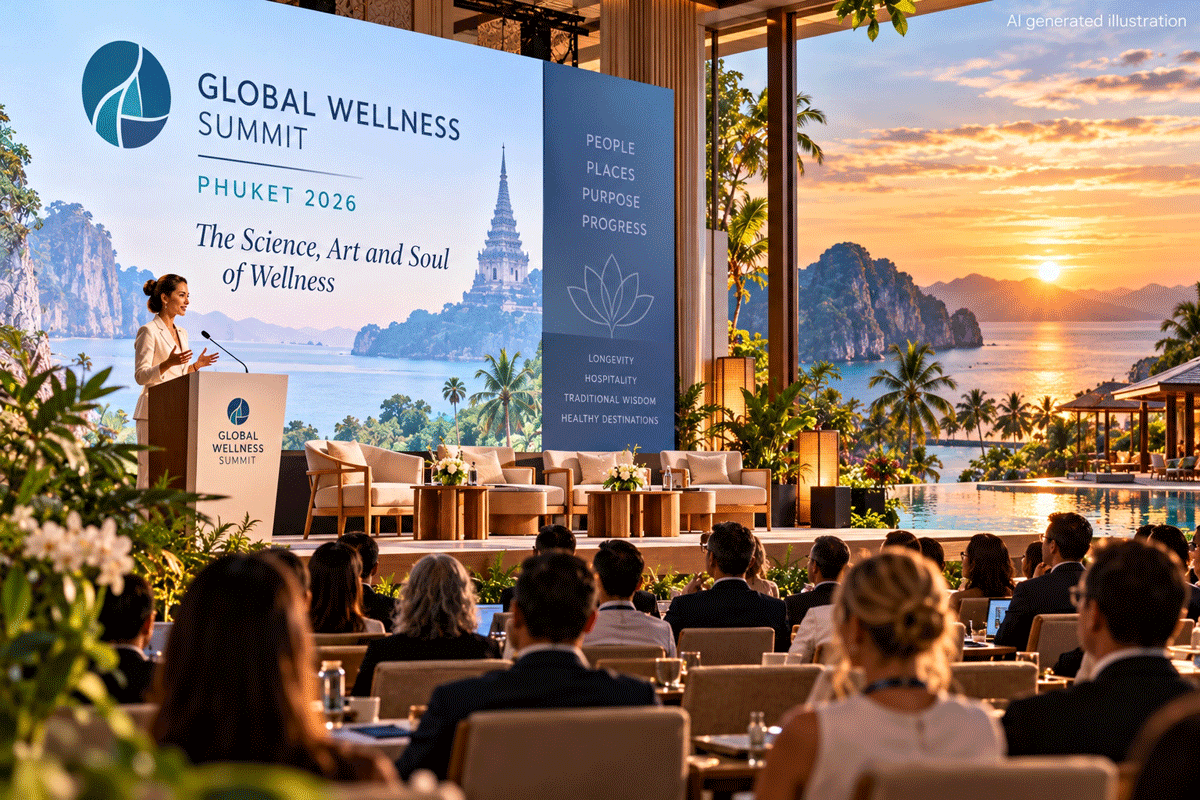
The Global Wellness Summit has unveiled the programme for its 20th annual conference, which will take place from November 10 to 13, 2026, at Angsana Laguna Phuket in Thailand. Under the theme The Science, Art and Soul of Wellness, the gathering will bring together more than 70 international experts to examine developments in preventive healthcare, longevity, wellness hospitality and the relationship between physical environments and human well-being.
The conference comes at a time when the boundaries between medical treatment, preventive health services and traditional wellness experiences are becoming increasingly fluid. While longevity medicine and personalised health assessments have gained prominence, the industry is also facing growing demands for scientific evidence supporting its treatments and programmes. The organisers intend to address this tension by examining both clinically grounded approaches and broader concepts involving emotional well-being, social connection and lifestyle.
Thailand provides a particularly relevant setting for these discussions. The country has established an international health tourism industry combining private hospitals, specialist medical services, traditional Thai medicine and luxury wellness resorts. Phuket, already an important destination for international leisure tourism, is also attracting investment in integrated wellness facilities and preventive health programmes. The summit will therefore take place in a destination where several of the industry's emerging business models are already being developed.
Longevity moves beyond commercial promises
Scientific credibility will be a central theme of the conference. Medical researchers and industry executives are expected to examine how longevity services can move beyond promotional claims towards interventions supported by clinical evidence.
Kenneth Pelletier, clinical professor of medicine at the University of California, San Francisco, will address the distinction between scientific findings and speculative claims in human longevity. Andrea Maier, director of the National University of Singapore's Academy for Healthy Longevity, will discuss the integration of consumer-oriented health services with precision approaches to ageing.
Other contributions will explore the relationship between medical wellness and established healthcare systems. John Schoonbee, global chief medical officer of Swiss Re, will examine the insurance industry's growing interest in preventive health, while Tanupol Virunhagarun of Bangkok Dusit Medical Services will present perspectives on scientifically oriented wellness services.
The programme also includes a presentation by Simone Gibertoni, chief executive of Clinique La Prairie, concerning the company's expansion into Phuket. This provides a concrete example of how established international wellness brands are extending their activities into major tourism destinations.
For health tourism providers, the discussions are particularly relevant because longevity programmes increasingly combine medical consultations, diagnostic examinations, lifestyle interventions and residential stays. Their long-term credibility will depend on distinguishing established preventive measures from treatments whose effectiveness remains insufficiently demonstrated.
Hospitality, architecture and traditional healing converge
Beyond medical wellness, the summit will examine how accommodation, architecture and cultural experiences can contribute to the development of health-oriented destinations.
Architect Thomas Heatherwick will discuss the relationship between the built environment and human well-being, while representatives of international property developers and hospitality companies will explore wellness-oriented communities and destination design.
The programme also gives considerable attention to traditional healing practices, spirituality, creativity and social connection. Ajahn Jayasāro, a Buddhist monk and teacher, will contribute a perspective on personal well-being, while Banyan Group founder Ho Kwon Ping will examine the changing relationship between hospitality and purpose.
Thailand's Department of Thai Traditional and Alternative Medicine will be represented by its director general, Pongsadhorn Pokpermdee, who is scheduled to address the relationship between traditional knowledge and modern medicine.
These subjects reflect an increasingly broad interpretation of wellness. However, cultural practices, relaxation experiences and professionally delivered medical treatments remain distinct categories, with different standards of evidence and responsibility.
New market data expected in Phuket
The summit will also provide an opportunity to assess the economic development of the international wellness industry.
The Global Wellness Institute is scheduled to unveil its 2026 Global Wellness Economy Monitor, presenting updated research on the sector's scale and development. The findings could offer new insights into the relationship between wellness tourism, preventive healthcare, health-oriented real estate and other segments of the wellness economy.
According to the organisers, the conference will examine developments across the industry's previous two decades while considering how scientific research, changing consumer expectations and new hospitality concepts may influence its future.
For Thailand, hosting the anniversary summit reinforces the country's visibility as an international meeting point for medical wellness and health tourism. For the wider industry, the most significant question may be how providers can combine attractive destinations and personalised experiences with transparent medical standards and credible evidence of health benefits.
Image Credit: © AI generated illustration