New global research points to rising demand for personalised prevention, clinically informed wellness retreats and longer-term health programmes, while questions about medical evidence and treatment quality gain importance
International medical wellness is moving beyond traditional spa treatments towards a broader combination of preventive healthcare, personalised diagnostics, lifestyle medicine and structured recovery programmes. New research released by the Global Wellness Institute (GWI) on November 11, 2026, highlights the growing economic importance of health-oriented services, while industry trend reports identify significant changes in the way travellers approach longevity, mental wellbeing and preventive medicine.
According to the Global Wellness Economy Monitor 2026, the worldwide wellness economy reached $7.5 trillion in 2025, an increase of 8.9 percent compared with the previous year. Wellness tourism grew by 11.4 percent, while the market for spas expanded by 12.8 percent and thermal and mineral springs by 10.4 percent. The institute expects the overall wellness economy to reach approximately $10.9 trillion by 2030, although these figures cover a much broader market than medical wellness alone.
For international health tourism providers, the findings suggest opportunities extending beyond conventional resort-based wellness. Preventive medical assessments, rehabilitation-oriented travel, sleep programmes, women's health and lifestyle interventions are increasingly being incorporated into hospitality and healthcare concepts. At the same time, the growing use of advanced diagnostics and longevity technologies is raising questions about clinical evidence, professional supervision and the distinction between established medicine and commercially promoted wellness services.
Personalised diagnostics become a major growth driver
One of the most significant developments is the expansion of preventive diagnostics and personalised health programmes.
The GWI estimates that the personalised medicine segment reached $364 billion in 2025, growing by 7.7 percent over the previous year. This category includes services associated with preventive diagnostics and longevity programmes, although not all expenditure is connected with travel.
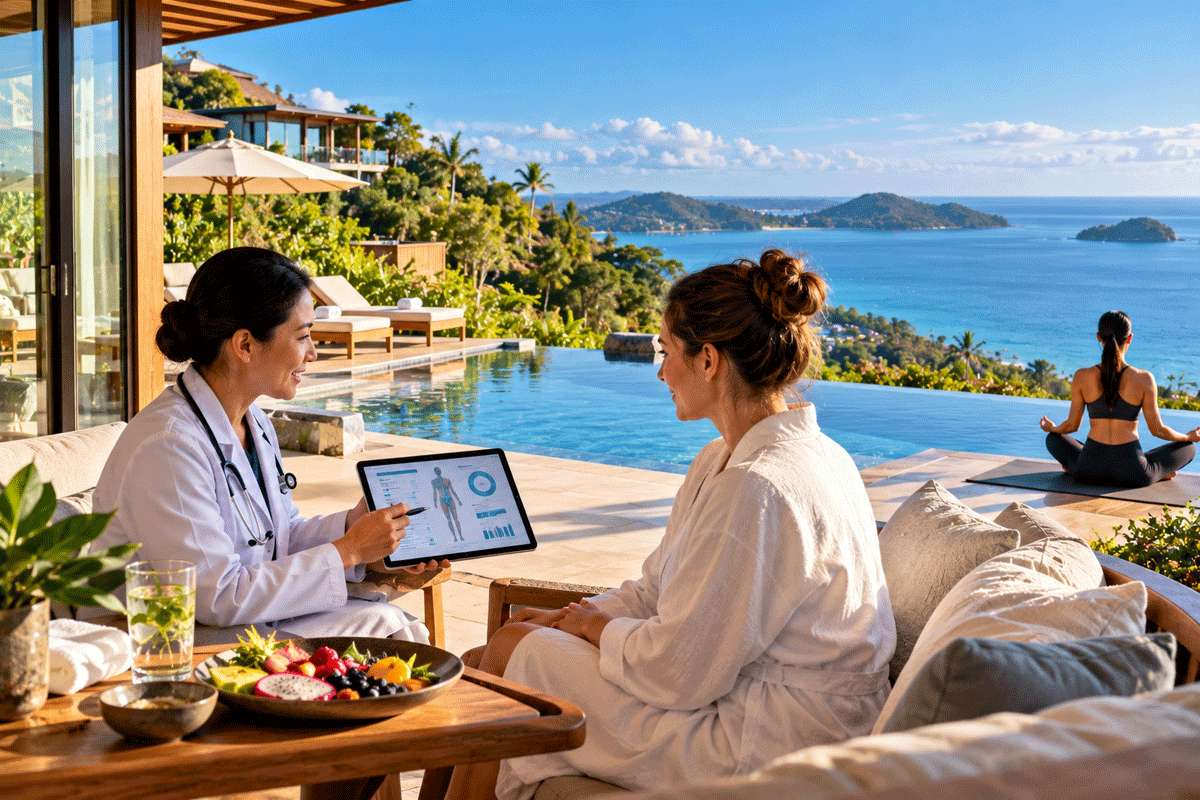
For medical wellness resorts and specialist clinics, the development creates opportunities to combine health assessments with longer stays focused on nutrition, physical activity, sleep and lifestyle management.
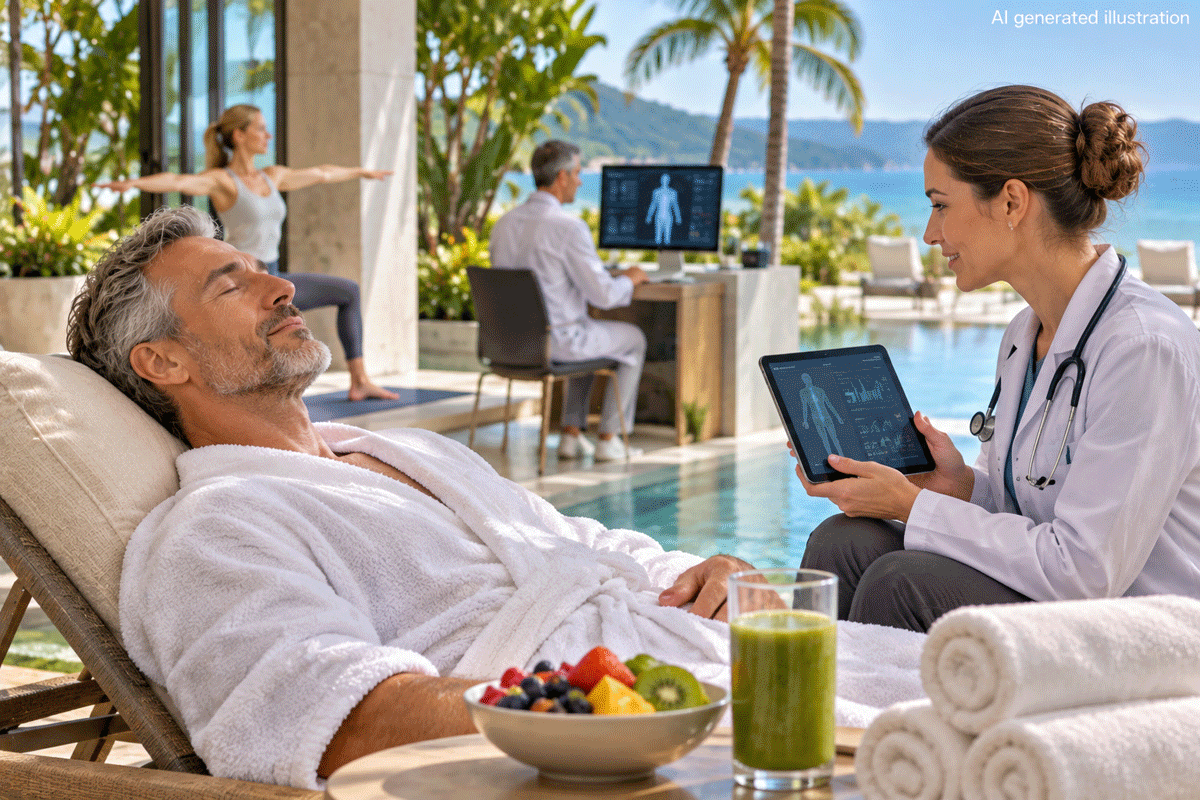
Some providers are moving towards programmes that begin with medical examinations and continue through individually designed interventions and follow-up monitoring. Digital platforms and wearable devices can support this approach by collecting information about physical activity, sleep patterns and other health indicators.
However, more extensive testing does not necessarily produce better health outcomes.
A May 2026 survey by the International Institute of Longevity, examining 22 longevity clinics across four regions alongside a wider group of industry organisations, identified a growing gap between the adoption of advanced diagnostics and the availability of validated clinical evidence.
The report found that longevity clinics are increasingly integrating molecular testing, imaging, behavioural interventions and long-term monitoring. Nevertheless, the development of appropriate measurement standards and clinical accountability has not always kept pace with commercial expansion.
For international patients, this makes transparent information about the purpose, limitations and medical relevance of diagnostic procedures particularly important.
Women's health and nervous-system recovery gain prominence
Medical wellness is also becoming more specialised.
The Global Wellness Summit's 2026 trend analysis identifies women's longevity as an emerging area of development. Rather than treating healthy ageing as a uniform process, providers are increasingly considering health needs associated with different life stages, including menopause, bone health, cardiovascular risk and metabolic changes.
This creates potential demand for programmes combining appropriate medical consultations with physical training, nutrition and preventive health services.
However, established approaches to women's preventive healthcare should be distinguished from experimental interventions marketed as methods of slowing biological ageing. The clinical value of individual treatments requires separate assessment.
Another developing segment is neurowellness, a term used for services intended to support nervous-system regulation, stress management and psychological resilience.
The concept encompasses a wide range of activities, from breathing exercises, meditation and movement-based programmes to sensory environments and consumer neurotechnology.
For wellness destinations, this represents a shift towards experiences designed around rest, recovery and mental wellbeing rather than physical performance alone.
The Global Wellness Institute's 2026 wellness tourism trends also identify demand for deep rest, greater privacy and travel experiences intended to help visitors recover from persistent stress.
These services may be relevant to travellers seeking relief from demanding working environments or disrupted sleep patterns. Nevertheless, commercial neurowellness programmes should not be presented as substitutes for medical treatment of neurological or psychiatric conditions.
Thermal resorts and rehabilitation broaden their offerings
Traditional wellness destinations are also adapting to changing expectations.
The GWI forecasts annual growth of 9.8 percent for thermal and mineral springs between 2025 and 2030, making the sector one of the stronger projected performers within the global wellness economy.
Its 2026 hot springs trends report identifies a movement towards structured recovery programmes, multi-day retreats and greater attention to measurable health outcomes.
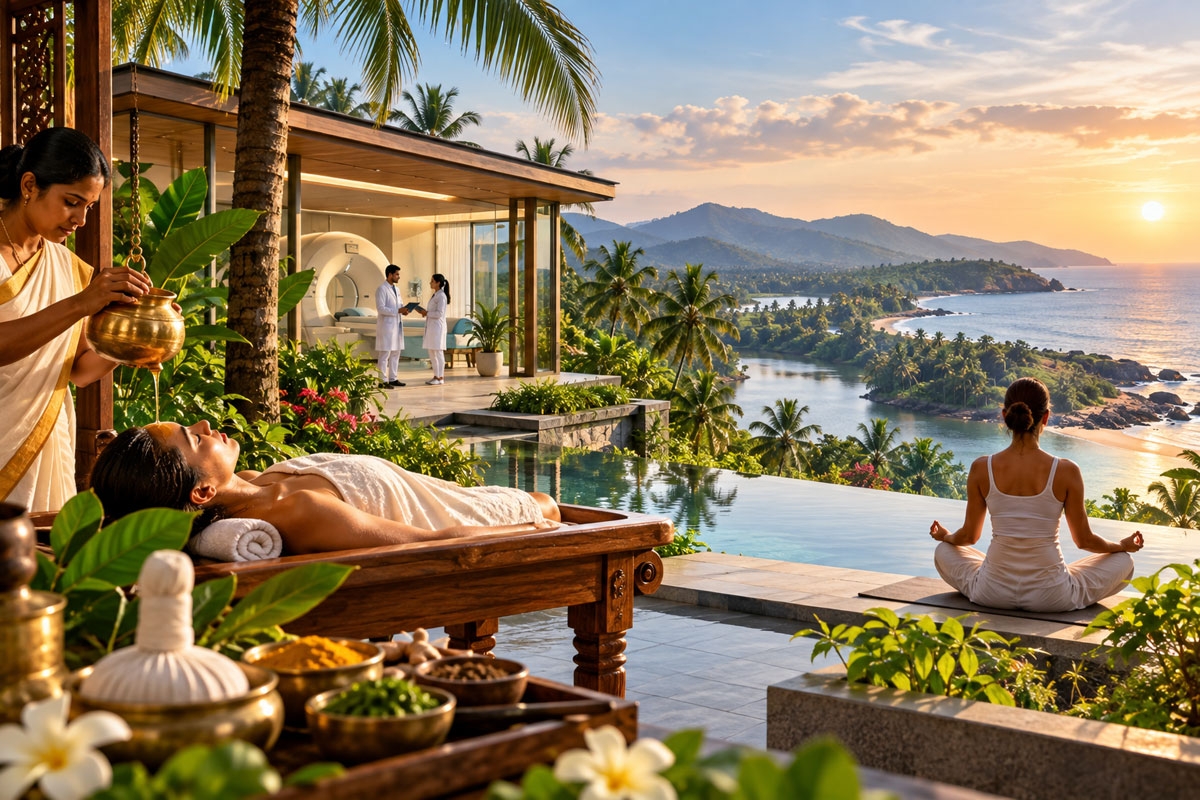
This development is particularly relevant for established thermal destinations in Europe and Asia, where bathing traditions can be combined with physiotherapy, supervised exercise, relaxation and other health-oriented services.
The trend does not necessarily mean that thermal bathing is becoming a medical treatment in itself. Benefits depend on the specific intervention, the patient's condition and the quality of supporting evidence.
For destinations with existing rehabilitation infrastructure, however, the integration of hospitality and professionally supervised recovery services may provide opportunities to attract international visitors seeking longer stays.
The wider growth of lifestyle medicine is reinforcing this development.
The Global Wellness Institute's 2026 lifestyle medicine trends place particular emphasis on physical activity, nutrition, sleep, mental wellbeing and social connection as foundations of preventive healthcare.
Unlike experimental longevity interventions, many lifestyle-based approaches have established roles in reducing disease risk and supporting long-term health, although their effectiveness depends on appropriate implementation and individual circumstances.
Medical credibility becomes a competitive factor
The expansion of medical wellness is creating a more complex market for international travellers.
Traditional spa hotels, preventive medicine clinics, rehabilitation centres and luxury longevity resorts increasingly offer overlapping services, but they operate under different professional, regulatory and clinical frameworks.
The Global Wellness Institute's 2026 wellness tourism analysis explicitly identifies credibility in longevity travel as a major industry concern.
For travellers considering medical wellness programmes abroad, the distinction between general wellbeing services and regulated healthcare is essential.
A resort offering relaxation, exercise and nutrition programmes is not necessarily equipped to provide medical diagnosis or treatment. Similarly, the availability of sophisticated testing equipment does not establish that a particular intervention improves health or extends lifespan.
Providers seeking to develop credible international offerings will need to communicate clearly about medical qualifications, clinical supervision, evidence supporting individual treatments and arrangements for follow-up care.
These requirements may become particularly important as medical wellness destinations seek to attract visitors with existing health conditions rather than exclusively healthy leisure travellers.
The latest GWI figures also demonstrate the geographical breadth of the market's expansion. Wellness tourism expenditure grew particularly strongly in the Middle East and North Africa, sub-Saharan Africa and Asia during 2025, with increases of 21.5 percent, 18.1 percent and 15.6 percent respectively.
Such growth creates opportunities for destinations combining established hospitality infrastructure with healthcare expertise, although regional wellness tourism growth cannot automatically be interpreted as equivalent growth in international medical patient numbers.
The emerging direction of medical wellness is therefore not simply towards more technology or increasingly elaborate treatments. It is also towards longer-term health management, individualised programmes and closer cooperation between hospitality providers and qualified healthcare professionals.
For international health tourism, the central challenge will be to translate this demand into services that combine attractive travel experiences with realistic medical claims, transparent standards and demonstrable benefits.
The industry's next phase is likely to be shaped as much by clinical credibility and continuity of care as by investment in new wellness facilities and longevity technologies.
Image Credit: AI generated illustration