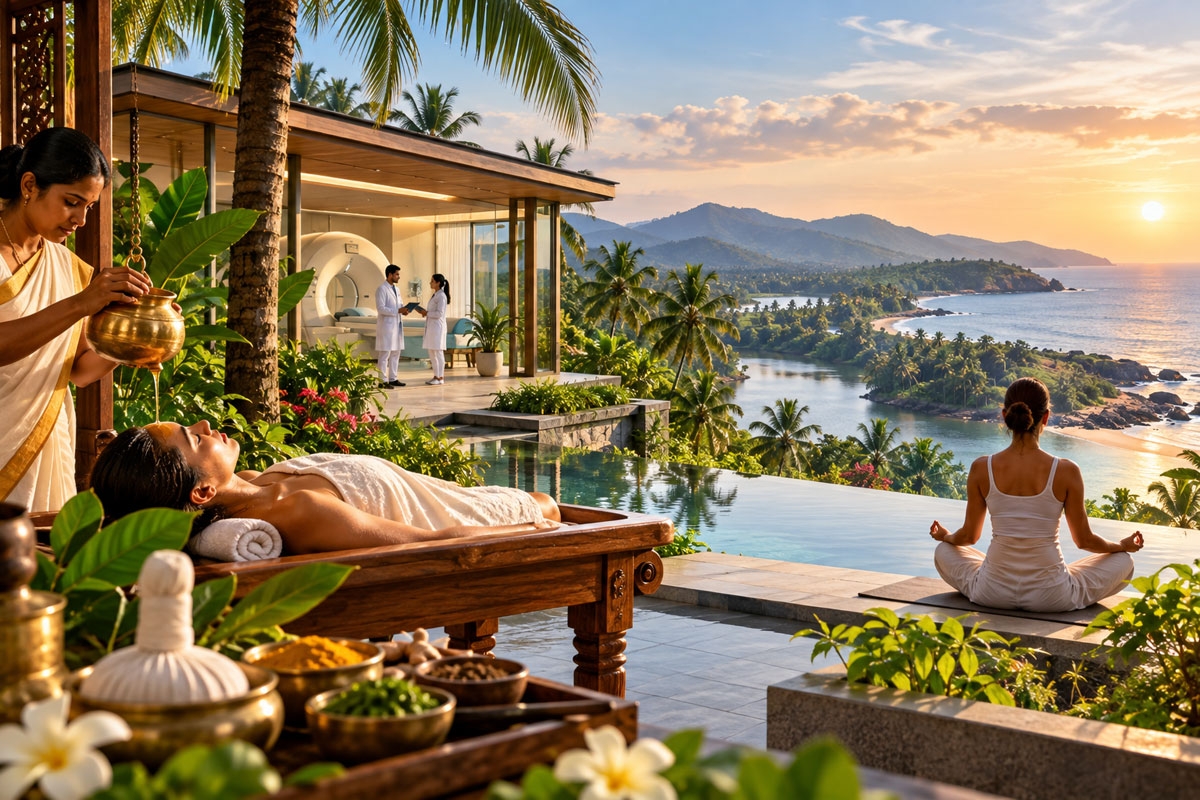
Northern Kerala is combining advanced medicine, Ayurveda and hospitality as the region seeks a stronger position in international health and wellness travel
Malabar in northern Kerala is emerging as a testing ground for a new approach to health tourism in India. Rather than relying solely on Kerala’s internationally established reputation for Ayurveda, the region is increasingly bringing modern hospitals, advanced diagnostics, traditional medicine and resort-style wellness together within a broader healthcare destination.
The development comes as India strengthens its focus on Medical Value Travel and wellness tourism. A national strategy developed by the Ministry of Tourism includes medical and wellness travel, while a dedicated Ayush Visa introduced in 2023 facilitates visits by international patients seeking treatment through Ayurveda and other traditional Indian systems of medicine.
For Malabar, the opportunity lies in combining these national initiatives with assets already available in the region: an established healthcare sector, Kerala’s healing traditions, improving tourism infrastructure and direct international access through airports including Kozhikode.
Malabar connects healthcare and tourism
One initiative seeking to develop this combination is Aura Malabar, which positions the region as a destination for Medical Value Tourism. Its concept brings together hospitals, physicians, modern medical technology and Ayurveda while also addressing the wider patient journey.
The model extends beyond individual medical procedures. International patients increasingly expect assistance with accommodation, transportation, communication and recovery alongside clinical treatment, making cooperation between healthcare providers and the hospitality sector an important part of destination development.
Malabar already has hospitals providing services specifically for international patients, including multilingual assistance, airport transfers, accommodation support and help with travel arrangements.
Clinical wellness adds a new dimension
One of the clearest examples of Malabar’s changing health tourism landscape is Tulåh Clinical Wellness Sanctuary near Kozhikode, which opened in 2026.
Set on a 30-acre site at Kakkancherry, the centre combines Ayurveda, yoga, Vedanta, Tibetan medicine and traditional Chinese medicine with contemporary diagnostics, regenerative therapies and clinical care.
Its approach begins with medical assessment rather than a conventional resort wellness programme. Available diagnostics include genome and microbiome testing, blood biomarkers, cardiovascular and pulmonary assessments, body composition analysis and medical imaging. Advanced programmes can also include MRI, CT coronary calcium scoring and other examinations depending on clinical requirements.
The resulting health data are used to develop individualized programmes combining medical evaluation, physical activity, nutrition and traditional therapeutic approaches.
Kerala strengthens its wellness position
Malabar's development also benefits from Kerala's established international identity as an Ayurveda destination. The state was named Best Wellness Destination in Travel + Leisure India’s 2025 awards, while Kerala Tourism continues to promote Ayurveda as one of the state's core tourism products.
Kozhikode has also become a focal point for discussions about the future of the sector. Kerala Tourism selected the city to host the state's first International Ayurveda–Wellness Conclave in 2026, bringing the wellness industry, healthcare specialists and international stakeholders together.
At national level, India is seeking to strengthen the same connection. The Ministry of Ayush and India Tourism Development Corporation are cooperating on the promotion of Medical Value Travel, while regional summits have brought states including Kerala into efforts to develop India as an international destination for traditional and integrative healthcare.
From Ayurveda destination to healthcare ecosystem
For Malabar, this creates an opportunity to move beyond the conventional distinction between medical tourism and wellness holidays.
A patient might travel for diagnostics, specialist treatment or preventive healthcare while incorporating rehabilitation, Ayurveda, nutrition or a longer period of recovery into the same journey. Conversely, wellness travellers can gain access to medical assessment and evidence-based diagnostics that are rarely part of a conventional resort stay.
This combination could become one of Malabar's distinguishing features in the increasingly competitive Asian health tourism market.
The region does not need to abandon the healing traditions for which Kerala is already known. Its emerging proposition is instead to place those traditions within a wider clinical ecosystem — linking hospitals, diagnostics and physicians with Ayurveda, wellness, hospitality and the natural environment of northern Kerala.
Image Credit: © AI generated illustration