
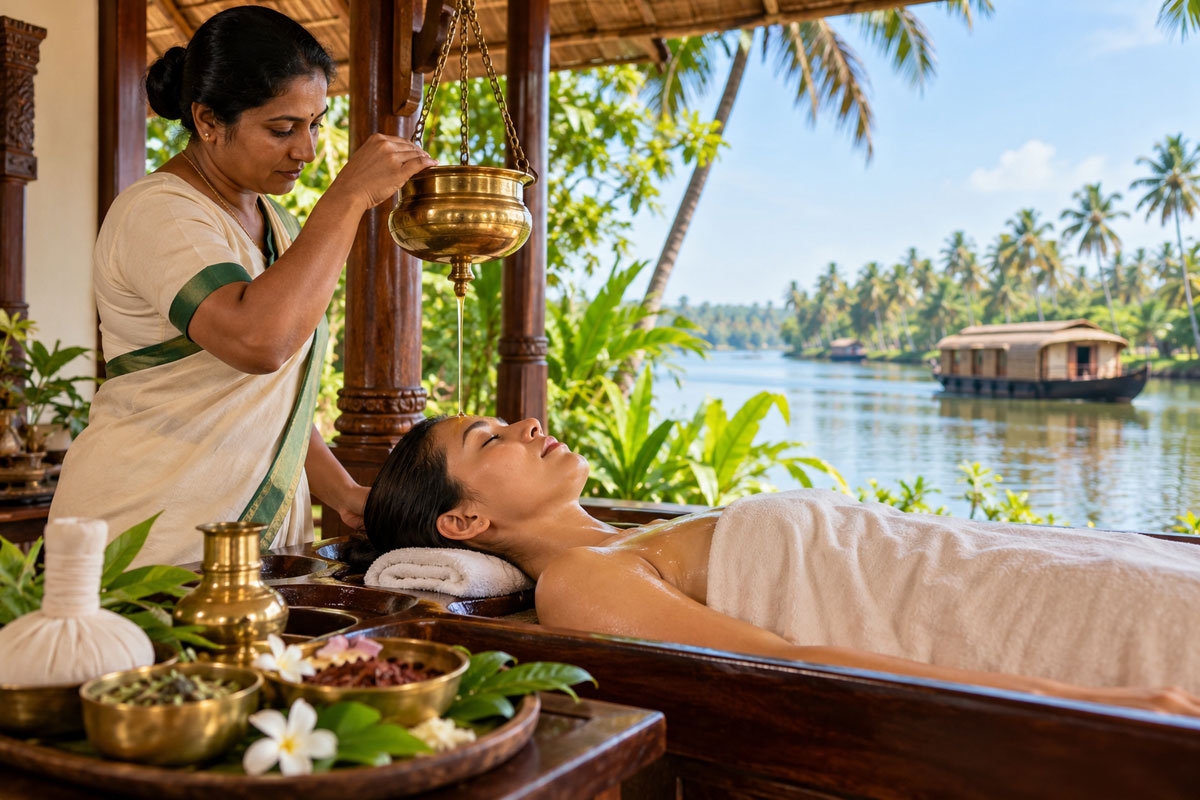
Government initiatives, dedicated medical visas and regional investment are positioning traditional Indian healthcare as an international travel product
India is expanding its international health tourism strategy by placing greater emphasis on Ayurveda, yoga and traditional medical practices. Government initiatives developed through 2026 aim to attract foreign visitors seeking preventive healthcare, wellness programmes and traditional treatments, while strengthening the country's position in the global medical travel market.
India's Ministry of Ayush has outlined measures to promote traditional medicine within the country's wider medical and wellness tourism strategy. These include dedicated visa categories for international patients, cooperation between tourism and healthcare organisations, and initiatives to improve quality standards. The southern state of Kerala, already established as an international Ayurveda destination, is playing a particularly prominent role in these efforts.
The strategy reflects India's ambition to develop two complementary segments of international healthcare travel. While conventional medical tourism focuses on hospital treatment, specialist procedures and diagnostics, Ayurveda-based travel combines traditional therapeutic practices with nutrition, lifestyle programmes and relaxation. The distinction is increasingly important as destinations seek to attract travellers interested in preventive health and longer wellness stays.
Dedicated visas support international patients
One of the central measures is the Ayush Visa, introduced in July 2023 to facilitate travel for foreigners seeking treatment through India's recognised traditional medical systems. The M-3 category covers eligible patients, while the M-4 category is intended for accompanying persons.
These visa arrangements provide a dedicated immigration framework for traditional medical travel rather than requiring visitors to rely exclusively on ordinary tourist visas.
The Ministry of Ayush has also established cooperation with the India Tourism Development Corporation to promote Ayurveda and other traditional medical systems internationally. Regional Medical Value Travel summits in Mumbai in September 2024 and Chennai in May 2025 brought together government representatives, healthcare providers and industry organisations to explore opportunities for developing the sector.
Quality assurance is another element of the strategy. In December 2025, India introduced the Ayush Quality Mark as part of efforts to strengthen standardisation and international confidence in traditional healthcare products and services. The initiative is intended to support the sector's credibility in global markets, although quality certification should not be interpreted as independent evidence of clinical effectiveness.
Kerala invests in its Ayurveda identity
Kerala is among the most visible beneficiaries of India's growing focus on traditional wellness travel. The state has built an international reputation around Ayurveda, combining treatment centres and specialist facilities with coastal resorts, tropical landscapes and established tourism infrastructure.
In 2026, the Kerala government approved funding totalling INR 43.84 million for its Home of Ayurveda 2.0 promotional campaign and a wellness industry conclave in Kozhikode. The allocation included INR 20 million for the promotional campaign and approximately INR 23.84 million for the conclave, illustrating the state's commitment to developing Ayurveda as a tourism product.
Kerala also possesses a substantial traditional healthcare infrastructure. The Kerala Development Report 2026 identifies 130 hospitals and 818 dispensaries operating under the state's Indian System of Medicine department, with a combined hospital capacity of 3,154 beds. These facilities serve broader healthcare functions and should not be regarded exclusively as medical tourism establishments.
For international travellers, Kerala's Ayurveda sector offers different types of experiences, from resort-based relaxation programmes to more structured treatment stays. Traditional practices may include therapeutic massage, dietary guidance, yoga, meditation and Panchakarma procedures.
The integration of these services with accommodation and destination experiences creates opportunities for specialist tour operators, wellness resorts and medical travel intermediaries. It also raises questions about how providers distinguish recreational wellness services from treatments requiring professional medical supervision.
Medical evidence remains an important consideration
Despite Ayurveda's long history and growing international popularity, scientific evidence supporting many of its medical applications remains limited.
According to the US National Center for Complementary and Integrative Health, some small studies suggest potential benefits for symptoms associated with osteoarthritis and type 2 diabetes. However, many trials have methodological limitations, and there is insufficient high-quality evidence to establish the effectiveness of Ayurveda for most medical conditions.
Safety is another concern. Certain Ayurvedic preparations have been found to contain potentially harmful concentrations of lead, mercury or arsenic. International patients therefore need reliable information about product quality, practitioner qualifications and possible interactions with conventional medication.
These considerations are particularly relevant as India promotes traditional medicine to international healthcare travellers. Transparent treatment information, appropriate medical oversight and credible quality standards will be essential for distinguishing responsible providers from purely promotional wellness offerings.
India's broader medical tourism ambitions provide an economic context for the expansion. A government background report published in May 2026 cited industry estimates valuing the country's medical tourism market at approximately USD 8.7 billion in 2025, with projections reaching USD 16.2 billion by 2030. These figures cover the wider medical tourism industry rather than Ayurveda travel alone and represent market estimates rather than confirmed future revenues.
For destinations such as Kerala, Ayurveda represents an opportunity to diversify international visitor demand beyond conventional leisure tourism. The longer-term development of this segment will depend not only on destination marketing and accessibility, but also on demonstrable service quality, patient safety and a clear distinction between traditional wellness practices and evidence-based medical treatment.
Image Credit: © AI generated illustration