Community-led experiences in Peru, Ecuador, Colombia and Brazil are bringing ancestral knowledge, medicinal plants and traditional wellness rituals into international tourism
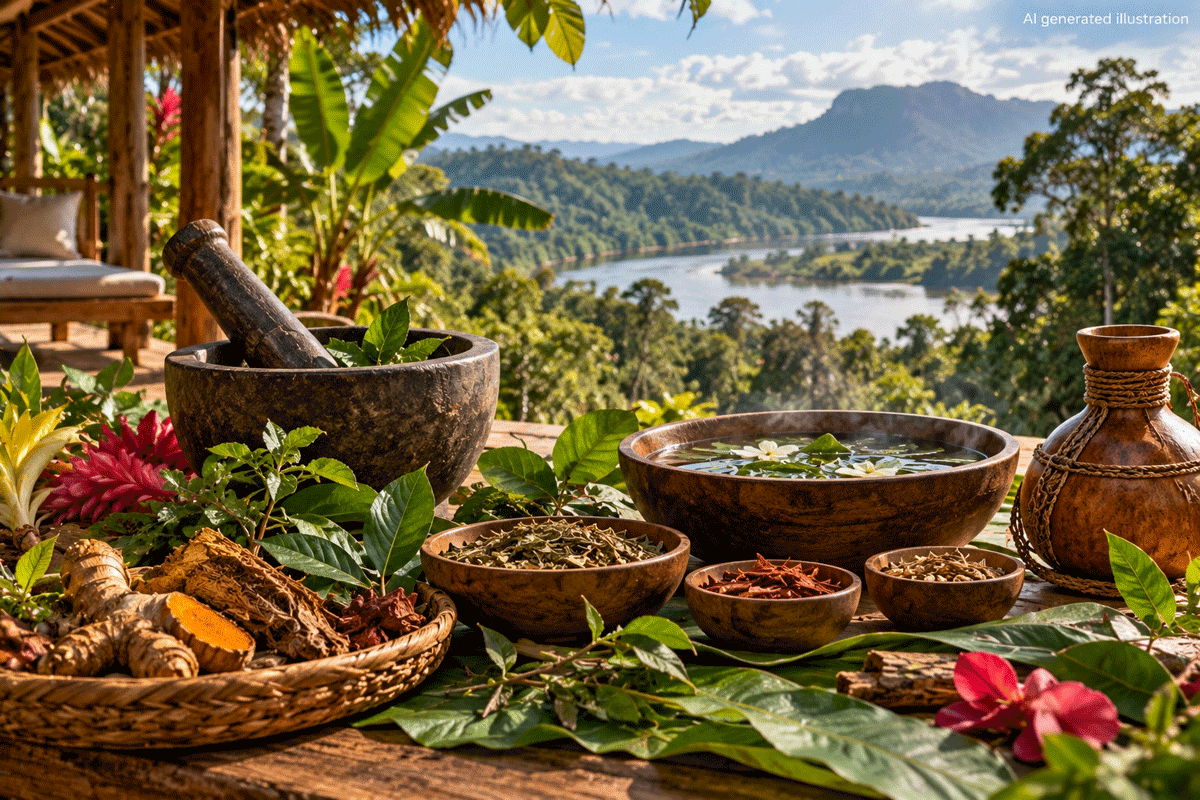
Indigenous healing traditions are gaining visibility within South America's tourism industry as travellers seek experiences combining cultural immersion, nature and personal well-being. From medicinal plant walks in the Amazon rainforest to traditional bathing rituals and Andean healing ceremonies, community-based tourism initiatives are making selected ancestral practices accessible to international visitors. Their development creates opportunities for Indigenous communities while raising important questions about cultural ownership, medical evidence and the commercial use of traditional knowledge.
Recent policy developments are strengthening the foundations for this emerging sector. In July 2026, Peru introduced new regulations supporting community-based tourism, including initiatives managed by Indigenous peoples and communities holding ancestral knowledge. The framework emphasises local participation, cultural preservation and sustainable economic development. Colombia has also increased its focus on Indigenous tourism, hosting the first Latin American and Caribbean Indigenous Tourism Summit in Popayán in October 2025, with representatives from more than 18 countries.
Traditional medicine is simultaneously receiving greater attention within regional healthcare systems. A May 2026 dialogue organised with the participation of the World Health Organization and Pan American Health Organization examined how Indigenous knowledge and traditional practices can contribute to culturally appropriate healthcare. Although these initiatives primarily concern public health rather than tourism, they illustrate the growing institutional recognition of ancestral medical traditions.
Amazon communities develop visitor experiences
Some of the clearest examples of Indigenous wellness-related tourism can be found in Ecuador's Amazon region, where Kichwa communities combine cultural activities with knowledge of medicinal plants and traditional practices.
Near Misahuallí in Napo province, ReGeneración Travel offers a day-long experience with Kichwa women that includes guided walks introducing medicinal and edible plants, traditional food preparation and a wellness activity involving herbal vapour treatments. The programme also features a chocolate-based body treatment and aromatic bathing. These activities are presented as cultural and wellness experiences rather than clinical medical services.
Further east, the Kichwa Añangu community operates tourism experiences in Ecuador's Yasuní region through the Napo Cultural Center and Napo Wildlife Center. Visitors can join guided rainforest walks, learn about traditionally used medicinal plants and participate in cultural exchanges introducing Indigenous customs, food and rituals.
In Peru, the Tambopata region offers comparable opportunities. Tourism experiences promoted by the country's official tourism organisation include guided identification of medicinal plants and explanations of their traditional uses. Posada Amazonas, developed in cooperation with the Ese Eja community near Puerto Maldonado, has also incorporated visits to an ethnobotanical centre where visitors learn about forest plants and traditional knowledge.
These activities illustrate a potentially important distinction within Indigenous wellness tourism. Rather than offering medical treatment, many programmes focus on education, cultural exchange and an understanding of traditional relationships between people, plants and their environment.
Colombia and Brazil connect rituals with cultural tourism
Colombia is developing tourism products that explicitly incorporate ancestral wellness practices.
In the Sibundoy Valley of Putumayo, an experience promoted through Colombia's official tourism platform introduces visitors to the knowledge of the Camëntsá people. The programme, offered through Rio Selva Viajes, combines traditional plant knowledge with aromatherapy, music, artistic activities and harmonisation rituals.
The initiative reflects a broader effort to make Indigenous cultural heritage part of Colombia's tourism offering while creating economic opportunities for local communities.
Brazil provides another example through Indigenous tourism in the Amazon and along the Atlantic coast.
The country's official tourism promotion platform features cultural immersion experiences with Indigenous communities along the Rio Negro near Manaus. Visitors participate in guided forest walks and learn about plants traditionally used by local communities, alongside music, crafts and cultural activities.
In Bahia, the Pataxó Porto do Boi Reserve near Caraíva offers community-led cultural experiences that may include traditional herbal baths and ceremonies associated with the lunar calendar. Tourism activities at the reserve have been organised by the community since 2004.
These examples demonstrate how Indigenous wellness practices can form part of broader cultural tourism products without necessarily becoming standalone therapeutic services.
Bolivia's Kallawaya tradition holds international significance
Among South America's most internationally recognised Indigenous medical traditions is that of the Kallawaya people in Bolivia.
The Kallawaya are known for an extensive body of botanical knowledge, traditional healing practices and ceremonies developed in the Andean region north of La Paz. Their cultural tradition was proclaimed by UNESCO in 2003 and subsequently incorporated into the Representative List of the Intangible Cultural Heritage of Humanity.
UNESCO describes a traditional pharmacopoeia encompassing approximately 980 plant species, reflecting knowledge accumulated through generations of travel across different ecological environments.
The tradition remains culturally significant, although its international tourism potential is less developed than some of the visitor experiences available in Peru, Ecuador and Colombia.
In August 2026, the Bolivian Catholic University presented a documentary examining Kallawaya herbal knowledge and traditional medicine at the National Museum of Ethnography and Folklore's annual ethnology gathering. The initiative highlights continuing efforts to document and preserve practices that face pressures from cultural change and the loss of traditional knowledge.
For tourism development, the challenge is to create opportunities for respectful cultural exchange without reducing complex medical and spiritual traditions to commercial performances.
Medical credibility and community control remain essential
The expansion of Indigenous wellness tourism presents opportunities but also significant responsibilities.
Traditional knowledge of medicinal plants can have cultural, historical and scientific value. However, the longstanding use of a plant or ritual does not establish that it is safe or effective for treating a particular medical condition. Some botanical preparations may contain pharmacologically active substances, interact with medication or cause adverse effects.
The distinction becomes especially important when tourism operators describe ceremonial or traditional practices as healing treatments. Cultural experiences, relaxation programmes and medically supervised therapies require different standards of evidence, professional responsibility and consumer information.
Practices involving psychoactive plants or substances raise additional concerns, including medical risks, informed consent and differing national legal requirements. Such activities should not be treated as interchangeable with conventional wellness services.
Community participation is equally important. Research into Indigenous tourism in Brazil has emphasised the need for local communities to retain control over how their knowledge and cultural resources are presented to visitors.
This includes decisions about which practices may be shared publicly, how revenues are distributed and whether traditional knowledge is protected against unauthorised commercial exploitation.
For international tourism operators, responsible partnerships require more than employing local guides. They depend on meaningful community leadership, transparent agreements and respect for practices that communities may consider sacred or private.
South America's Indigenous wellness tourism sector remains fragmented, and reliable statistics measuring its international visitor numbers or economic value are not yet available. Nevertheless, existing programmes demonstrate that there is already a marketable range of experiences connecting traditional knowledge with nature-based travel.
The strongest development opportunities may lie in carefully designed cultural wellness programmes that combine community-led activities, appropriate accommodation and accessible tourism infrastructure. Such offerings could attract travellers interested in relaxation, cultural learning and environmental sustainability without making unsupported medical claims.
For Indigenous communities, the potential benefit extends beyond tourism revenue. When developed on their own terms, these experiences can support the transmission of traditional knowledge, strengthen cultural identity and create economic incentives for protecting natural environments that remain central to ancestral healing traditions.
Image Credit: AI generated illustration