Rest and recovery are becoming travel products in their own right as hotels combine sleep science, technology and wellness services
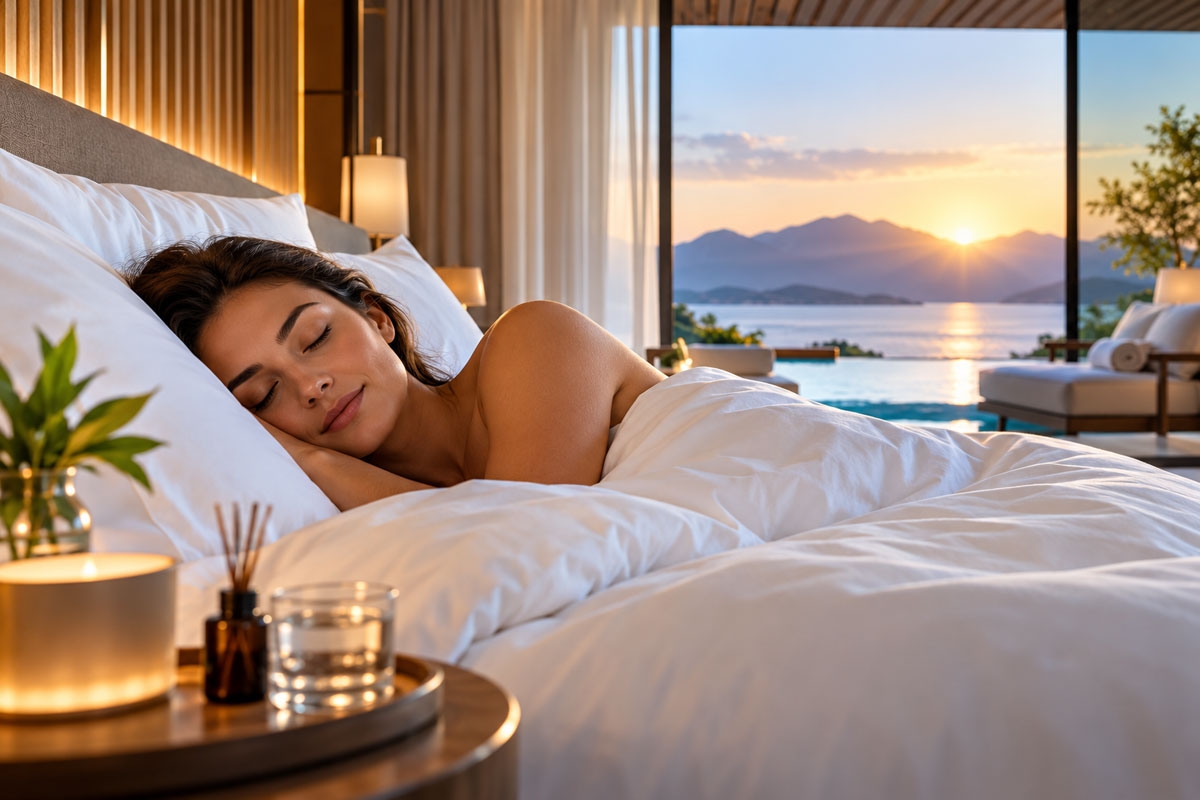
Sleep is moving from a basic hotel amenity to a central part of the travel experience. Hotels and wellness resorts are increasingly developing dedicated programs around restorative sleep, while recent traveler surveys suggest that rest itself has become an important reason for taking a trip.
The development is giving rise to what has become known as “sleep tourism” or the “sleepcation”: trips in which improving sleep, reducing fatigue and recovering from everyday stress take priority over a packed sightseeing itinerary.
Rest becomes a reason to travel
Hilton’s 2026 Trends Report provides an indication of the scale of the shift. In research conducted by Ipsos among 14,009 adults planning to travel across 14 countries, 56 percent identified “to rest and recharge” as their number one motivation for leisure travel in 2026.
Other motivations identified in the research reinforce the connection between travel and well-being. Thirty-seven percent of respondents wanted to spend time in nature, while 36 percent cited improving their mental health.
A separate KAYAK study conducted among 1,121 US consumers who had traveled domestically or internationally during the previous two years found that 85 percent had felt sleep-deprived during the previous year. More than half, 55 percent, said they would book a sleepcation.
“We’re in a time where burnout is at an all-time high and people are struggling to achieve restorative sleep in their home lives,” sleep specialist Dr. Angela Holliday-Bell said in connection with the KAYAK research.
Hotels turn sleep into a specialized product
Hospitality companies are responding with increasingly sophisticated offerings.
At Equinox Hotel New York, the Sleep Lab has been developed in partnership with Dr. Matthew Walker, professor of neuroscience and psychology at the University of California, Berkeley. The experience combines an adaptive mattress, personalized sleep and wake automation, overnight sleep measurement, circadian-light concepts, soundscapes and a sleep assessment.
Rates for the Sleep Lab currently start at approximately $1,700 per night.
Park Hyatt New York has taken another approach with its One Bedroom Sleep Suite by Bryte. The 83-square-meter suite incorporates a Restorative Bed by Bryte alongside blackout curtains, individual climate control, sleep masks, an essential-oil diffuser and other features intended to create a more controlled sleeping environment.
Sleep-focused wellness is also extending beyond individual hotel rooms. Six Senses offers dedicated sleep programs at resorts in Europe, Asia, the Middle East and other regions. Depending on the property, the programs combine sleep tracking and analysis with advice from sleep specialists, meditation, yoga nidra, wellness treatments, nutrition and low-intensity exercise.
Health data provide a wider context
The commercial trend is developing against a broader background of widespread fatigue. A report released by the US National Center for Health Statistics in September 2026, based on the 2024 National Health Interview Survey, found that around one in six US adults experienced frequent fatigue, defined as feeling very tired or exhausted most days or every day during the previous three months.
The prevalence was highest among adults aged 18 to 34, at 19.5 percent, compared with 12.9 percent among people aged 65 and older.
The figures measure fatigue rather than sleep disorders and therefore do not establish a direct connection with demand for sleep tourism. They nevertheless illustrate the wider health environment in which products centered on rest and recovery are emerging.
From hotel amenity to wellness segment
Sleep tourism remains a loosely defined segment rather than a medical treatment category. The growing range of dedicated products, however, shows how hospitality and wellness providers are turning sleep quality into a distinct component of the travel experience.
The development also reflects a broader change in wellness travel. Instead of adding spa treatments or fitness activities to a conventional vacation, some products now place a specific health-related objective at the center of the trip itself.
For hotels and wellness resorts, sleep therefore represents more than another room feature. It is becoming a specialized product around which technology, hospitality, recovery services and increasingly sleep science can be combined.
Image Credit: © AI generated illustration