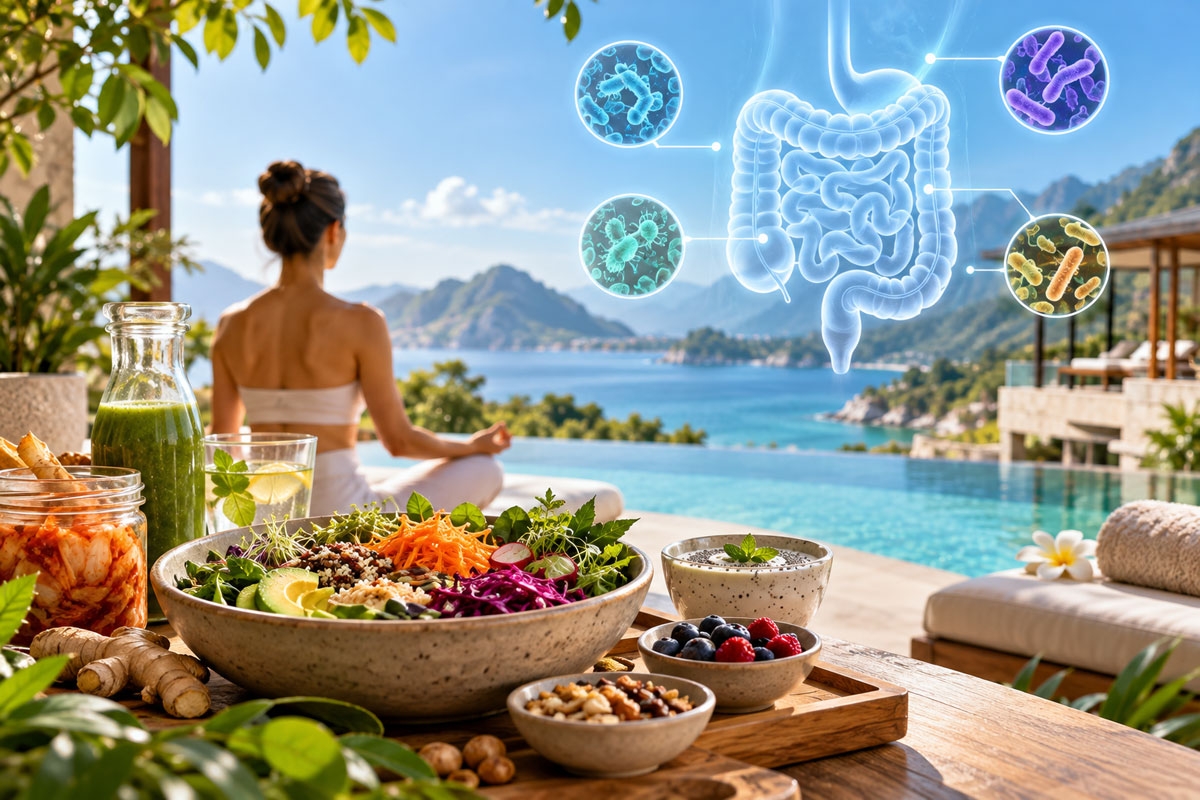
From microbiome testing in Switzerland to personalized nutrition retreats in Thailand, digestive health is becoming a new focus of international wellness tourism
A new specialization is taking shape in international wellness tourism as luxury resorts, medical wellness centers and specialized retreats increasingly focus on one of the body's most complex biological systems: the gut microbiome. Known as gut health tourism or microbiome tourism, the emerging segment combines personalized nutrition, digestive health assessments, lifestyle interventions and restorative travel experiences.
The development reflects growing scientific and public interest in the trillions of microorganisms inhabiting the human digestive tract. Research has established that the intestinal microbiome plays an important role in digestion, metabolism and immune function, while studies continue to investigate its connections with neurological processes, sleep and psychological wellbeing.
For the hospitality industry, this interest is creating opportunities to develop programmes extending beyond conventional spa treatments. Instead of concentrating exclusively on relaxation, weight management or physical fitness, specialized retreats are introducing nutritional consultations, digestive health assessments and individually designed dietary programmes.
Recent industry research suggests that consumer interest is accelerating. According to figures cited from BookRetreats' 2026 wellness travel report, interest in gut-health-related retreats increased by 52%, placing digestive health among the fastest-growing treatment categories identified by the platform.
The emerging market is attracting established medical wellness providers as well as luxury hospitality companies seeking to expand their preventive health offerings.
Austria builds on its tradition of digestive health retreats
Austria has a long history of medical wellness programmes centered on digestive health, particularly through the principles associated with physician Franz Xaver Mayr.
Developed during the early twentieth century, the Mayr approach traditionally emphasizes dietary habits, digestive rest and lifestyle modification.
Contemporary medical wellness resorts have adapted elements of this philosophy by incorporating diagnostic assessments, nutritional counseling, physical activity and individualized health programmes.
MAYRLIFE, located on the shores of Lake Altaussee in the Austrian Alps, illustrates this development.
Its Health Potential Reset programme combines medical examinations and diagnostic procedures with personalized nutrition, movement therapy and stress management.
Guests participate in structured programmes designed around individual health objectives, with dietary recommendations and lifestyle guidance intended to continue after their stay.
The setting itself forms part of the experience. Surrounded by Alpine landscapes, the retreat offers an environment where guests can temporarily distance themselves from everyday routines while following a supervised wellness programme.
However, the historical Mayr philosophy and modern evidence-based gastroenterology should not be considered interchangeable. The clinical benefits of individual interventions depend on the specific treatment and the scientific evidence supporting it.
Switzerland introduces personalized microbiome programmes
Switzerland offers another example of how digestive health is being incorporated into high-end medical hospitality.
At Grand Resort Bad Ragaz, a luxury resort known for its thermal facilities and medical wellness services, the My Microbiome programme places particular emphasis on individualized nutritional strategies.
The programme incorporates laboratory assessments and dietary recommendations intended to address digestive health and the composition of the intestinal microbiome.
The resort combines these services with its established medical infrastructure and specialized wellness facilities.
Such programmes illustrate a broader development in luxury hospitality: the growing integration of diagnostic services and medical consultations into experiences traditionally associated with spa treatments and relaxation.
For international guests, the attraction lies in combining professional healthcare services with accommodation, personalized nutrition and restorative surroundings.
The growing availability of microbiome-related testing nevertheless raises questions about how laboratory results should be interpreted and whether they can reliably guide treatment decisions.
Thailand combines nutrition, probiotics and traditional therapies
In Southeast Asia, Chiva-Som in Hua Hin has developed a dedicated Gut Health retreat that incorporates nutrition, physical activity and traditional wellness treatments.
The programme emphasizes dietary approaches involving natural nutrients, probiotics and fiber, supported by consultations with the resort's wellness professionals.
Guests receive individualized guidance and participate in activities intended to support general wellbeing and healthier lifestyle habits.
The retreat also includes access to fitness activities, spa facilities and specialized treatments.
Among its distinctive offerings is a holistic abdominal massage combining elements of traditional Asian therapeutic practices.
While massage may provide relaxation and subjective comfort, claims that such treatments can directly correct microbiome imbalances or treat gastrointestinal disorders require stronger clinical evidence.
Chiva-Som's approach nevertheless demonstrates how established wellness destinations are incorporating digestive health into their broader programmes.
For international travellers, Thailand offers a combination of hospitality infrastructure, specialized wellness services and established traditions of therapeutic treatments.
Mexico expands the medical wellness approach
The growing interest in gut health is also influencing medical wellness providers outside Europe and Asia.
SHA Wellness, which operates facilities in Spain and Mexico, offers specialized Gut Health programmes within its broader preventive health and longevity services.
At SHA Mexico, digestive health programmes can include professional consultations, assessments of intestinal microbial composition and individualized nutritional guidance.
Additional services may involve complementary treatments and lifestyle interventions intended to address digestive discomfort and support general wellbeing.
The programme illustrates the increasing overlap between wellness tourism and medical services.
Rather than offering standardized spa packages, providers are developing combinations of diagnostic procedures, professional consultations and personalized interventions.
However, not all treatments marketed for digestive health have equivalent scientific support. Procedures such as intestinal ozone therapy remain controversial and should not be presented as established treatments for microbiome disorders.
The gut-brain connection attracts growing attention
One of the reasons microbiome tourism is gaining visibility is the expanding scientific interest in communication between the digestive system and the brain.
The gut-brain axis describes a complex network involving neural, hormonal, immune and metabolic pathways.
Research suggests that intestinal microorganisms can influence some of these processes, although many questions remain about their significance for human health and the potential benefits of targeted interventions.
A 2025 scientific review published in Nature Reviews Microbiology examined the relationship between gut microorganisms, brain activity and behavior, highlighting the bidirectional nature of communication between the microbiome and the nervous system.
For wellness providers, this research has encouraged the development of programmes combining digestive health with stress management, sleep improvement and mental wellbeing.
At Minos Palace Resort in Crete, the Nao Longevity Hub offers a six-day Gut-Brain Reset programme incorporating microbiome assessment, personalized nutrition, movement and restorative activities.
The concept reflects the convergence of several emerging travel segments, including longevity tourism, sleep-focused retreats and neurowellness.
Nevertheless, the existence of a biological connection between the gut and brain does not establish that commercial microbiome interventions can reliably improve mood, cognition or sleep.
Scientists question the value of commercial microbiome tests
The rapid commercialization of microbiome-related wellness services has prompted growing scientific scrutiny.
An international consensus statement published in The Lancet Gastroenterology & Hepatology in 2025 concluded that evidence supporting the routine clinical use of microbiome testing remains limited.
The experts warned that commercially available tests may generate results whose medical significance is uncertain.
Although microbiome research has advanced considerably, scientists have not established a universally applicable definition of an optimal intestinal microbiome.
Microbial composition varies between individuals and can be influenced by diet, medication, age, geography and numerous other factors.
A separate international consensus statement published in Nature Reviews Gastroenterology & Hepatology in February 2026 emphasized the need for greater clarity in defining and assessing gut health.
These findings are particularly relevant for medical wellness providers offering expensive diagnostic packages.
A microbiome test may generate extensive biological information without necessarily providing clinically actionable recommendations.
For consumers, the distinction between scientifically validated diagnostic procedures and exploratory wellness assessments is therefore essential.
Personalized nutrition becomes a central component
Despite the uncertainties surrounding commercial microbiome testing, several established lifestyle practices can contribute to digestive health.
Dietary diversity, adequate fiber intake and regular consumption of plant-based foods are widely recognized as important elements of healthy eating patterns.
Vegetables, fruits, legumes, whole grains, nuts and seeds provide nutrients and substrates used by intestinal microorganisms.
Certain fermented foods may also contribute beneficial microorganisms, although their effects depend on the specific product and microbial strains involved.
Regular physical activity, sufficient sleep and appropriate stress management can support overall health and may also influence digestive function.
For wellness resorts, these recommendations create opportunities to develop nutrition-focused experiences incorporating cooking classes, dietary consultations and individualized meal planning.
The challenge is ensuring that personalized nutrition remains grounded in established nutritional science rather than unsupported claims about restoring an ideal microbiome.
A new opportunity for medical wellness destinations
Gut health tourism is emerging at the intersection of several developments reshaping international travel.
Growing interest in preventive healthcare, personalized nutrition, longevity and mental wellbeing is encouraging travellers to seek experiences addressing specific health objectives.
For medical wellness destinations, digestive health provides a recognizable theme around which structured programmes can be developed.
Austria and Switzerland already have established traditions of medical wellness and nutritional therapy, while destinations such as Thailand, Mexico and Greece are incorporating digestive health into broader hospitality concepts.
The business potential extends beyond accommodation and spa treatments to nutritional counseling, diagnostic services, specialized cuisine and follow-up programmes.
However, long-term credibility will depend on the ability of providers to distinguish evidence-based interventions from experimental procedures and marketing claims.
Unlike conventional spa tourism, microbiome-focused programmes increasingly involve questions that require medical expertise, particularly when guests have persistent digestive symptoms or diagnosed gastrointestinal conditions.
The development of responsible services will therefore require appropriate professional supervision, transparent information and realistic expectations.
From luxury retreat to lasting lifestyle changes
The emergence of microbiome tourism reflects a wider transformation in wellness travel.
Travellers are increasingly seeking programmes that address specific aspects of their health rather than offering relaxation alone.
Digestive health provides an attractive focus because it connects everyday nutrition with broader questions about metabolism, immunity and wellbeing.
Yet the most valuable outcome of a gut-health retreat may not be a sophisticated laboratory report or an expensive therapeutic procedure.
It may instead be the opportunity to establish healthier dietary habits, receive qualified nutritional guidance and develop routines that can be maintained after returning home.
For the international wellness tourism industry, the challenge will be turning growing interest in the microbiome into credible, sustainable services that offer benefits extending beyond the duration of a holiday.
Image Credit: © AI generated illustration