Luxury wellness retreats are moving beyond traditional spa treatments as diagnostics, preventive healthcare and personalised programmes become increasingly important parts of the travel experience
Wellness tourism is changing character. Yoga, meditation and traditional therapies remain important, but a growing number of high-end retreats are combining them with medical assessments, health data and programmes tailored to individual needs. Recent concepts in India and Japan illustrate how the boundaries between wellness travel, preventive healthcare and longevity are becoming increasingly fluid.
Travel specialist FYNE Travel sees the trend as part of a broader shift in what travellers expect from wellness-focused journeys. According to Verena Weigelt, owner of FYNE Travel Düsseldorf, customers are increasingly looking beyond the size and scope of a hotel's spa facilities. Experiences connected to a destination, its natural environment and its traditions are gaining importance, turning wellness itself into a reason for travelling.
Kerala combines diagnostics with traditional medicine
One of the clearest examples of this development can be found in northern Kerala. Opened in 2026, tulåh Clinical Wellness combines traditional systems including Ayurveda, yoga, Vedanta, Tibetan medicine and Traditional Chinese Medicine with modern diagnostics and regenerative approaches.
The concept extends beyond the stay itself. Health and wellness assessments can begin before arrival, while clinical programmes may include physician consultations, laboratory testing and diagnostic procedures. Genome and microbiome testing, cardiovascular and performance assessments and medical imaging are among the diagnostic options available.
The results are used to develop personalised programmes combining medical expertise with nutrition, movement, restorative therapies and traditional healing practices. This makes the retreat an example of a wider development in which wellness travel is increasingly incorporating elements previously associated primarily with preventive medicine and specialist healthcare.
Women's health becomes a travel theme in Kyoto
A different form of specialisation is emerging in Japan. Six Senses Kyoto is preparing a women-focused retreat designed around health and wellbeing across different stages of life.
Scheduled for December 2026, “The Way of a Woman” combines modern approaches to women's health with traditional Eastern practices and Japanese cultural elements. Topics include hormonal health and transitions ranging from family planning and pregnancy to menopause and later life.
The programme incorporates wellness screenings and sleep-tracking technology alongside movement, meditation and educational sessions. Japanese traditions are also part of the experience, including kintsugi, the art of repairing broken ceramics with lacquer and gold powder, which is used as a metaphor for accepting change rather than concealing it.
Nature remains part of the treatment experience
Elsewhere, the trend is less clinical but similarly focused on making the destination itself part of the wellness experience.
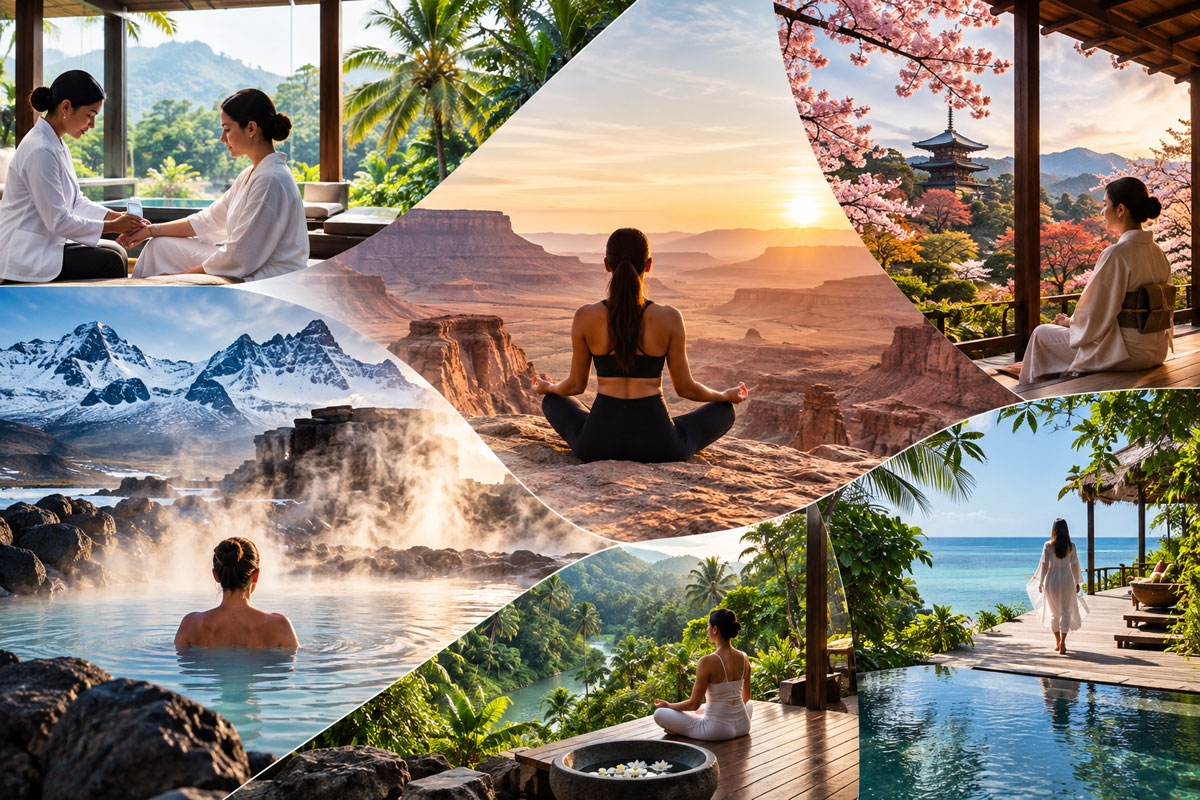
At Amangiri in Utah, yoga and meditation take place among the rock formations of the Colorado Plateau, while mindfulness walks lead through the surrounding canyons. Treatments draw inspiration from regional traditions and natural materials.
In northern Iceland, Eleven Deplar Farm uses the contrasting elements of the landscape as part of its approach. Cold plunges, breathing techniques, warmth, movement and recovery are combined in an environment shaped by mountains, rivers and the North Atlantic climate.
Palmaïa – The House of AïA on Mexico's Caribbean coast incorporates meditation, sound-based practices and yoga into a retreat environment surrounded by tropical vegetation, while COMO Shambhala Estate near Ubud in Bali combines yoga, Tai Chi, Qigong and meditation with individually designed wellness programmes.
From spa tourism to personalised health journeys
What links these very different destinations is a move away from wellness as an additional hotel amenity. The experience itself is increasingly becoming the reason for travelling.
At the more medically oriented end of the market, developments such as tulåh also show how far this transition can go. Diagnostics, physician-led assessments and personalised health data are entering a sector once dominated by massages, fitness and relaxation.
For the international health tourism industry, this creates an expanding segment between conventional wellness holidays and medical travel: travellers who are not necessarily seeking treatment for an acute condition, but who are willing to travel for prevention, longevity, personalised health assessment and a more intensive approach to their physical and mental wellbeing.
Image Credit: © AI generated illustration