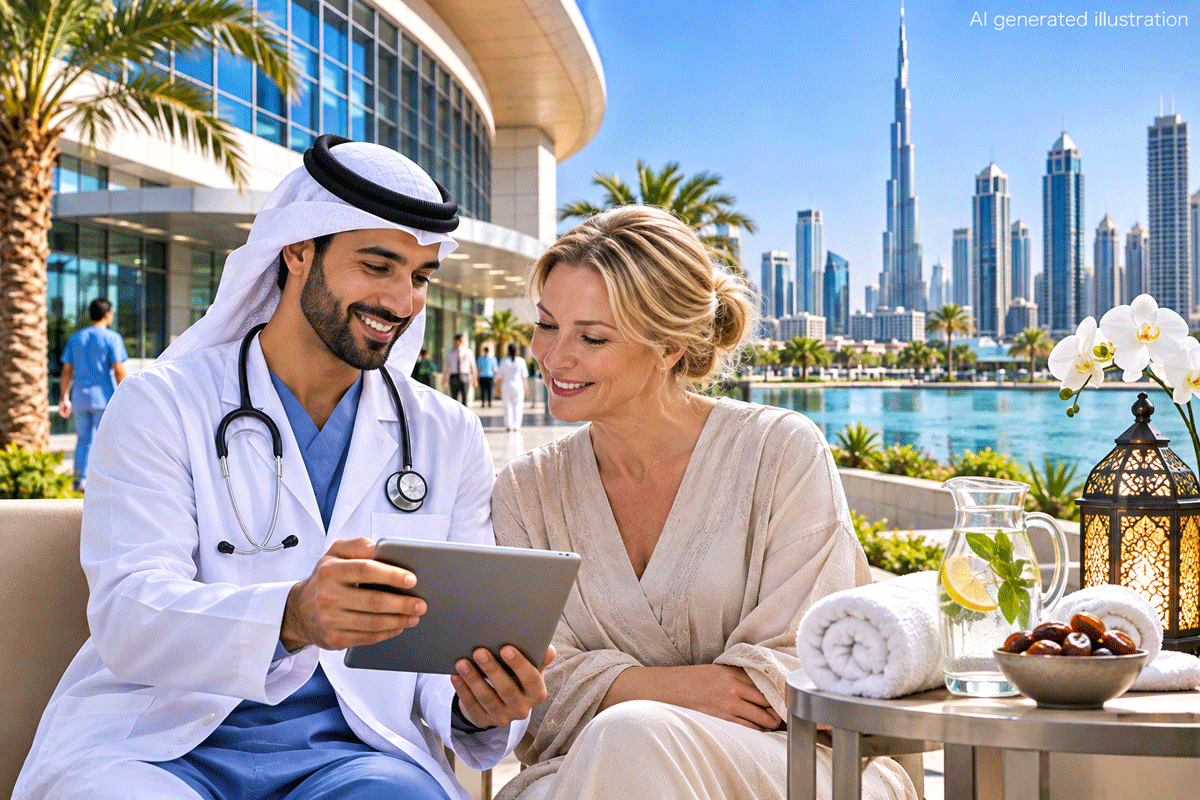
Dubai and Abu Dhabi combine international hospital networks, specialist healthcare and luxury wellness experiences to attract patients from across the Middle East and beyond
The United Arab Emirates has developed into one of the Middle East’s most prominent destinations for international medical and wellness tourism. Supported by extensive aviation connections, substantial healthcare investment and an expanding network of private hospitals, the country attracts patients seeking specialist treatment, preventive medicine and premium healthcare services. Dubai and Abu Dhabi form the two principal centres of this development, each pursuing a distinct approach to international patient care.
Unlike destinations that compete primarily on low treatment costs, the UAE positions itself around medical expertise, modern facilities, international accessibility and a high standard of hospitality. Its healthcare sector brings together internationally established hospital brands, regional medical groups and specialist institutions offering services ranging from complex surgery and oncology to fertility treatment, rehabilitation and preventive health programmes. For many international patients, the combination of medical services with convenient travel arrangements and accommodation is an important advantage.
The country's medical tourism ambitions also reflect a broader economic strategy. Healthcare has become a significant area of investment as the Emirates seek to diversify their economies and strengthen their position as international centres for knowledge-intensive services. Government initiatives in Dubai and Abu Dhabi support healthcare development, while regulatory authorities oversee medical licensing, clinical standards and patient protection.
Dubai: International access and private healthcare
Dubai is the UAE's most internationally visible medical tourism destination. Its extensive air connections, established hotel infrastructure and multilingual service environment make it particularly accessible to patients travelling from the Gulf, Africa, South Asia and other international markets.
The Dubai Health Authority has promoted the emirate as a destination for international healthcare through the Dubai Health Experience initiative, commonly known as DXH. The programme connects medical tourism promotion with licensed healthcare providers and services intended to help patients navigate treatment arrangements.
Dubai's medical sector includes major private hospital groups such as Mediclinic, American Hospital Dubai, King's College Hospital London Dubai and Saudi German Hospital. These institutions contribute to a diversified healthcare market that serves both the emirate's international resident population and patients arriving from abroad.
Among the most prominent treatment areas are orthopaedics, cosmetic and reconstructive surgery, dentistry, fertility medicine, ophthalmology and specialist diagnostics. Cardiology, oncology and other complex disciplines also form part of the emirate's hospital services, although the availability of individual procedures and specialist teams varies between institutions.
Dubai Healthcare City has played a particularly visible role in the development of the sector. Established as a dedicated healthcare and medical education district, it accommodates hospitals, outpatient facilities, specialist practices and related businesses. Its concentration of medical services illustrates Dubai's approach to creating an internationally oriented healthcare ecosystem.
For international patients, the emirate's tourism infrastructure offers practical advantages. Medical appointments can be combined with hotel accommodation, airport transfers and, where clinically appropriate, accompanying family members' travel arrangements. However, medical travel packages require careful assessment, particularly when treatment involves surgery, anaesthesia or a significant recovery period.
Dubai's position as a premium destination also influences pricing. While certain procedures may be competitively priced against private healthcare in Western countries, the emirate is generally not a low-cost alternative to established medical tourism markets such as India, Thailand or Türkiye.
Abu Dhabi: Complex medicine and international hospital partnerships
Abu Dhabi has developed a different profile, placing greater emphasis on complex medical treatment, specialist centres and research-oriented healthcare. The emirate's strategy includes partnerships with internationally recognised institutions and the development of advanced clinical services that previously required some patients to travel overseas.
Cleveland Clinic Abu Dhabi is a prominent example. Established through a partnership involving Cleveland Clinic and Mubadala, the hospital provides specialised services in cardiovascular medicine, neurosciences, digestive diseases and other complex disciplines. It has also developed multi-organ transplantation capabilities, strengthening Abu Dhabi's position in advanced tertiary healthcare.
Other important institutions include Sheikh Shakhbout Medical City, developed through a partnership between Abu Dhabi's healthcare authorities and Mayo Clinic, and Sheikh Khalifa Medical City. The emirate also hosts specialist oncology, rehabilitation and paediatric services.
The Department of Health – Abu Dhabi has introduced a Centres of Excellence framework recognising facilities in defined medical disciplines. These include adult cardiac surgery, organ transplantation, stroke care and selected specialised treatments.
For international patients, such concentrations of expertise can be more relevant than a destination's general tourism appeal. Complex procedures require experienced multidisciplinary teams, intensive care capabilities, specialist diagnostics and reliable follow-up arrangements.
Abu Dhabi's medical sector also serves a wider regional function. Patients from neighbouring Gulf countries and other parts of the Middle East may seek treatment in the emirate when particular specialist services are unavailable or difficult to access closer to home.
Longevity, preventive medicine and luxury wellness
Alongside conventional medical tourism, the UAE is investing in preventive healthcare, longevity medicine and high-end wellness experiences. These fields increasingly connect clinical diagnostics and lifestyle medicine with the country's established luxury hospitality sector.
Abu Dhabi introduced a regulatory framework for Healthy Longevity Medicine Centres in 2024, intended to support personalised preventive services and the management of health risks associated with ageing. The initiative reflects a broader shift towards proactive healthcare, although individual longevity interventions vary considerably in their scientific evidence.
Dubai took a further institutional step in June 2026 by establishing the Dubai Longevity Authority. Its responsibilities include developing a regulatory environment for longevity-related services, supporting research and overseeing approved activities within the sector.
The creation of a dedicated authority illustrates the importance Dubai attaches to this emerging market. It does not, however, mean that every treatment marketed under the longevity label has demonstrated clinical benefits.
The Emirates' wellness offering extends beyond medical clinics. Luxury resorts in Dubai, Abu Dhabi and Ras Al Khaimah provide spa programmes, fitness activities, nutritional services, relaxation therapies and wellness retreats. Desert resorts, coastal properties and urban hotels offer contrasting settings for visitors seeking preventive health and restorative experiences.
Traditional and complementary medicine also forms part of the country's broader healthcare landscape. Ayurveda, acupuncture and other practices are available through various providers, reflecting the UAE's multicultural population and international connections.
In 2025, the country established the UAE Integrative Medicine Council to support the regulated development of traditional, complementary and integrative medicine. Its approach emphasises governance, research and the responsible integration of recognised practices into healthcare.
For medical tourists, distinguishing between clinical treatment, preventive health programmes and general wellness services remains essential. The medical evidence, professional qualifications and regulatory requirements differ substantially between these categories.
International patients, costs and quality standards
The UAE benefits from one of the world's most extensive international aviation networks. Dubai International Airport and Abu Dhabi's Zayed International Airport connect the country with major cities across Europe, Asia, Africa and the Americas.
This accessibility is particularly valuable for patients requiring several consultations or returning for follow-up treatment. The availability of international hotels, serviced apartments and multilingual healthcare personnel can also simplify extended medical stays.
Dubai's official healthcare investment data recorded approximately 674,000 health tourists in 2022, compared with 337,000 in 2018. These figures illustrate the scale of the emirate's established international healthcare market, although they should not be interpreted as a current nationwide total.
The same data showed that international patients used a wide range of healthcare facilities, with outpatient clinics accounting for a substantial proportion of visits. This distinction matters because medical tourism encompasses everything from relatively straightforward dental and dermatological appointments to complex hospital treatment.
Treatment costs vary significantly. Premium hospitals, internationally recruited specialists and high operating expenses can make procedures in the Emirates more expensive than comparable services in several Asian medical tourism destinations. Nevertheless, the UAE may offer financial advantages over certain private healthcare markets, depending on the procedure, provider and individual circumstances.
International accreditation is another important consideration. Some UAE hospitals hold recognition from organisations such as Joint Commission International, while domestic healthcare authorities maintain their own licensing and regulatory requirements. Patients should verify the current accreditation status of individual facilities rather than assume that all providers meet the same international standards.
Insurance coverage is equally important. International health policies do not necessarily reimburse planned treatment abroad, and medical tourism arrangements may require advance authorisation. Patients also need to consider complications, extended hospitalisation, travel restrictions and the costs of follow-up care after returning home.
The country's medical tourism development faces broader challenges. Maintaining an internationally competitive specialist workforce, ensuring transparent pricing and balancing international patient demand with the healthcare needs of residents all require sustained attention.
For complex treatment, the continuity of care between physicians in the UAE and healthcare providers in patients' home countries remains particularly important.
The UAE's competitive position ultimately rests on a combination of specialised medicine, international connectivity, regulatory development and hospitality infrastructure. Dubai's strength in accessible private healthcare and wellness complements Abu Dhabi's concentration of advanced specialist services.
With new initiatives in longevity medicine and continuing investment in clinical expertise, the Emirates are expanding the definition of health tourism beyond conventional treatment abroad. Their long-term success will depend not only on attracting international patients, but also on demonstrating consistent clinical quality, transparent standards and measurable benefits for the people receiving care.
Image Credit: AI generated illustration