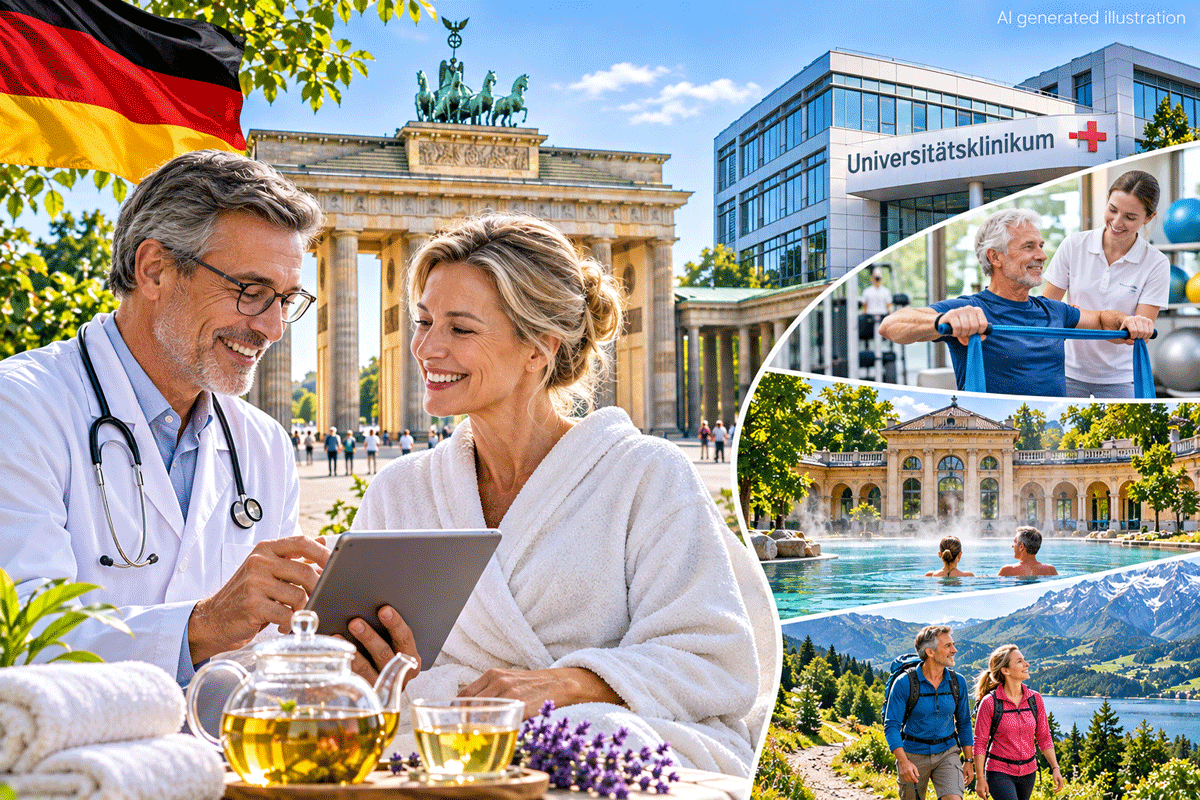
From university hospitals and specialist rehabilitation centres to historic spa towns and Alpine wellness retreats, Germany combines advanced medicine with one of Europe’s most established health tourism infrastructures
Germany occupies a distinctive position in international health tourism. Its appeal rests not on low treatment prices or a single medical speciality, but on a broad healthcare system that combines university medicine, specialised hospitals, rehabilitation facilities and centuries-old spa traditions. International patients travel to Germany for complex diagnostics, cancer treatment, cardiovascular medicine, orthopaedic surgery and other specialist services, while health-conscious visitors are drawn to thermal resorts, preventive programmes and medically oriented wellness retreats.
Unlike destinations where medical tourism has developed primarily through private hospitals serving foreign patients, Germany’s international healthcare offering is embedded in a much larger domestic system. Public, non-profit and private providers operate alongside university hospitals and specialist clinics. This creates considerable clinical depth, but also means that international patients must navigate different admission procedures, pricing arrangements and administrative requirements.
The country’s other major strength is its extensive network of recognised spa and health resorts. From the Baltic coast to the Bavarian Alps, Germany offers thermal baths, mineral springs, therapeutic mud treatments, climatic health resorts and structured rehabilitation programmes. These traditions increasingly intersect with contemporary interests in prevention, healthy ageing and longevity, giving Germany a broader health tourism identity than hospital treatment alone.
International medical care and specialist expertise
Germany is particularly attractive to patients seeking treatment for complex conditions that require multidisciplinary expertise, advanced diagnostic technology and coordinated specialist care. Its university hospitals play a central role in this market, combining clinical treatment with medical research and specialist training.
Berlin, Munich, Heidelberg, Hamburg and Frankfurt are among the principal destinations for international patients. Major institutions include Charité – Universitätsmedizin Berlin, Heidelberg University Hospital, LMU University Hospital Munich, TUM University Hospital in Munich and University Medical Center Hamburg-Eppendorf.
These institutions offer broad medical portfolios, but their international relevance varies by speciality. Patients seeking cancer treatment, for example, may prioritise comprehensive cancer centres with multidisciplinary tumour boards, molecular diagnostics and access to specialised therapies. Others travel for complex cardiovascular procedures, neurological treatment, orthopaedic surgery or highly specialised paediatric medicine.
Germany has also developed considerable expertise in transplantation, rare diseases and advanced surgical procedures. However, access to individual treatments depends on medical eligibility, hospital capacity, regulatory requirements and the availability of appropriate specialists.
Cancer medicine is one of the country’s most important international healthcare strengths. The German Cancer Research Center in Heidelberg, university cancer centres and specialist oncology hospitals contribute to a research-intensive treatment environment. Certified cancer centres operate within structured quality assurance systems, although certification applies to defined institutions and services rather than automatically to every hospital.
International patients may also be interested in proton therapy, precision oncology and advanced radiotherapy. Such technologies are available at selected German centres, but their suitability depends on the diagnosis and should not be assumed to offer superior outcomes for every condition.
Rehabilitation: A defining German strength
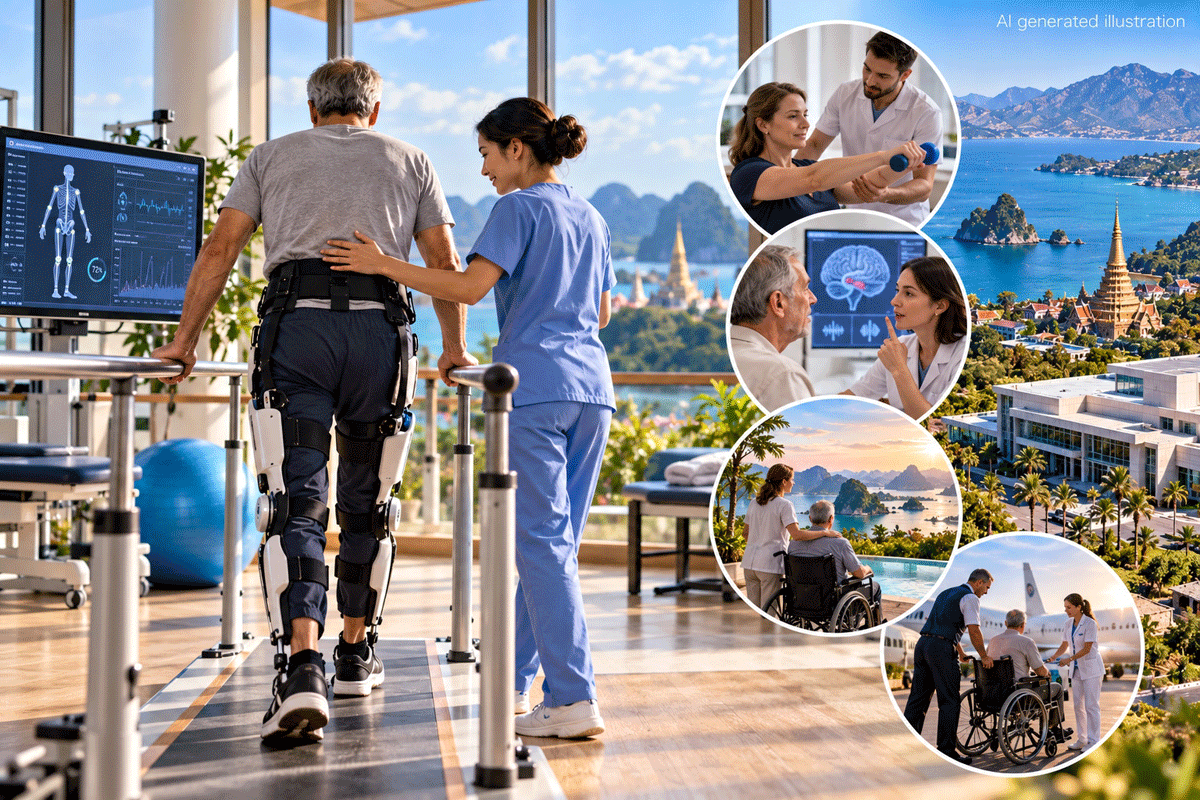
Rehabilitation is arguably the most distinctive component of Germany’s health tourism offering. The country has developed an extensive system of specialist rehabilitation hospitals and clinics addressing recovery after surgery, neurological illness, cardiovascular disease, cancer treatment and musculoskeletal conditions.
This infrastructure is rooted in Germany’s social insurance and healthcare traditions, which have long recognised rehabilitation as a separate stage of medical care. The resulting network includes inpatient facilities, outpatient programmes and specialist centres offering coordinated physiotherapy, occupational therapy, psychological support and medical supervision.
Neurological rehabilitation is a particularly important field. Specialist institutions provide programmes for patients recovering from stroke, traumatic brain injury and other neurological conditions, with treatment intensity and duration determined by individual needs.
Orthopaedic rehabilitation is another major area, including recovery after joint replacement, spinal surgery and complex injuries. Cardiovascular rehabilitation, meanwhile, combines supervised exercise with risk-factor management, patient education and medical follow-up.
Among the established providers are the VAMED rehabilitation network, MEDIAN clinics and the Schön Klinik group, although individual facilities differ considerably in their clinical focus and international patient services.
For overseas patients, rehabilitation requires careful planning. Appropriate admission criteria, language support, medical documentation and continuity of care after returning home are essential. Programmes designed for German statutory insurance patients are not necessarily available under the same conditions to privately paying international visitors.
Germany’s rehabilitation expertise also provides a foundation for preventive health programmes, particularly those addressing mobility, cardiovascular risk, metabolic health and functional independence in later life.
Spa culture: From Baden-Baden to the Baltic coast
Germany has more than 350 officially recognised spa towns and health resorts, making its network of traditional therapeutic destinations one of the country's most significant tourism assets. Their offerings range from mineral and thermal baths to climatic therapies, seawater treatments and medically supervised preventive programmes.
Baden-Baden is among the best-known destinations internationally. Its historic thermal bathing culture, elegant hotels and proximity to the Black Forest attract visitors seeking relaxation, wellness and cultural experiences. The town also forms part of the UNESCO-listed Great Spa Towns of Europe, reflecting the historical importance of European spa culture.
Bad Kissingen in Bavaria, another member of the UNESCO designation, combines mineral springs, historic spa architecture and contemporary health services. Bad Füssing, near the Austrian border, is particularly associated with thermal bathing and treatments addressing musculoskeletal complaints.
Bad Wörishofen is closely connected with Sebastian Kneipp, whose approach to health emphasised water applications, exercise, nutrition, medicinal plants and balanced daily routines. Kneipp facilities remain widespread across German health resorts, although the evidence supporting individual treatments varies.
Along the North Sea and Baltic coasts, destinations such as Norderney, Sylt and the Baltic seaside resorts offer maritime climates, therapeutic bathing and wellness programmes. Inland regions including the Black Forest, Harz Mountains and Bavarian Alps provide additional opportunities for health-oriented holidays combining natural surroundings with specialist services.
The distinction between medical treatment and recreational wellness remains essential. Official recognition as a health resort confirms defined natural resources and infrastructure standards, but does not establish that every treatment offered there is clinically effective.
Prevention, fasting and the longevity market
Germany's preventive health sector increasingly overlaps with the international longevity tourism market. Medical retreats and specialist wellness resorts offer programmes combining diagnostic assessments, nutritional counselling, supervised exercise, stress management and lifestyle modification.
Lanserhof Tegernsee, situated in the Bavarian Alpine foothills, is among the country's internationally recognised medical wellness destinations. Its programmes integrate preventive diagnostics, nutritional concepts and physical activity, with selected services addressing healthy ageing and longevity.
Buchinger Wilhelmi on Lake Constance represents another distinctive approach. The clinic specialises in medically supervised therapeutic fasting, complemented by nutritional education, exercise and relaxation programmes. Fasting interventions require individual medical assessment, particularly for guests with chronic illnesses or those taking regular medication.
In the Moselle region, Ayurveda Parkschlösschen offers programmes based on traditional Indian Ayurvedic practices. Such services contribute to Germany's diversity of wellness tourism products, but their therapeutic claims must be evaluated separately from established clinical treatments.
Germany's growing longevity offering reflects international demand for personalised prevention. Nevertheless, biological age testing, regenerative procedures and other interventions promoted as anti-ageing medicine do not necessarily demonstrate an ability to extend human lifespan.
For many visitors, the most evidence-supported benefits of preventive programmes remain improvements in physical activity, nutrition, sleep, stress management and the control of established health risks.
International patients, accessibility and costs
Germany's international medical travel market draws patients from neighbouring European countries as well as more distant markets, including parts of the Middle East and Central Asia. Patient origins differ substantially between hospitals, specialities and regions, and the country does not have a single comprehensive public dataset covering every category of international medical traveller.
European patients may access certain planned treatments through cross-border healthcare arrangements, subject to applicable reimbursement rules and authorisation requirements. Patients from outside these systems generally need to arrange treatment and payment directly with the hospital or through an authorised payer.
Major hospitals often maintain international patient offices that coordinate medical record reviews, treatment proposals, cost estimates, appointments, interpretation and visa documentation. Charité in Berlin, Heidelberg University Hospital and University Medical Center Freiburg are among the institutions providing such services.
Germany is not generally a low-cost medical tourism destination. Treatment costs reflect specialist staffing, hospital infrastructure and the complexity of clinical services. For selected procedures, prices may be substantially higher than those in competing destinations in Asia or Eastern Europe.
International self-paying patients are commonly required to make advance payments based on preliminary estimates. Final costs can change if additional examinations, complications or longer hospital stays become necessary. Written quotations and clarification of payment arrangements are therefore particularly important.
Frankfurt, Munich, Berlin, Düsseldorf and Hamburg provide major international air connections. Germany's rail network also facilitates travel between airports, hospitals and spa destinations, although patients recovering from surgery may require medically appropriate transport arrangements.
Visa requirements depend on nationality and the duration and purpose of travel. Hospitals can often provide supporting documentation, but entry permission remains subject to the relevant authorities.
Quality standards and future challenges
Germany's international reputation benefits from established medical training, specialist certification systems and structured healthcare regulation. Hospitals are subject to national quality assurance requirements, while selected departments and disease-specific centres undergo additional certification.
The German Cancer Society's certification programmes, for example, assess defined oncology structures and processes. Other quality systems cover rehabilitation facilities, specialist services and healthcare organisations. International accreditation may also be available at individual institutions, but it should not be assumed to apply across the entire healthcare system.
Germany's health tourism sector operates without a single national medical tourism programme comparable to those established in some competing destinations. International patient services are largely organised by individual hospitals, regional networks and specialist providers, while tourism organisations promote the country's broader health and wellness offering.
The sector faces several structural challenges. Hospital financing pressures, shortages of qualified healthcare professionals and ongoing reforms create uncertainty for providers. International patients may encounter waiting times, complex administrative procedures and limited availability of services in languages other than German.
For rehabilitation and medical wellness providers, another challenge is maintaining a clear distinction between evidence-based healthcare and commercially attractive but insufficiently validated longevity treatments.
Germany's competitive position ultimately rests on the breadth of its healthcare infrastructure. Few destinations combine university medicine, complex specialist treatment, structured rehabilitation, traditional health resorts and contemporary preventive retreats on a comparable scale.
Rather than competing primarily on price, Germany offers international patients and health-conscious travellers access to a mature medical system and a geographically diverse wellness landscape. Its future success will depend on preserving clinical quality, improving international patient coordination and adapting its rehabilitation and preventive health traditions to changing expectations without compromising scientific standards.
Image Credit: AI generated illustration