
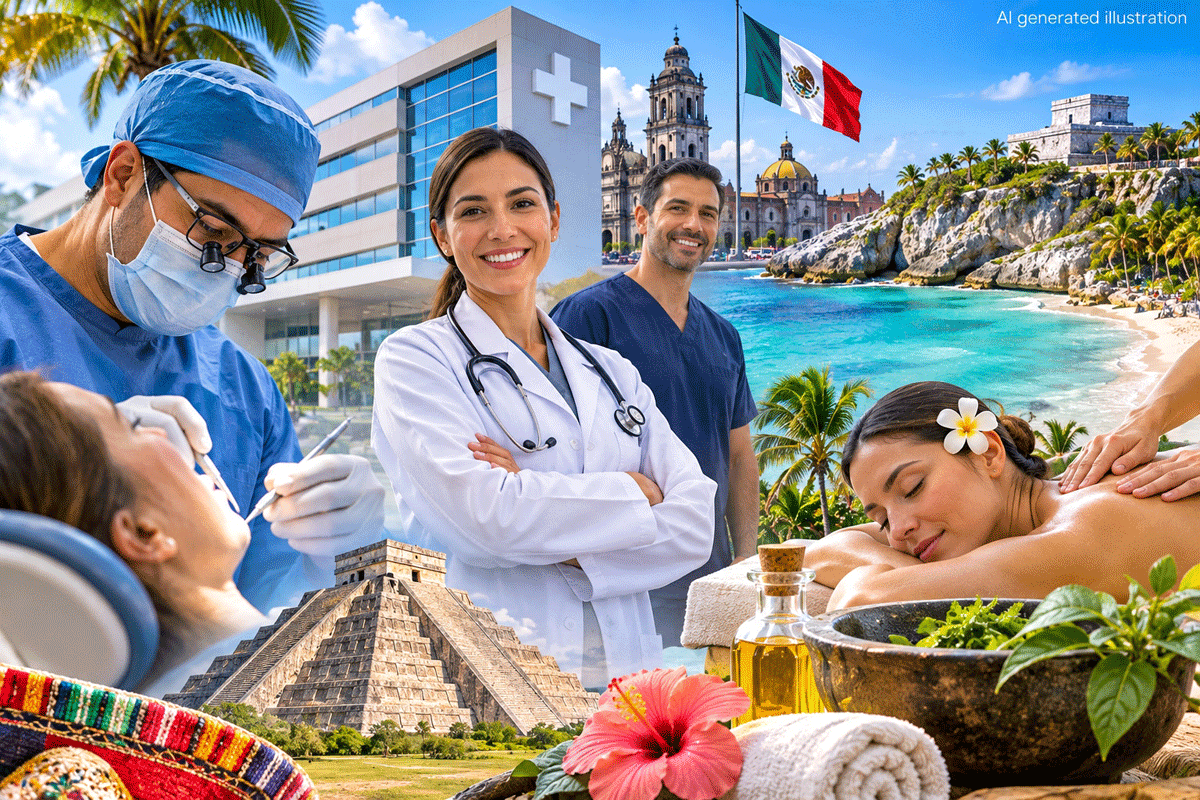
From dental clinics along the US border to bariatric surgery in Tijuana and specialist hospitals in Mexico City, Mexico combines affordable private healthcare with proximity to one of the world’s largest medical markets
Mexico occupies a distinctive position in international medical tourism. Unlike destinations that depend primarily on long-haul patients, its healthcare travel market is closely connected to the United States, where high treatment costs, insurance limitations and geographical proximity encourage patients to consider medical services across the border. Dental care, bariatric surgery, ophthalmology and selected elective procedures are particularly important, supported by private hospitals, specialist clinics and an extensive network of medical travel facilitators.
The country's appeal extends beyond price. Border cities offer convenient access for American patients, while major metropolitan areas provide sophisticated hospital services and specialist medical expertise. Mexico City, Monterrey and Guadalajara have developed advanced private healthcare infrastructure, attracting patients seeking complex diagnostics and treatment. Meanwhile, destinations such as Cancún and Puerto Vallarta combine elective medical services with established international tourism facilities.
Mexico's medical tourism industry is nevertheless highly fragmented. Large hospital groups operate alongside independent clinics, and standards of care, accreditation and patient support vary considerably. For international patients, selecting a qualified provider and arranging appropriate postoperative care are therefore especially important. The country's competitive advantage lies in accessibility and affordability, but its long-term reputation depends on clinical quality, transparency and reliable cross-border coordination.
Border cities drive international patient mobility
The relationship between Mexico and the United States shapes much of the country's medical tourism geography. Patients can travel by car or on foot across international border crossings, making treatment abroad possible without the expense of an intercontinental journey.
Tijuana, immediately south of San Diego, is among Mexico's most established medical tourism centres. Its private healthcare sector offers bariatric surgery, dentistry, cosmetic procedures and other elective treatments. The city's location allows patients from Southern California and other American states to reach medical providers relatively easily.
Bariatric surgery has become particularly important. Clinics and hospitals offer procedures such as sleeve gastrectomy and gastric bypass, often supported by packages that include consultations, hospital accommodation and postoperative arrangements. However, the availability of a package does not establish the quality of the surgical programme, and patients should assess specialist qualifications, complication management and long-term follow-up independently.
Mexicali and Ciudad Juárez also serve cross-border healthcare markets, while Nuevo Laredo and Reynosa attract patients from Texas. In these destinations, dental treatment, outpatient procedures and diagnostic services often form part of a wider local economy linked to cross-border commerce.
Los Algodones, near the California and Arizona borders, represents a particularly concentrated example of dental tourism. The small town has developed an extensive cluster of dental practices serving international visitors, especially Americans and Canadians seeking implants, crowns, bridges and other restorative treatments.
Its accessibility has made it popular among retirees and seasonal residents of the southwestern United States. Nevertheless, dental tourism can involve several appointments, laboratory work and subsequent adjustments, making realistic treatment schedules essential.
Dentistry and bariatric surgery lead demand
Dental care is one of Mexico's most visible international medical tourism products. Private clinics promote substantial savings compared with treatment prices in the United States, particularly for implants, prosthetic restorations and extensive dental reconstruction.
The actual financial advantage depends on the procedure, materials, practitioner qualifications and number of visits required. Patients must also consider travel expenses, possible complications and the cost of corrective treatment after returning home.
Bariatric surgery is another major specialty, particularly in Tijuana and other northern destinations. Mexico's private sector serves patients who may face high out-of-pocket costs, insurance restrictions or lengthy administrative processes in their home countries.
These procedures require more than an operation. Appropriate patient selection, nutritional assessment, anaesthesia safety, postoperative monitoring and lifelong follow-up are central to successful obesity treatment. Travelling shortly after surgery may introduce additional risks, and arrangements for managing complications across borders should be established before treatment.
Ophthalmology, including cataract surgery and selected refractive procedures, also attracts international interest. Cosmetic surgery and dermatological treatments form additional market segments, although patients should distinguish medically necessary procedures from elective aesthetic services.
Mexico's international healthcare offering is not limited to relatively straightforward treatments. Selected private hospitals provide cardiovascular medicine, oncology, orthopaedics, neurosurgery and advanced diagnostic services. These fields require more extensive clinical infrastructure and may involve longer stays or coordinated treatment between multiple specialists.
Mexico City, Monterrey and Guadalajara offer specialist care
Beyond the border region, Mexico's major metropolitan centres provide a different medical tourism proposition, centred on established private hospitals and multidisciplinary specialist services.
Mexico City has one of the country's largest concentrations of medical professionals, diagnostic facilities and tertiary healthcare institutions. Private providers such as Médica Sur and Centro Médico ABC offer extensive hospital services, including specialist consultations, complex surgery and diagnostic medicine.
Monterrey, an important industrial and business centre in northern Mexico, has developed a strong private healthcare sector. Hospital San José and other institutions associated with TecSalud contribute to the city's reputation for specialist medicine, medical education and clinical innovation.
Guadalajara combines a substantial metropolitan healthcare market with international air connections and established medical services. Hospitales Puerta de Hierro and other private providers serve domestic and international patients across a range of specialties.
These cities are particularly relevant for patients seeking treatment that requires advanced equipment, multidisciplinary assessment or specialist hospital infrastructure rather than a short outpatient visit.
However, institutional reputation should not replace an assessment of the specific department, treating physician and proposed procedure. The clinical capabilities and accreditation status of individual hospitals may differ.
Wellness, rehabilitation and traditional healing
Mexico also possesses considerable potential beyond conventional medical tourism. Its diverse landscapes, established resort industry and traditional healing practices support a broad wellness tourism market.
The Yucatán Peninsula and Riviera Maya offer spa resorts, yoga retreats, fitness programmes and relaxation experiences that draw on tropical surroundings and elements of regional cultural heritage. Cancún and the Riviera Maya are particularly accessible through extensive international flight connections.
Los Cabos and Puerto Vallarta have developed luxury wellness offerings within their established resort sectors. Programmes commonly combine spa treatments, exercise, nutrition and stress management, although their medical content varies considerably.
Traditional Mexican healing practices contribute another dimension. Temazcal ceremonies, involving a heated enclosed space and associated with Indigenous cultural traditions, are offered in various wellness settings. Their cultural significance should be distinguished from claims of medical effectiveness, and exposure to intense heat may be unsuitable for some visitors.
Herbal traditions, massage and other complementary practices also appear in Mexico's wellness market. As elsewhere, the qualifications of practitioners and the evidence supporting specific therapeutic claims require individual assessment.
Rehabilitation represents a more specialised opportunity. Private facilities offer physiotherapy, musculoskeletal rehabilitation and selected postoperative recovery services, although Mexico's international rehabilitation market is less clearly established than its dental and surgical tourism sectors.
The combination of medical treatment and a resort holiday requires particular caution. Swimming, sun exposure, strenuous activities and long journeys may be inappropriate during recovery, especially after major surgery.
Costs, accreditation and patient protection
Price remains one of Mexico's strongest competitive advantages. Dental procedures, bariatric surgery and selected elective treatments are frequently advertised at substantially lower prices than comparable private services in the United States.
However, published package prices do not necessarily include every diagnostic test, medication, complication or follow-up appointment. International patients should request detailed written quotations and clarify what happens if additional treatment becomes necessary.
Quality assurance is particularly important in a market containing providers of widely differing sizes and capabilities.
Mexico's General Health Council, the Consejo de Salubridad General, operates a national healthcare establishment certification framework. Some hospitals also pursue international accreditation, including through Joint Commission International. Such recognition applies to specific facilities and defined periods and should be verified directly.
Professional licensing, specialist qualifications, surgical privileges and the availability of emergency services are equally important. Accreditation alone cannot guarantee an individual treatment outcome.
Patients should also establish whether the provider has appropriate intensive care capacity, infection prevention procedures and arrangements for transferring patients if complications occur.
Cross-border continuity of care presents a further challenge. Medical records, prescriptions, postoperative instructions and communication with physicians in the patient's home country should be organised before departure.
For complex procedures, the apparent savings of overseas treatment can diminish if complications require additional hospitalisation or emergency care after returning home.
International access and the challenges ahead
Mexico benefits from exceptional geographical access to the United States, alongside major international airports serving Mexico City, Cancún, Guadalajara, Monterrey, Tijuana and other destinations.
American patients form the core of much of the border-region medical tourism market, while Canadian visitors and members of the Mexican diaspora also contribute to demand. Patients from Central America and other Latin American countries use selected Mexican specialist hospitals, although comprehensive national statistics separating international medical tourists from other healthcare visitors remain limited.
Medical travel facilitators help some patients arrange consultations, accommodation, transfers and treatment packages. Their services can simplify logistics, but commercial relationships with clinics should be transparent, particularly when recommendations are influenced by referral payments.
Security and transport conditions also vary substantially between regions. International patients should consider official travel advice, the location of medical facilities and the practical arrangements for moving between airports, hotels and hospitals.
Mexico's medical tourism development has largely been driven by private providers, regional initiatives and cross-border demand rather than a single comprehensive national programme. This has encouraged specialised local markets but also created differences in promotion, service quality and patient coordination.
The sector faces growing competition from other destinations offering affordable elective treatment, while domestic healthcare inequalities and workforce requirements remain important national concerns.
For Mexico, the next stage of medical tourism development will depend on strengthening trust as much as expanding capacity. Transparent prices, independently verifiable qualifications, reliable clinical standards and effective follow-up arrangements are essential to attracting patients seeking more than inexpensive procedures.
Its proximity to the United States gives Mexico an enduring geographical advantage that few international competitors can replicate. Combined with established private hospitals, specialist clinics and a diversified tourism economy, this provides a strong foundation for continued cross-border healthcare travel. The challenge is to ensure that affordability and convenience are consistently matched by patient safety, clinical accountability and continuity of care.
Image Credit: AI generated illustration