Pacific island nation expands testing, treatment and prevention as health authorities confront one of the world’s steepest increases in new HIV infections
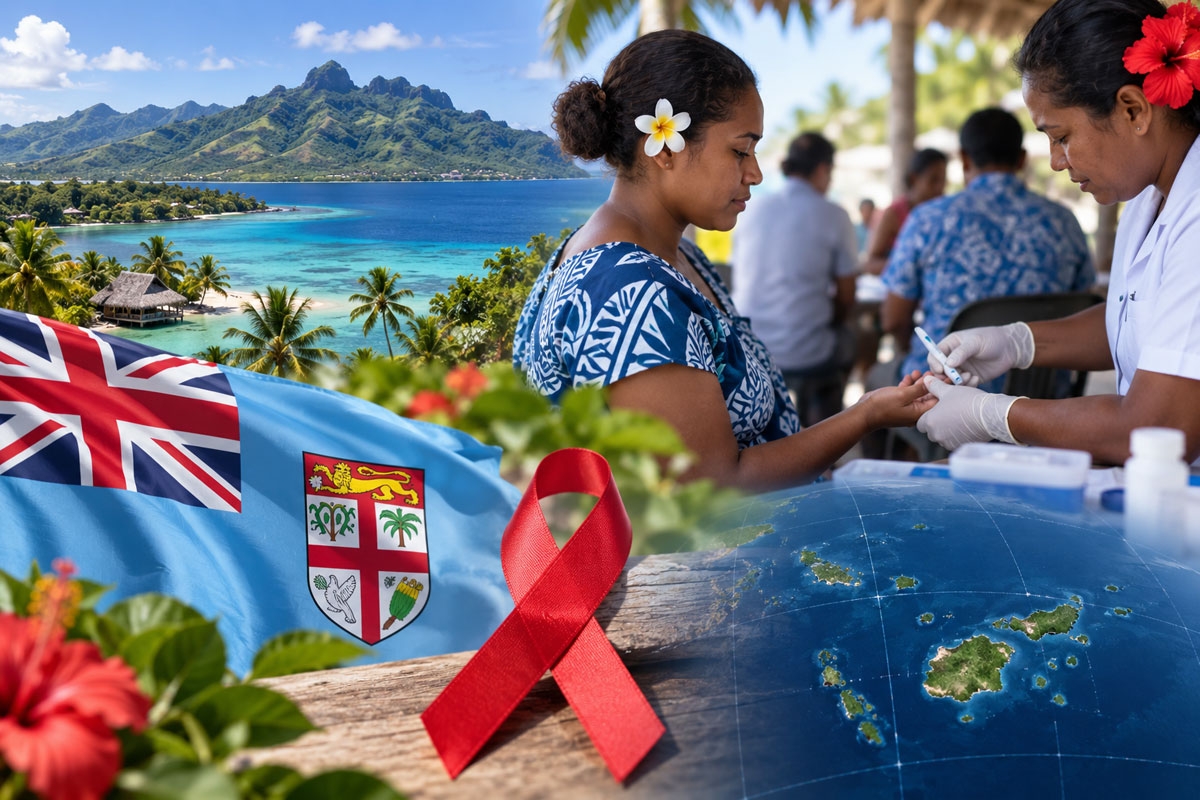
Fiji has formally declared HIV a national emergency following a dramatic increase in infections, prompting the government to intensify prevention, testing and treatment programmes across the country.
The declaration, made on September 15, builds on measures introduced over the past two years under Fiji’s HIV Surge Strategy 2024–2027 and its national HIV Outbreak Response Plan. International health organisations are supporting the country as it expands its response.
Fiji is currently experiencing one of the sharpest increases in new HIV infections globally. An estimated 9,100 people were living with HIV in the country in 2025, while only 39% knew their HIV status and just 22% were receiving antiretroviral treatment.
New infections rise twelve-fold
The scale of the increase has raised serious concerns among national and international health authorities. Estimates indicate that new HIV infections in Fiji increased twelve-fold between 2010 and 2025.
Injecting drug use has emerged as an important driver of the epidemic alongside sexual transmission. Among cases for which the mode of transmission is known, more than half were associated with sexual transmission and more than 42% with injecting drug use.
Unsafe injecting practices and limited access to sterile injecting equipment have become a particular focus of the public health response.
The government has established a Cabinet subcommittee tasked with addressing policy and implementation barriers and accelerating measures to bring the epidemic under control.
Testing, PrEP and treatment to be expanded
Fiji is expanding access to free HIV testing as well as prevention and treatment services. Measures include wider availability of pre-exposure prophylaxis, or PrEP, for people at substantial risk of acquiring HIV.
Long-acting prevention options, including twice-yearly injections, are also expected to form part of the expanded prevention strategy.
At the same time, authorities are preparing to introduce a needle and syringe programme as a harm-reduction measure for people who inject drugs. Legislative amendments required for the programme are expected to be submitted to Parliament.
Free antiretroviral treatment remains a central element of the strategy. Effective treatment not only allows people living with HIV to live long and healthy lives but can also prevent sexual transmission when the viral load becomes undetectable.
Fighting stigma remains a priority
Health authorities and international organisations are also emphasizing the importance of reducing stigma and discrimination.
Fear of discrimination can discourage people from seeking testing, prevention services and treatment, making community-based healthcare and peer outreach an important part of Fiji’s response.
Community organisations are already helping connect people with testing, treatment and care while working to counter misinformation about HIV.
Health authorities have stressed that the emergency declaration should prompt action rather than fear. HIV is not transmitted through everyday social contact.
Regional cooperation across the Pacific
Fiji’s response is also taking on a wider regional dimension. Pacific island countries are closely connected through travel, employment, education and family ties, making surveillance, prevention and cooperation between national health systems increasingly important.
Regional health authorities are therefore calling for stronger preparedness, information exchange and access to prevention and treatment throughout the Pacific.
International partners will continue supporting Fiji in strengthening its healthcare response, expanding access to services and improving surveillance as the country works to reverse the rapid rise in infections.
Image Credit: © AI generated illustration