New research examines practitioner qualifications and regulatory frameworks for traditional therapies, with implications for international wellness providers and patient safety
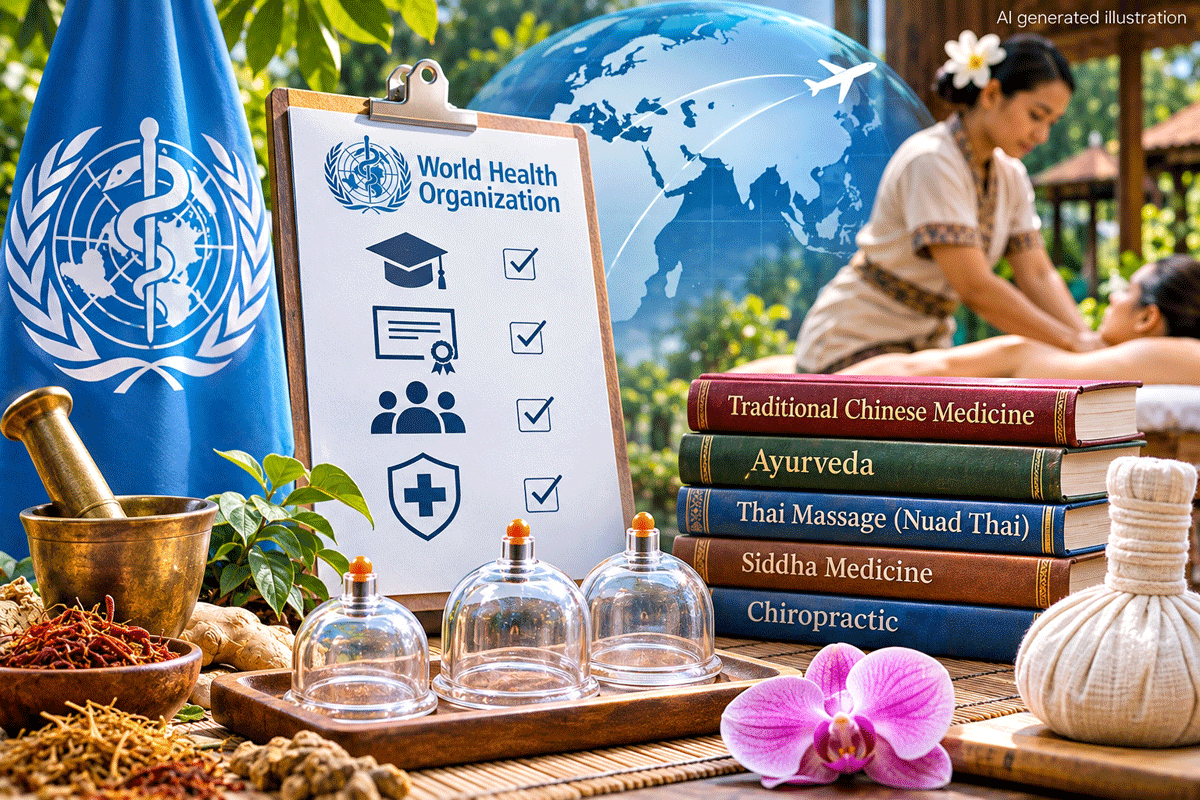
The World Health Organization (WHO) has begun publishing a series of working papers examining professional training and clinical practices in traditional, complementary and integrative medicine. The initiative addresses growing questions about practitioner qualifications, regulatory oversight and patient safety as healthcare systems increasingly consider incorporating traditional therapies alongside conventional medical services.
Developed by the WHO Global Traditional Medicine Centre, the publications will document existing educational pathways, professional competencies, assessment methods and accreditation arrangements across different therapeutic traditions. The first paper, released in October 2026, examines training in cupping therapy, drawing primarily on practices associated with traditional Chinese medicine. Further studies are scheduled for 2026 and 2027.
The initiative is also relevant to international health and wellness tourism, where traditional therapies form part of the visitor experience in destinations across Asia and beyond. From Ayurvedic retreats in India to traditional Thai massage centres and Chinese medicine clinics, travellers encounter a wide range of treatments offered under different professional and regulatory systems. The WHO research could provide useful reference material for authorities and healthcare providers seeking greater transparency about practitioner qualifications.
Training standards and patient safety under examination
The first working paper examines how cupping therapy is taught and practised in different settings. Its scope includes educational programmes, curriculum content, practitioner competencies, assessment procedures, trainer qualifications and accreditation arrangements.
Rather than establishing new requirements, the publication documents existing approaches and provides a reference for policymakers, regulators, educational institutions, healthcare professionals and researchers.
This distinction is important. The WHO has not introduced a universal certification system for cupping therapy, nor does publication of the research constitute an endorsement of its clinical effectiveness.
The working paper forms part of the WHO Global Traditional Medicine Strategy 2025–2034, which seeks to strengthen the evidence base for traditional medicine and support informed decisions about its regulation and integration into healthcare systems.
Further publications are expected to examine training in chiropractic, Siddha, Taijiquan and traditional Chinese medicine. Additional working papers will address clinical practices in Nuad Thai, the traditional Thai massage system, as well as Siddha and Chinese medicine.
The research will draw on scientific literature, existing accreditation frameworks and expert contributions. However, the planned publications will remain descriptive rather than prescriptive, meaning they will not automatically establish international professional standards or regulatory obligations.
Implications for international wellness destinations
Traditional and complementary therapies have become an important component of health-oriented travel, particularly in destinations that combine cultural healing traditions with modern hospitality and medical services.
Thailand, for example, offers traditional massage and other complementary treatments through wellness resorts, specialised centres and selected healthcare facilities. India has developed an extensive tourism sector around Ayurveda and other traditional medical systems, while Chinese medicine remains an established part of health-related travel in several Asian markets.
For international visitors, differences in professional qualifications and regulatory requirements can make it difficult to assess the credentials of individual practitioners. Training periods, clinical supervision, licensing arrangements and institutional accreditation may vary considerably between countries and treatment providers.
These differences are especially relevant when traditional therapies are offered alongside conventional medical treatment. Healthcare institutions must consider possible contraindications, infection prevention, professional responsibilities and appropriate communication between practitioners from different medical disciplines.
The WHO initiative may help national authorities and professional organisations compare existing training arrangements and identify areas requiring further evaluation. It could also provide wellness resorts and medical tourism operators with a clearer understanding of the professional standards applied in different markets.
However, any future regulatory changes would depend on decisions by individual countries and competent authorities. The working papers themselves do not impose new requirements on international wellness providers.
Evidence remains central to integration
The increasing visibility of traditional medicine has intensified discussions about how complementary treatments should be assessed within modern healthcare systems.
Some traditional practices are primarily associated with relaxation, cultural wellbeing and personal care, while others are promoted for specific medical conditions. Their potential benefits and risks must be evaluated individually, taking account of available scientific evidence and the qualifications of those providing treatment.
Professional training and clinical effectiveness are also separate questions. A practitioner may have completed a recognised educational programme without that qualification establishing the effectiveness of every treatment offered.
For international patients, this distinction is particularly important when therapies are marketed as alternatives to established medical care or presented with claims that have not been adequately demonstrated.
The WHO's research programme addresses one part of this wider challenge by improving the documentation of training systems and professional practices. It does not replace clinical research into treatment outcomes, safety or comparative effectiveness.
As international wellness tourism continues to incorporate traditional and integrative approaches, the ability to distinguish cultural practices, professionally regulated services and evidence-based medical treatments will remain essential.
The forthcoming WHO publications could contribute to more informed regulatory discussions and greater transparency across national healthcare systems. For the health tourism industry, their significance lies in supporting a clearer understanding of practitioner qualifications and professional oversight without confusing traditional medical heritage with scientifically established therapeutic benefits.
Image Credit: AI generated illustration