International rehabilitation centres offer multidisciplinary treatment after stroke, but medical suitability, continuity of care and reliable outcome data remain essential
International medical travel is expanding beyond elective surgery and short hospital stays into specialised rehabilitation services. Stroke survivors requiring physiotherapy, occupational therapy, speech and language therapy or longer periods of neurological rehabilitation are among the patients targeted by facilities offering treatment abroad. The emerging field is often described as international stroke rehabilitation or cross-border neurorehabilitation rather than conventional medical tourism.
Unlike dental treatment or cosmetic surgery, stroke rehabilitation rarely follows a predictable timetable. Recovery depends on the location and severity of brain injury, accompanying medical conditions, functional limitations and the patient's response to therapy. Some patients require intensive inpatient rehabilitation, while others can participate in outpatient programmes supported by suitable accommodation and family assistance.
For international healthcare providers, the opportunity lies in delivering coordinated rehabilitation programmes that may be difficult to access in a patient's home country. However, the existence of international services does not establish the size or growth rate of a distinct stroke rehabilitation tourism market. Reliable cross-border patient statistics remain limited, and medical travel must be assessed against the risks of transport, interrupted treatment and inadequate follow-up.
Thailand and Türkiye develop international rehabilitation services
Thailand combines an established medical tourism industry with private rehabilitation facilities offering services to patients from overseas. Bangkok and other healthcare destinations have providers advertising neurological rehabilitation, including programmes for patients recovering from stroke.
Some centres combine physiotherapy, occupational therapy, speech therapy and nursing support with accommodation designed for longer stays. The country's hospitality infrastructure and experience with international patients may simplify practical arrangements for accompanying relatives.
Nevertheless, prospective patients must distinguish between medically supervised neurological rehabilitation, general physiotherapy and residential care. A facility offering accommodation and exercise programmes may not have the clinical capacity required for patients with complex neurological disabilities.
Türkiye provides another example of rehabilitation services being marketed internationally. The country's private healthcare sector includes specialist physical medicine and rehabilitation hospitals, multidisciplinary rehabilitation departments and facilities offering technology-assisted therapy.
Romatem, a Turkish rehabilitation provider, offers neurological rehabilitation services and has developed an international patient-facing business. Other hospital groups, including Doruk Hospitals, advertise stroke rehabilitation alongside conventional and robot-assisted treatment methods.
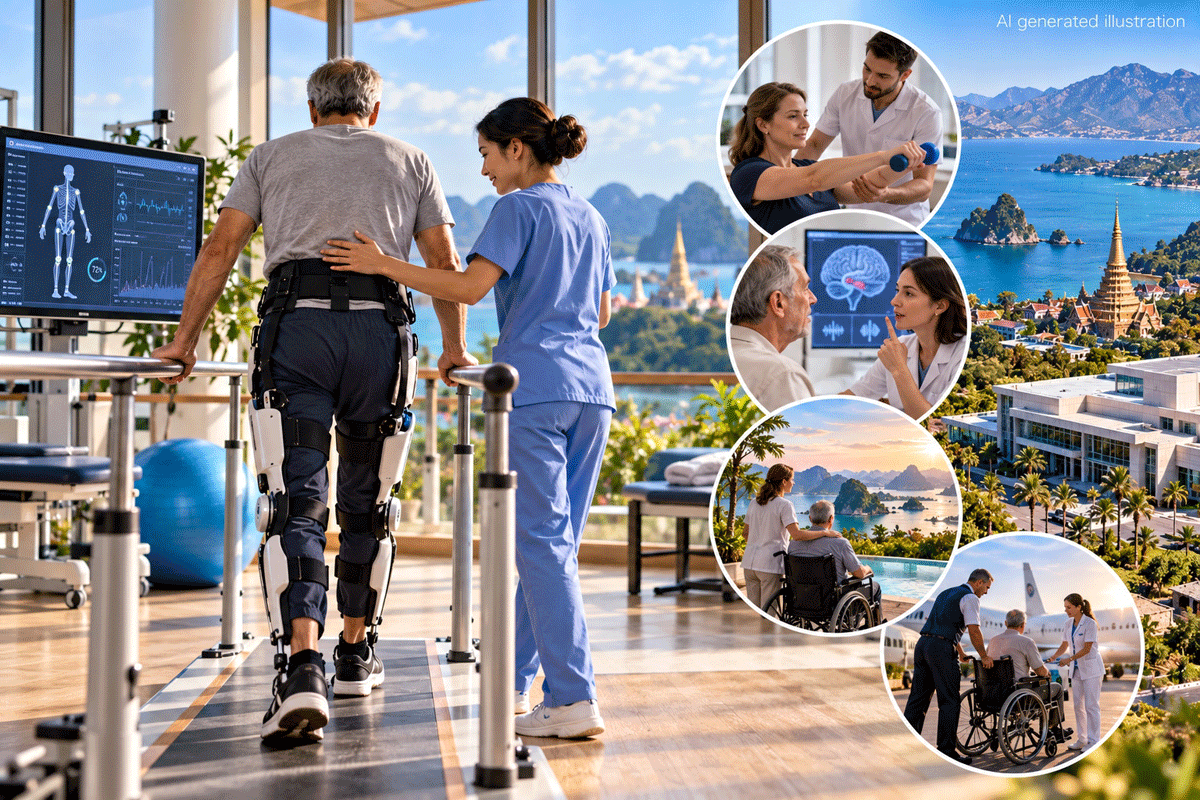
These technologies can include robotic gait-training systems, upper-limb rehabilitation devices and computer-assisted exercise programmes. Their clinical value depends on the patient's condition, treatment goals and integration into a comprehensive rehabilitation plan. Equipment alone does not establish superior outcomes.
Switzerland represents a different segment of the market. Specialist neurological rehabilitation institutions such as Rehaklinik Zihlschlacht provide intensive rehabilitation for patients with neurological conditions, including stroke. Such facilities illustrate the importance of clinical specialisation and multidisciplinary expertise rather than competing primarily on accommodation costs.
The contrast between destinations is significant. International patients may encounter different models ranging from specialist hospitals and rehabilitation clinics to private residential programmes. Comparing them requires more than examining advertised treatment packages.
New stroke rehabilitation guidelines strengthen the clinical focus
The international discussion has gained additional relevance following the publication of updated stroke rehabilitation guidelines by the American Heart Association and American Stroke Association on 27 August 2026.
The guidelines emphasise that rehabilitation should begin once a patient is medically stable, ideally within 48 hours after a stroke. Treatment should address physical, cognitive, communication and psychological needs through coordinated multidisciplinary care. The recommendations also highlight the importance of sufficient therapy intensity, regular reassessment and support for family caregivers.
These principles have direct implications for international rehabilitation providers. A programme intended for overseas patients must be able to demonstrate appropriate clinical assessment, qualified personnel and coordination between different therapeutic disciplines.
The guidelines also recognise that recovery can continue over months or years. Rehabilitation should therefore not be presented as a fixed-duration intervention that guarantees a particular level of improvement.
For patients considering treatment abroad, this makes the transition between healthcare systems especially important. Medical records, rehabilitation goals and information about complications must accompany the patient, while arrangements for continued therapy after returning home should be established before departure.
Medical travel introduces additional risks
Transporting a patient recovering from stroke can be considerably more complicated than organising travel for an otherwise healthy person undergoing an elective procedure.
Depending on the patient's condition, concerns may include cardiovascular stability, swallowing difficulties, reduced mobility, communication impairments, cognitive limitations and the risk of complications associated with prolonged immobility.
Some patients may require specialist medical transport, wheelchair assistance or an accompanying healthcare professional. Others may be able to travel on scheduled commercial flights, but suitability must be determined individually by the treating medical team.
Long-distance travel can also interrupt established rehabilitation routines. The timing of an international transfer therefore requires particular attention, especially during the early recovery period when consistent therapy and medical supervision are important.
Financial arrangements introduce further uncertainty. International rehabilitation packages may include accommodation, nursing care and scheduled therapy sessions, but additional medical examinations, specialist consultations, medication, assistive devices or emergency treatment can generate extra costs.
Insurance coverage is another major consideration. Rehabilitation abroad may not be reimbursed under the same conditions as treatment within the patient's home healthcare system. Patients and families need written confirmation of coverage and responsibility for unexpected medical expenses.
Technology creates opportunities but not guarantees
Robotic rehabilitation systems, virtual reality, functional electrical stimulation and digitally supported exercise programmes are increasingly visible in specialist neurological rehabilitation.
Such technologies may help patients undertake repetitive, task-specific exercises or provide therapists with additional ways to assess movement and functional progress.
However, their effectiveness varies according to the intervention and the patient's clinical circumstances. International providers should not imply that access to expensive equipment automatically produces better outcomes than conventional multidisciplinary rehabilitation.
The 2026 American guidelines also highlight the developing role of telerehabilitation. Remote consultations and supervised home-based treatment can support access to services, particularly when patients have difficulty travelling to a rehabilitation centre.
For cross-border healthcare, this creates opportunities for continuity between an overseas rehabilitation programme and the patient's home environment. Follow-up consultations, therapy adjustments and caregiver education may be supported remotely, provided that professional responsibilities, patient safety and data protection requirements are addressed.
The availability of digital services does not eliminate the need for local medical care. Patients experiencing complications or requiring physical assistance must have access to appropriate professionals near their residence.
A specialised market with limited transparency
Stroke rehabilitation abroad differs fundamentally from medical tourism segments driven primarily by price comparisons or short treatment packages.
Patients may need several weeks of intensive treatment, accessible accommodation, specialist transport and continuing support from relatives. The decision to travel is therefore closely connected to the patient's functional condition and the capacity of the receiving institution.
Internationally marketed rehabilitation services are already available in countries including Thailand, Türkiye and Switzerland. Nevertheless, comparable statistics on cross-border stroke rehabilitation patients, treatment expenditure and clinical outcomes are not sufficiently established to support reliable global market estimates.
This lack of transparency makes it difficult to determine whether the segment is expanding rapidly or primarily reflects the international marketing of existing rehabilitation capacity.
For healthcare providers and medical travel facilitators, the most important competitive factors are likely to be clinical expertise, multidisciplinary staffing, transparent treatment programmes and the ability to coordinate care across borders.
International stroke rehabilitation may offer an additional option for selected patients, particularly when appropriate specialist services are unavailable or difficult to access at home. Its long-term role in medical tourism, however, will depend on demonstrable treatment quality, safe patient transfers and effective continuity of care rather than the appeal of the destination itself.
Image Credit: AI generated illustration