Historic salt mines across Europe and Türkiye are combining underground tourism with respiratory wellness programmes, although scientific evidence for their therapeutic benefits remains limited
Deep beneath the surface of Central and Eastern Europe, former and active salt mines are developing a second identity as destinations for health and wellness tourism. Underground chambers once associated with industrial extraction now accommodate visitors seeking relaxation, distinctive natural environments and, in some locations, supervised programmes for respiratory conditions. Poland, Romania, Germany and Türkiye offer different examples of how salt-related heritage can be incorporated into tourism products.
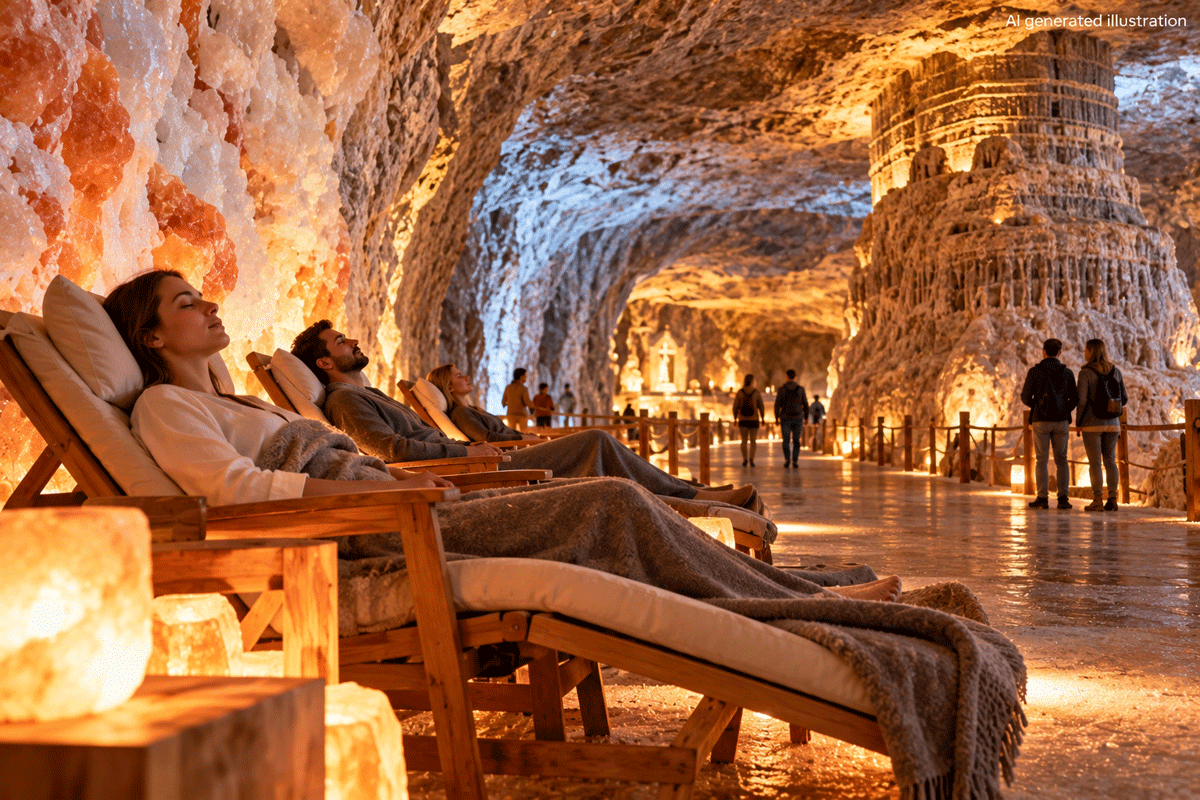
The growing interest reflects a wider trend towards wellness experiences rooted in natural environments and regional traditions. Salt mines offer an unusual combination of geological heritage, stable underground temperatures and atmospheric conditions that operators associate with respiratory well-being. Some destinations provide structured programmes involving breathing exercises and medical supervision, while others concentrate on recreational visits, relaxation and cultural experiences.
However, the distinction between tourism appeal and medical effectiveness is essential. Although salt caves and inhalation facilities are frequently promoted for asthma, chronic obstructive pulmonary disease (COPD) and other respiratory conditions, the clinical evidence remains limited and inconsistent. Their development as international health tourism destinations therefore depends not only on infrastructure and accessibility but also on transparent information about what visitors can reasonably expect.
Poland and Romania develop underground health experiences
Poland has established some of Europe's most distinctive underground health tourism facilities. The historic Wieliczka Salt Mine, near Kraków, operates a subterranean health resort approximately 135 metres below ground. Its programmes combine extended stays in the mine's underground environment with breathing exercises, physical activity and selected therapeutic applications.
The facility benefits from Wieliczka's international reputation as a UNESCO World Heritage site. Visitors can combine underground wellness programmes with cultural sightseeing and accommodation in the Kraków region, creating opportunities for longer stays and specialised travel packages.
Nearby, the Bochnia Salt Mine offers another model. Its underground chambers accommodate recreational activities and overnight experiences, demonstrating how historic mining infrastructure can support tourism products extending beyond conventional sightseeing.
Romania has developed a particularly visible salt-mine tourism sector. Salina Turda combines spectacular underground architecture, recreational attractions and areas associated with salt-air therapy. Its appeal extends to international visitors interested in unusual destinations, although recreational use should not be confused with medically validated treatment.
The vulnerability of this tourism model became apparent in May 2025, when severe flooding forced the closure of the Praid Salt Mine. The site had previously attracted substantial visitor numbers, including people seeking respiratory wellness experiences. The disruption also affected the surrounding tourism economy, illustrating the importance of major salt attractions to regional hospitality businesses.
Türkiye expands its salt cave tourism ambitions
Türkiye offers an increasingly interesting example of how salt mines can be developed for both tourism and health-related purposes.
In Central Anatolia, the Çankırı Salt Cave has been developed as an underground visitor attraction, with extensive salt formations and chambers that provide an unusual setting for cultural and wellness tourism. The destination has also become the focus of research examining whether exposure to its underground environment could complement conventional respiratory care.
In March 2026, the Çankırı Governor's Office announced the publication of findings from the Daha Güçlü Bir Nefes project, meaning A Stronger Breath. The initiative examined patients with respiratory conditions, including asthma and COPD, through a programme involving time in the salt mine alongside hospital-based interventions.
According to the authorities, participants experienced improvements in selected respiratory symptoms, physical capacity and quality-of-life measures. These findings provide an additional reason to examine the site's health tourism potential, but they should not be interpreted as conclusive proof that salt-cave exposure itself produced the reported benefits. The role of accompanying treatments and the study's methodological limitations remain important when assessing the results.
Further east, the Tuzluca Salt Caves have developed into a regional tourism attraction. A salt therapy centre opened there in 2021, adding a health-related dimension to the site's underground visitor experience. Regional development authorities reported approximately 100,000 visitors in 2022.
Tuzluca is particularly relevant to cross-border tourism because its location in eastern Türkiye makes it accessible to neighbouring markets. Reports have documented visitors from Azerbaijan and Iran, although available figures do not establish how many travel specifically for therapeutic purposes.
The Turkish tourism sector also has a longer tradition of promoting cave environments for respiratory well-being. The Damlataş Cave on the Mediterranean coast has historically been associated with visits by people experiencing asthma symptoms. Unlike Çankırı and Tuzluca, however, Damlataş is not a salt mine. Its inclusion in health tourism discussions reflects the broader concept of speleotherapy, which involves exposure to particular underground environments rather than salt inhalation alone.
Germany combines salt traditions with established spa tourism
Germany approaches salt-related wellness through its extensive network of spa towns, brine facilities and traditional therapeutic establishments.
The Salzheilstollen Berchtesgaden in Bavaria offers organised stays in an underground salt environment. Visitors can participate in sessions intended for relaxation and respiratory well-being, with the surrounding Alpine region providing accommodation, outdoor activities and complementary wellness services.
Nearby Bad Reichenhall represents a different tradition. Its historic salt industry forms the basis for brine-related attractions, including a large outdoor graduation tower where saline water flows over brushwood structures. Visitors experience the surrounding saline atmosphere as part of the town's established spa offering.
These facilities illustrate an important distinction within salt-related health tourism. Underground speleotherapy, dry-salt aerosol inhalation in purpose-built salt rooms and exposure to saline air around graduation towers are different applications. Their physical environments, methods of exposure and supporting scientific evidence cannot automatically be treated as equivalent.
Artificial salt rooms have also become common in wellness hotels and urban spas internationally. Their relatively modest infrastructure requirements make them easier to incorporate into existing hospitality businesses than natural underground facilities. Nevertheless, their presence in a hotel or spa does not establish medical effectiveness.
Scientific credibility will shape international growth
Salt-related wellness tourism has several commercial advantages. Underground facilities offer distinctive experiences that are difficult to reproduce elsewhere, while established spa towns can combine salt applications with accommodation, outdoor recreation and other wellness services. In some destinations, underground attractions also operate independently of seasonal weather conditions.
For international travellers, the combination of unusual environments, cultural heritage and relaxation may be more compelling than unverified medical promises. Operators can develop short introductory visits, multi-day wellness packages and longer supervised programmes, provided that their descriptions accurately distinguish recreational experiences from clinical healthcare.
Scientific uncertainty remains the sector's principal challenge. Research into halotherapy and speleotherapy has produced some encouraging observations, but studies often differ considerably in methodology, treatment conditions and participant characteristics. Evidence supporting routine use for asthma, COPD or other respiratory diseases remains insufficient.
Salt inhalation may also cause discomfort or airway irritation in susceptible individuals. Patients with chronic respiratory conditions should not replace prescribed treatment with salt-cave visits, and medically oriented programmes require appropriate professional oversight and clear information about potential contraindications.
Reliable international statistics specifically measuring salt-cave health tourism are also scarce. Visitor totals at major attractions frequently include ordinary sightseeing, making it difficult to determine the proportion of travellers motivated primarily by health concerns.
For destinations such as Wieliczka, Turda, Çankırı and Tuzluca, the strongest opportunity may therefore lie in combining geological heritage with carefully designed wellness experiences rather than positioning salt caves as substitutes for established medical treatment.
As interest in nature-based wellness and distinctive travel experiences continues, salt mines offer tourism authorities and operators a recognisable product with strong regional identities. Their longer-term contribution to international health tourism will depend on investment, accessibility, professional standards and a credible separation between traditional wellness practices and clinically established therapies.
Image Credit: © AI generated illustration