Germany, Austria and Switzerland have established Kneipp traditions and spa infrastructure, but international demand remains limited despite growing interest in preventive wellness travel
As international wellness tourism increasingly embraces preventive health, nature-based experiences and personalised lifestyle programmes, one of Europe's oldest holistic health traditions could find new opportunities beyond its established domestic markets. Kneipp therapy, developed in 19th-century Germany, combines water applications, physical activity, nutrition, medicinal plants and lifestyle balance. Its continuing presence in German-speaking spa destinations provides an existing foundation for international wellness tourism.
The approach is particularly associated with Bad Wörishofen in Bavaria, where Sebastian Kneipp developed and promoted his system of natural health practices. Today, the town combines traditional Kneipp facilities with medical services, rehabilitation programmes, hotels and modern thermal bathing. Similar offerings are available in Austria and Switzerland, where specialised establishments and publicly accessible water-treatment facilities connect wellness experiences with Alpine landscapes and established tourism infrastructure.
Yet the international commercial significance of Kneipp tourism remains difficult to measure. Although spa destinations attract substantial numbers of visitors, available tourism statistics rarely distinguish travellers specifically seeking Kneipp treatments from other leisure and health tourists. Regional data also suggest that international demand remains modest compared with domestic tourism, raising questions about how effectively the tradition is being presented to foreign markets.
Established infrastructure, limited international reach
Germany has the strongest historical association with Kneipp therapy. Its traditional practices were included in the country's national inventory of intangible cultural heritage in 2015, recognising their cultural significance and continuing transmission across generations.
The designation concerns cultural heritage rather than clinical effectiveness. Nevertheless, it provides a distinctive identity for destinations seeking to differentiate themselves in the increasingly competitive wellness tourism market.
Bad Wörishofen remains the best-known example. The German National Tourist Board promotes the Bavarian spa town internationally, highlighting its combination of traditional Kneipp applications, preventive wellness services and modern bathing facilities.
However, the destination also faces challenges. Local tourism figures published in December 2025 recorded slightly more than 103,000 arrivals and almost 431,000 overnight stays during the first nine months of that year, representing declines of approximately four and two percent respectively compared with the corresponding period in 2024.
Broader regional statistics illustrate the limited international penetration of some Kneipp destinations. In the German state of Thuringia, officially designated Kneipp spa resorts recorded 211,064 overnight stays in 2025, of which only 1,309 were attributed to international visitors. Foreign guests accounted for approximately 0.6 percent of overnight stays, while their average visit lasted two days compared with 6.9 days across all visitors.
These figures cannot be generalised to every Kneipp resort in Germany, but they indicate how strongly parts of the sector continue to depend on domestic demand.
Austria offers another established market. In Upper Austria, the Curhaus facilities in Bad Kreuzen and Bad Mühllacken combine Kneipp applications with exercise programmes, nutritional guidance and elements of Traditional European Medicine. Austria's national tourism organisation also promotes Kneipp facilities in Tyrol and the Salzburg region.
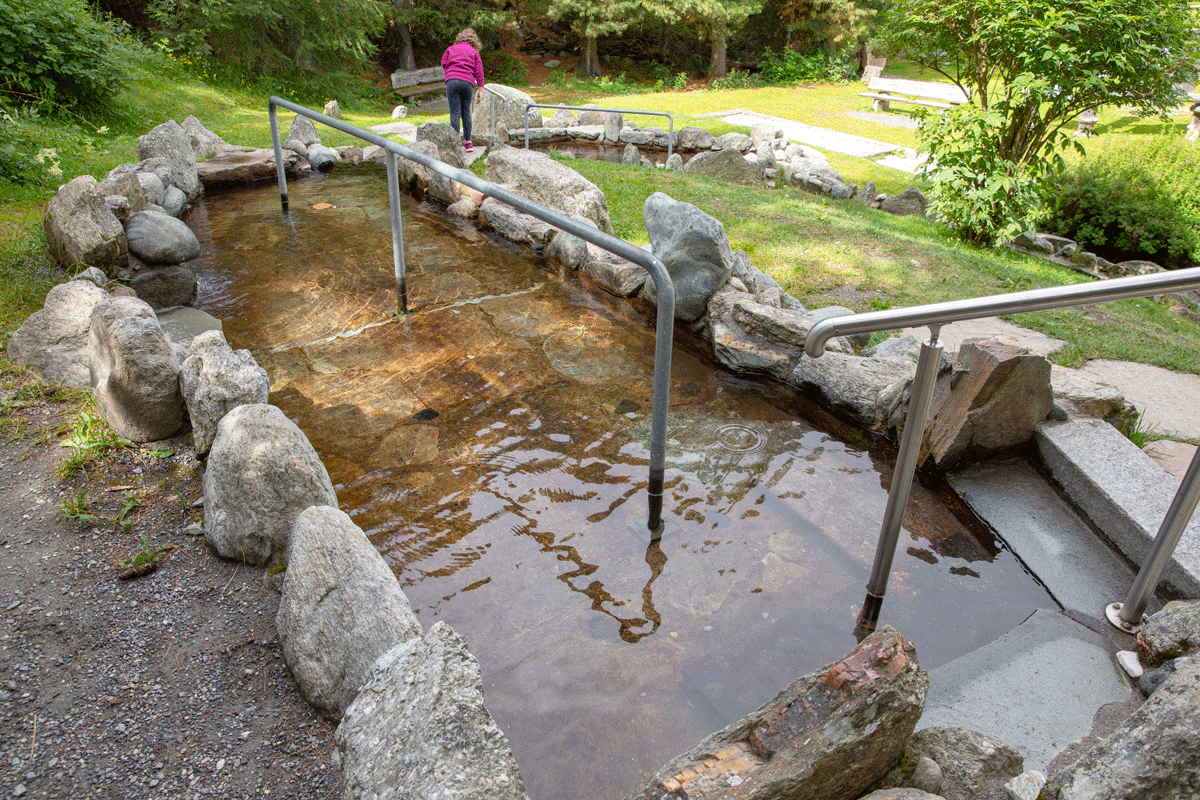
Switzerland has developed a different model, frequently integrating Kneipp facilities into outdoor recreation. In Grächen, in the canton of Valais, visitors can use a 2,500-square-metre Kneipp garden with water-treading pools, an arm basin, a herb garden and relaxation areas. Such facilities make the tradition accessible to visitors who may not be interested in a formal therapeutic stay.
Scientific evidence remains an important challenge
The international positioning of Kneipp therapy also depends on how its health benefits are communicated.
A systematic review published in 2023 examined 20 randomised controlled trials involving 4,247 participants. The researchers identified some positive findings for specific conditions and outcomes, including chronic venous insufficiency and menopausal symptoms. However, methodological limitations and substantial differences between studies prevented firm conclusions about treatment effectiveness.
A more recent systematic review published in 2026 examined the evidence for Kneipp medicine as a comprehensive therapeutic approach. Only one small exploratory trial involving 30 patients met its inclusion criteria. The authors concluded that robust clinical evidence supporting the overall Kneipp system remains insufficient.
This distinction is important for international health tourism. Kneipp programmes can be marketed as traditional wellness experiences incorporating movement, relaxation and water-based activities without suggesting that the complete system has demonstrated effectiveness in preventing or treating specific diseases.
For medically supervised applications, appropriate professional qualifications, individual assessment and clear information about contraindications remain essential. Cold-water exposure, for example, is not suitable for every patient.
International positioning could open new markets
Despite these limitations, Kneipp destinations possess several characteristics that could support international expansion. Their programmes combine activities already familiar to wellness travellers, including walking, nutritional guidance, relaxation and contact with nature. Many are located in established tourism regions with accommodation, transport connections and year-round visitor infrastructure.
The main commercial opportunity may therefore lie in presenting Kneipp therapy as a distinctive European wellness tradition rather than attempting to compete directly with hospital-based medical tourism.
Structured short-stay programmes could introduce international visitors to the five elements of Kneipp therapy, while longer retreats could combine supervised wellness activities with cultural experiences, regional cuisine and outdoor recreation.
The approach could be particularly relevant for destinations seeking to reduce seasonal dependence and attract visitors interested in active ageing, stress management and sustainable travel. However, the potential size of these markets remains unquantified, and international demand for dedicated Kneipp programmes should not be assumed from broader wellness tourism growth.
There is also an opportunity for cooperation across national borders. Kneipp Worldwide, established in 1962, connects organisations promoting the tradition internationally. The next International Kneipp Action Days, known as the Kneippiade, are scheduled for June 10–13, 2027, in Bad Nauheim, Germany, providing a platform for professional exchange and international networking.
For German-speaking spa destinations, the challenge is less about creating a new wellness product than making an established one accessible and understandable to international visitors. Multilingual information, transparent programme descriptions, cooperation with international tour operators and a clear distinction between wellness and medical treatment could help broaden its appeal.
Kneipp therapy already forms part of the health tourism infrastructure of Germany, Austria and Switzerland. Its future international significance will depend on whether destinations can translate that heritage into credible, attractive and commercially viable experiences for travellers unfamiliar with the tradition.
Image Credit: Grächen, Valais, Switzerland © Traveller70 / Shutterstock.com