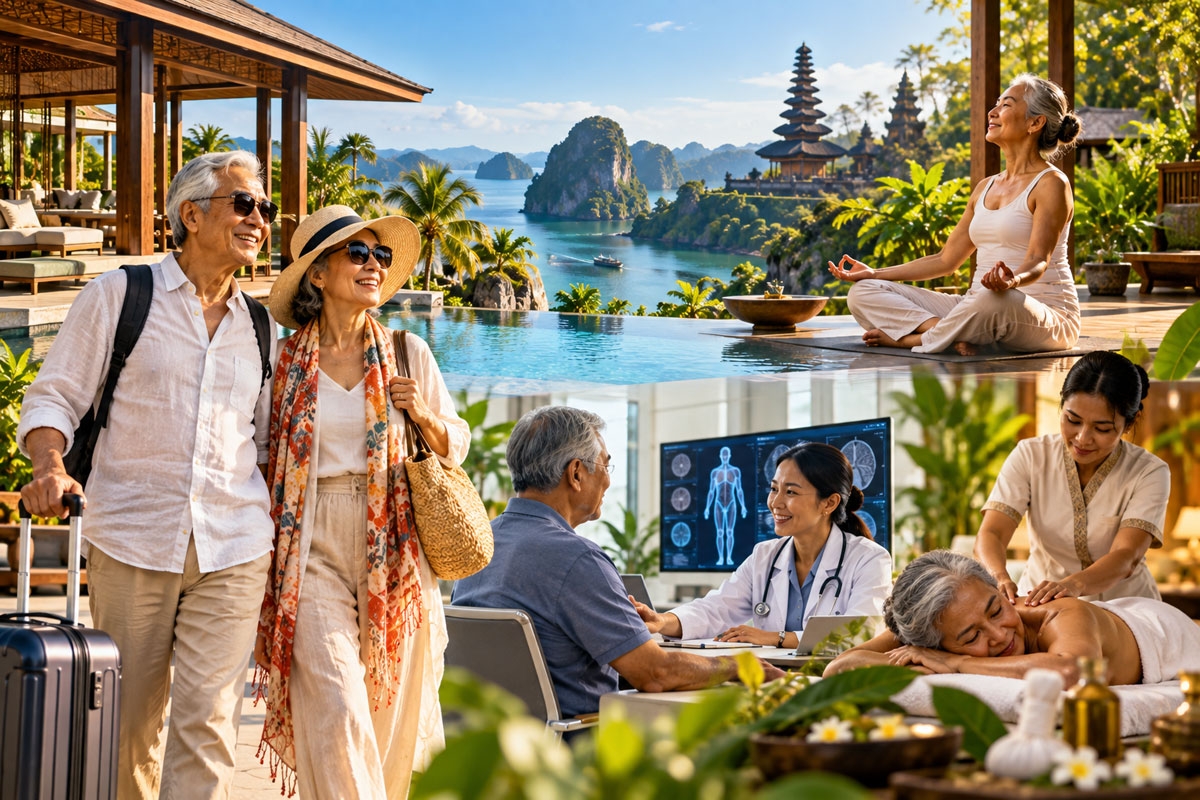
Medical wellness, diagnostics and a new generation of thermal destinations are bringing the spa sector closer to its therapeutic roots
The global spa industry is entering a new phase in which relaxation alone is increasingly giving way to measurable health outcomes, preventive wellness and personalised treatments. Medical spas are expanding particularly rapidly, while longevity diagnostics, thermal bathing and technology-supported wellness programmes are changing what travellers expect from spa and health-oriented destinations.
The shift is taking place within a considerably larger global market than less than two decades ago. According to figures from the Global Wellness Institute cited by EHL Hospitality Business School, the number of spas worldwide increased from 71,800 in 2007 to 201,861 in 2024. Revenues rose from $47 billion to approximately $157 billion over the same period, representing average annual growth of 7.4%.
Medical spas emerge as a major growth market
Medical spas are expanding considerably faster than the overall spa sector. The global medical spa market was valued at $24.2 billion in 2025 and is forecast to reach $78.2 billion by 2033, corresponding to compound annual growth of 15.9%.
Unlike conventional spas, these businesses combine traditional wellness services with procedures requiring medical or other appropriately qualified clinical practitioners. Depending on the facility and regulatory environment, services can include laser and skin treatments, IV therapies, nutritional and lifestyle programmes and weight-management services.
The development is particularly visible in the United States, where the medical aesthetics sector has surpassed $17 billion and is adding more than $1 billion in annual revenues. Weight-management services have become an important part of that expansion.
GLP-1 treatments illustrate how rapidly the boundaries between aesthetics, lifestyle medicine and wellness are shifting. According to US market analysis cited by EHL, patients spent $1.30 billion on GLP-1 medications through medical aesthetic practices in 2024, an increase of 75% from the previous year.
Longevity changes what spa guests expect
Alongside medical aesthetics, longevity is moving deeper into the wellness and hospitality sectors. Consumers increasingly expect programmes to produce results that can be measured rather than simply offering a temporary sense of relaxation.
Diagnostics, biomarker testing and other forms of health assessment are consequently becoming part of high-end wellness programmes. This development is closely associated with growing consumer interest in longevity, preventive health and biohacking.
The wider personalised medicine market is estimated at $147 billion and is expected to grow by 9.3% annually. For wellness operators, the trend is encouraging a transition from standardised treatment menus towards programmes tailored to individual health data and objectives.
Technology is reinforcing this development. Wearables and digital health data can potentially allow providers to personalise programmes and monitor changes over repeated visits, while technologies such as AI-supported skin analysis are extending data-driven approaches into aesthetic treatments.
Thermal tourism enters another expansion phase
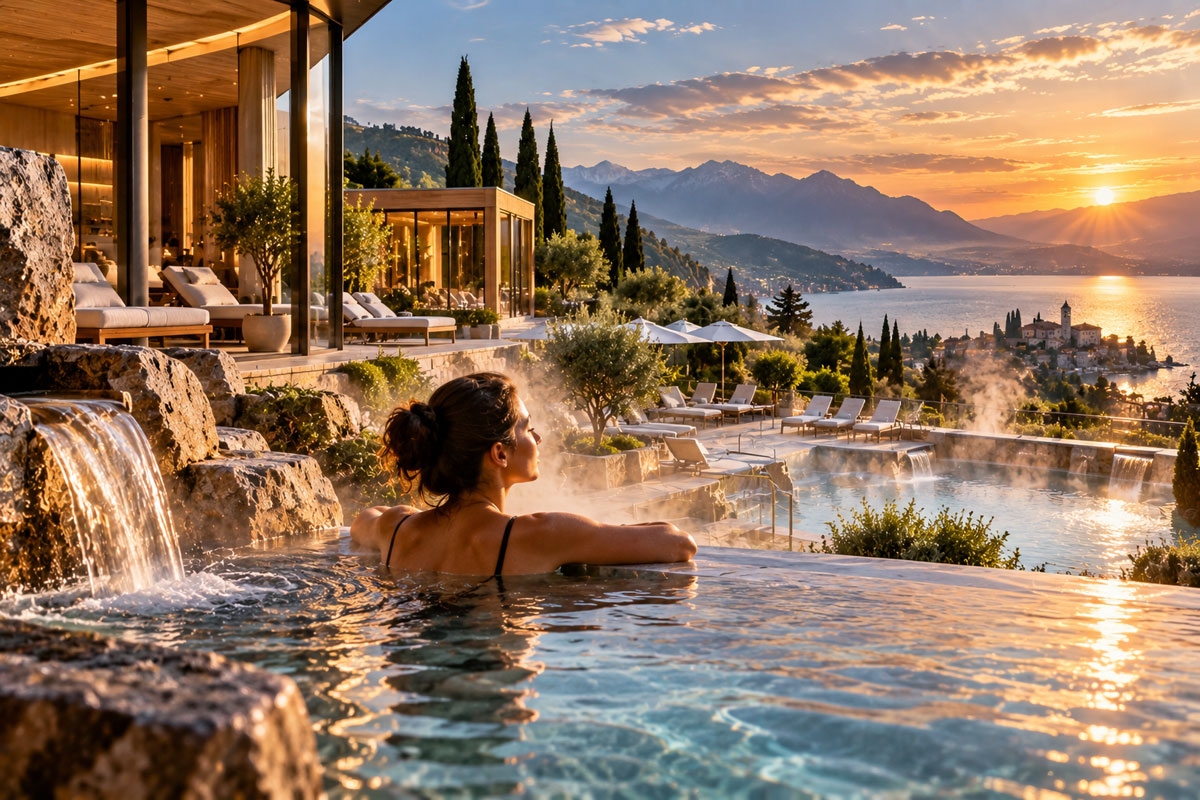
At the same time, one of the oldest forms of health-related travel is experiencing renewed investment. Thermal and mineral springs have emerged as an important growth area within the global wellness economy.
According to the Global Wellness Institute, 365 new thermal bathing projects opened worldwide between 2020 and 2025, while more than 250 additional projects are under development.
This expansion is significant for health and wellness tourism because thermal destinations can combine natural resources with accommodation, recreation and preventive wellness programmes. It also represents a return to a tradition that predates the modern spa industry by centuries, when mineral springs and bathing destinations were closely associated with therapeutic travel.
New investment is not confined to traditional European spa towns. Thermal resorts, contemporary bathhouses and sauna concepts are appearing in different markets, often combining established bathing traditions with modern architecture and wellness services.
Social bathing broadens the spa audience
Another development is changing the social function of spas. Sauna facilities, bathhouses and contrast-therapy concepts are increasingly being designed as communal environments rather than places centred exclusively on individual treatments.
This new generation of facilities is widening the potential customer base beyond conventional spa guests. Some concepts combine bathing and sauna experiences with social spaces, technology and longevity services, creating an alternative to both the traditional day spa and, in some cases, the conventional fitness club.
The trend also reflects growing interest in psychological wellbeing. Sleep programmes, mindfulness and approaches aimed at stress management and nervous-system regulation are becoming more prominent within wellness hospitality.
From pampering to preventive health
The broader wellness economy reached an estimated $6.8 trillion in 2024 and is forecast to approach $9.8 trillion by 2029. Rising incomes, an expanding global middle class and greater willingness to spend on personal health are supporting continued growth, while wellness tourism provides a particularly direct connection between travel and the spa sector.
For health tourism, however, the most important development may be the gradual convergence of previously separate industries. Medical services, hospitality, aesthetics, preventive health, traditional thermal treatments and wellness are increasingly appearing within the same destination or facility.
This convergence also raises expectations. As spas move closer to clinical services, medical credibility, professional qualifications and evidence for health claims become increasingly important alongside hospitality and comfort.
The spa of the coming decade may therefore look very different from the treatment rooms that dominated the sector at the beginning of the century. At one end of the market, medical spas are incorporating increasingly sophisticated clinical and diagnostic services. At the other, thermal baths and communal bathing are rediscovering traditions that are thousands of years old. Both developments point in the same direction: health is once again becoming central to the spa experience.
Image Credit: © AI generated illustration