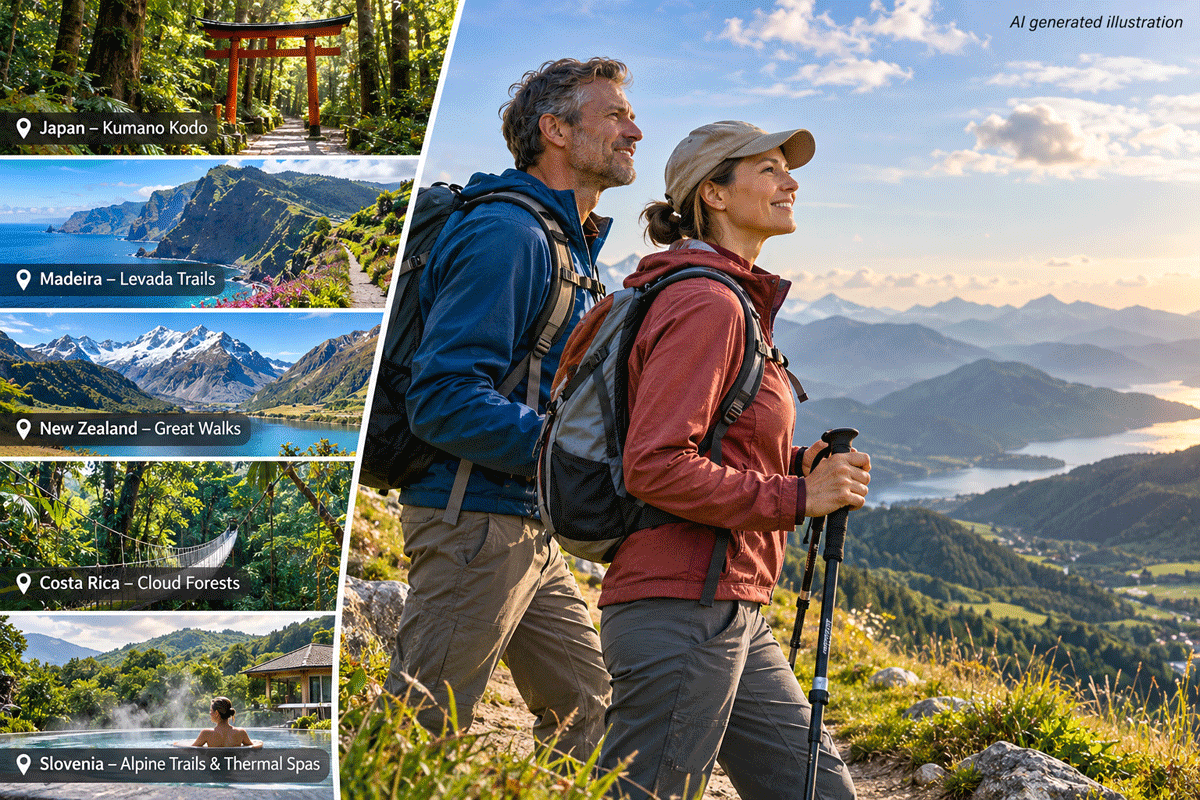
From Japan’s ancient forest trails to Madeira’s mountain paths, five destinations combine physical activity, natural environments and opportunities for restorative travel
Walking holidays are becoming an important part of the wider wellness tourism landscape, offering travellers an alternative to conventional spa programmes and fitness retreats. Whether following historic pilgrimage routes, exploring tropical forests or crossing alpine landscapes, hiking combines physical exercise with time outdoors and a temporary escape from everyday routines.
The health benefits of regular physical activity are well established. The World Health Organization recommends 150 to 300 minutes of moderate-intensity aerobic activity per week for adults, noting that physical activity can help prevent and manage cardiovascular disease and type 2 diabetes while supporting mental well-being. Hiking offers one way of incorporating such activity into a holiday, although its intensity varies considerably with terrain, altitude and individual fitness.
Five destinations stand out for the combination of varied walking opportunities, distinctive natural settings and tourism infrastructure. They range from accessible forest walks and coastal trails to demanding multi-day treks. Rather than constituting a medical ranking, the selection highlights different approaches to health-oriented travel, including active recreation, nature immersion, cultural experiences and opportunities to combine walking with wellness services.
Japan and Madeira: Nature and Mindful Walking
Japan’s Kumano Kodo pilgrimage routes, crossing the mountainous Kii Peninsula, offer a particularly strong connection between physical activity and contemplative travel. The UNESCO-listed network links ancient shrines through forests, valleys and historic stone pathways. Travellers can choose shorter walks or undertake multi-day journeys, with the Nakahechi and Iseji routes among the established options.
The region also lends itself to shinrin-yoku, the Japanese practice of forest bathing, which emphasises attentive engagement with the natural environment rather than athletic performance. Traditional accommodation, cultural experiences and nearby hot springs can complement the walking programme. Japan’s tourism authorities promote itineraries combining Kumano Kodo hiking with visits to Kawayu Onsen and the region’s sacred sites.
Portugal’s Madeira offers a contrasting experience, combining subtropical vegetation, dramatic mountain scenery and extensive walking routes along historic irrigation channels known as levadas. The island’s trails range from relatively gentle forest walks to exposed mountain paths requiring considerably more experience.
Routes such as Levada das 25 Fontes and Vereda dos Balcões illustrate the variety available. Madeira is particularly suitable for travellers seeking an active holiday without committing to continuous long-distance trekking.
However, access requires planning. Since January 2026, reservations have been mandatory for classified walking trails, with applicable access charges. Some routes are temporarily closed or restricted, making official trail-status checks essential before departure.
New Zealand and Costa Rica: Active Immersion
New Zealand is a leading choice for travellers seeking structured multi-day trekking through diverse natural environments. Its Great Walks network includes the Milford, Routeburn and Abel Tasman Coast tracks, providing access to alpine landscapes, forests and coastal scenery.
The Department of Conservation maintains a system of established routes, accommodation and booking arrangements. Guided options are also available, allowing visitors to select different levels of support.
For health-focused travellers, the appeal lies in sustained outdoor activity and the opportunity to disconnect from everyday routines. Nevertheless, even well-maintained trails can involve substantial physical demands, rapidly changing weather and remote terrain.
Costa Rica offers a tropical alternative, particularly in the cloud forests of Monteverde and the volcanic landscapes surrounding Arenal. Walking experiences combine physical activity with opportunities to observe biodiversity, including birds, tropical vegetation and distinctive forest ecosystems.
The country's tourism authorities promote hiking in Monteverde during the green season and nature-based activities across its national parks. Shorter guided walks can make the experience accessible to visitors who prefer moderate exercise rather than demanding trekking expeditions.
The country's combination of nature tourism, established accommodation and wellness-oriented hospitality also makes it suitable for itineraries that balance walking with rest and relaxation.
Slovenia: Walking and Thermal Wellness
Slovenia offers a particularly attractive combination for travellers who want to integrate hiking with established wellness facilities. Its landscapes range from alpine environments to vineyard-covered hills, while thermal spa destinations provide opportunities for relaxation after outdoor activities.
Thermal Pannonian Slovenia, for example, brings together walking landscapes, natural health resorts and local food traditions. Destinations such as Rogaška Slatina and Moravske Toplice illustrate how outdoor recreation can be combined with spa-based holidays.
For the health tourism industry, this combination provides a useful model: walking can form the active component of a broader programme that also includes rest, wellness services and appropriately tailored exercise.
The distinction between general wellness and medical treatment remains important. Although regular walking offers recognised health benefits, demanding hikes are not suitable for everyone. Travellers with cardiovascular conditions, mobility limitations or other significant health concerns may need individual medical advice before undertaking strenuous routes.
Across all five destinations, the strongest proposition is not extreme physical achievement but the possibility of matching outdoor activity to individual capabilities. For wellness hotels, tour operators and health-oriented travel providers, carefully designed walking programmes offer opportunities to connect preventive health, nature experiences and sustainable tourism.
Image Credit: AI generated illustration