
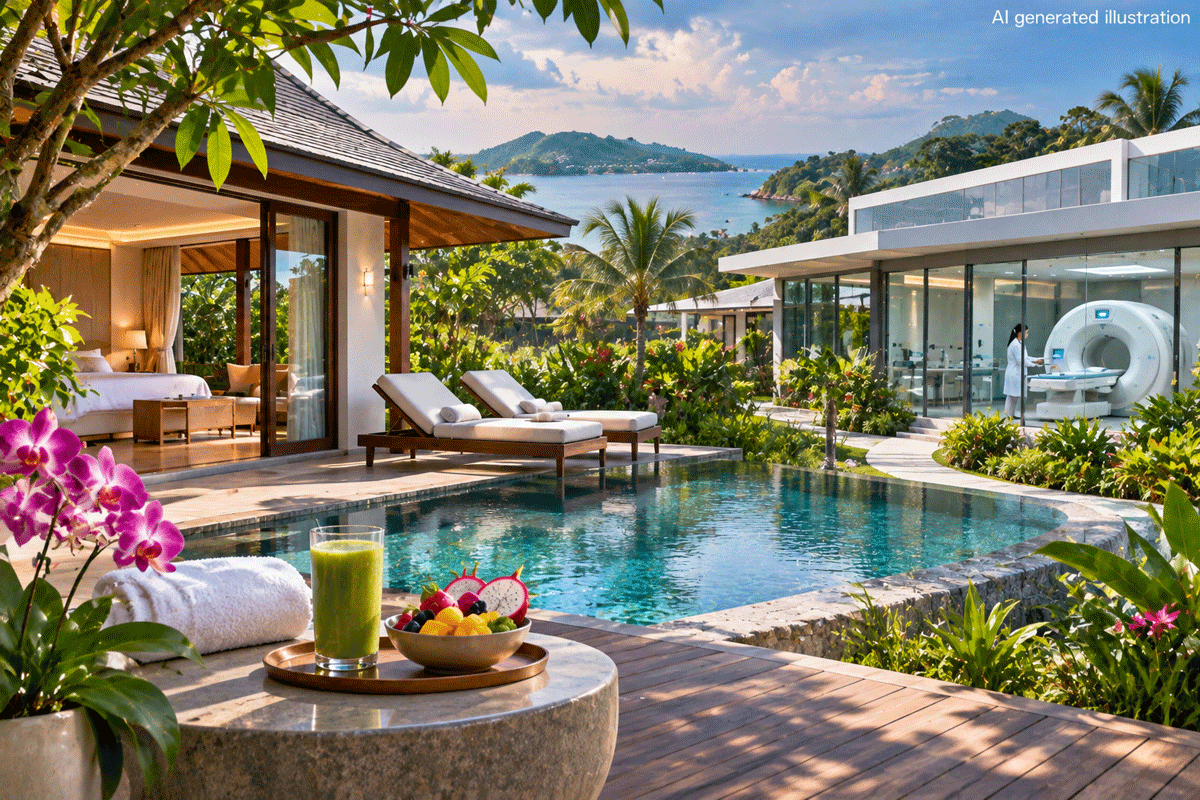
The Swiss longevity specialist brings advanced diagnostics, preventive healthcare and luxury hospitality together at Tri Vananda, marking its first health resort in Southeast Asia
Swiss medical wellness specialist Clinique La Prairie has opened a new longevity resort at Tri Vananda in Phuket, Thailand, combining medical diagnostics and preventive health programmes with luxury accommodation. The opening was presented to international industry representatives on November 11, 2026, during the Global Wellness Summit in Phuket, marking a significant expansion of the company's presence in Southeast Asia.
The resort features 40 private pool villas alongside dedicated medical facilities equipped for magnetic resonance imaging (MRI), computed tomography (CT), X-ray examinations and cardiovascular assessments. According to the operator, the medical team includes 15 specialist physicians, supported by facilities for physiotherapy and rehabilitation. The development represents a more clinically oriented approach to wellness hospitality than conventional spa resorts, with medical examinations forming an integral part of the guest experience.
Located within the Tri Vananda development, the property is designed to attract international visitors seeking personalised preventive healthcare, health assessments and longevity-oriented programmes. Its opening also reflects Phuket's growing role as a destination for medical wellness, where established tourism infrastructure is increasingly being combined with specialist healthcare services. The project adds a new international operator to Thailand's expanding premium health tourism sector.
Medical diagnostics at the centre of the resort concept
A defining feature of the new Clinique La Prairie property is its integration of diagnostic infrastructure within a resort environment.
The medical facilities allow guests to undergo a range of examinations without relying exclusively on external healthcare providers. Imaging equipment, cardiovascular assessments and specialist consultations form part of an approach intended to establish individual health profiles before personalised programmes are developed.
According to the company, these assessments can include the analysis of more than 300 biomarkers, covering different aspects of physiological health.
The results are intended to inform programmes combining medical consultations with nutrition, physical activity, lifestyle management and wellness treatments.
This approach reflects a broader trend in international medical wellness, with providers seeking to move beyond relaxation-focused experiences towards services incorporating preventive medicine and individual health monitoring.
However, the availability of sophisticated diagnostic technology does not automatically establish the medical value of every examination offered.
Extensive testing may identify relevant health risks, but it can also produce incidental findings and unnecessary follow-up investigations. The benefits of individual assessments depend on clinical indications, the reliability of the tests and the medical decisions that follow.
Similarly, the scientific evidence supporting specific longevity and anti-ageing interventions varies considerably. Established preventive measures should be distinguished from experimental approaches or commercial programmes whose effects on human lifespan have not been demonstrated.
A new model for luxury medical wellness
The Phuket resort combines its medical infrastructure with a relatively small accommodation offering of 40 pool villas.
This limited capacity reflects a premium hospitality model focused on individual attention and longer, programme-based stays rather than high-volume tourism.
For international guests, the combination of private accommodation and on-site medical services may simplify the organisation of preventive health assessments and wellness activities during a single visit.
The presence of physiotherapy and rehabilitation facilities also broadens the range of services available within the resort.
Nevertheless, these facilities should not automatically be equated with a specialised postoperative rehabilitation hospital. The suitability of any recovery programme depends on the medical condition involved, the qualifications of the treating professionals and the level of clinical supervision available.
Clinique La Prairie is internationally associated with premium longevity and medical wellness services, particularly through its established operations in Switzerland.
Its expansion into Phuket brings that positioning to a destination with extensive international air connections, luxury hospitality infrastructure and an established healthcare tourism industry.
The Tri Vananda project provides a setting in which accommodation, medical services and wellness experiences can be integrated within a single development.
For Thailand, the investment illustrates how international health tourism is diversifying beyond conventional hospital treatment and traditional spa holidays.
Phuket strengthens its position in preventive health tourism
The resort's opening coincided with the 2026 Global Wellness Summit, held in Phuket from November 10 to 13.
The event brought together international representatives from wellness, healthcare, hospitality and investment, with longevity and preventive medicine among the major themes.
Against this background, the opening of Clinique La Prairie Phuket provides a concrete example of investment in the convergence of healthcare and wellness hospitality.
Thailand has long attracted international visitors for medical treatment, particularly through private hospitals and specialist healthcare providers. Its wellness tourism sector has also benefited from traditional Thai massage, spa services, hospitality expertise and the country's established appeal as a leisure destination.
Medical longevity resorts occupy a different position within this market.
Rather than concentrating on individual medical procedures, they typically offer structured programmes intended to assess health risks, encourage lifestyle changes and support longer-term wellbeing.
Their commercial appeal increasingly depends on the ability to combine qualified medical personnel, appropriate diagnostic services and a comfortable environment for international guests.
The Clinique La Prairie development is particularly notable because its reported medical infrastructure extends beyond the consultation rooms and basic health assessments found at many wellness properties.
At the same time, the distinction between clinical capability and demonstrated treatment effectiveness remains essential.
For prospective international guests, relevant considerations include the qualifications of medical staff, the clinical justification for proposed tests, transparent programme costs and arrangements for follow-up care after returning home.
The operator has not provided detailed figures on expected international guest numbers, principal source markets or the proportion of visitors likely to use the resort primarily for medical services.
Its longer-term contribution to Phuket's health tourism economy will therefore depend on demand for its specialised programmes and the extent to which guests regard integrated diagnostics and medical supervision as valuable additions to luxury wellness travel.
The opening nevertheless represents a significant development in Thailand's premium medical wellness sector. By bringing advanced diagnostic facilities and specialist medical services into a purpose-built resort, Clinique La Prairie is introducing a model that connects preventive healthcare with international hospitality more closely than traditional spa tourism.
For Phuket, the project strengthens its appeal to travellers seeking medically informed wellness experiences while illustrating the growing importance of clinical credibility in the international longevity market.
Image Credit: AI generated illustration