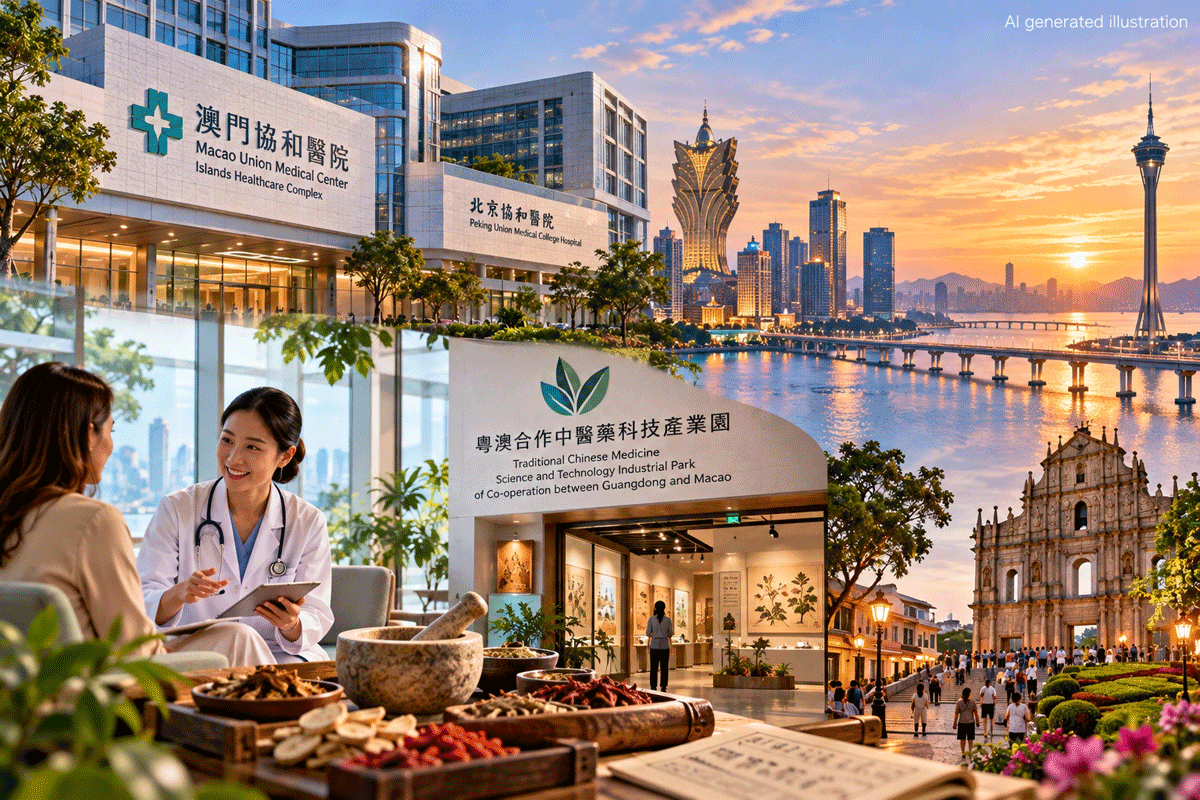
Medical infrastructure and traditional Chinese medicine feature in regional efforts to connect healthcare, cultural experiences and tourism
Macao and neighbouring Hengqin are drawing attention to the potential of cross-border health tourism as part of wider efforts to diversify the region's visitor economy. During the 12th Global Tourism Economy Forum, held in Macao in October 2026, delegates were introduced to healthcare facilities and traditional Chinese medicine initiatives that illustrate how medical services could become part of the region's expanding tourism offering.
The programme included visits to the Islands Healthcare Complex – Macao Medical Center of Peking Union Medical College Hospital, also known as Macao Union Medical Center, and the Traditional Chinese Medicine Culture Experience Hall in Hengqin. Both facilities were presented within the framework of regional cooperation linking tourism, healthcare, cultural experiences and economic development.
The initiative reflects Macao's ambition to broaden its international identity beyond gaming and conventional leisure tourism. By combining modern medical infrastructure with traditional Chinese medicine and the wider resources of the Guangdong-Hong Kong-Macao Greater Bay Area, the region is exploring opportunities to attract visitors interested in health-related services. However, the forum did not announce specific international patient targets or new medical travel packages associated with these facilities.
Modern healthcare strengthens Macao's tourism diversification
The Macao Union Medical Center represents an important development in the city's healthcare infrastructure. Located within the Islands Healthcare Complex, the hospital operates through cooperation with Peking Union Medical College Hospital, one of mainland China's established medical institutions.
The facility is intended to strengthen specialist healthcare provision in Macao while supporting the development of medical services with broader regional and international relevance. Its connection with a major mainland Chinese hospital provides a foundation for clinical cooperation and the exchange of medical expertise.
For health tourism, the centre offers an opportunity to connect specialist healthcare with Macao's established hospitality infrastructure. The city has extensive hotel capacity, international transport connections and experience serving visitors from different markets.
Nevertheless, the existence of advanced medical facilities does not automatically establish a medical tourism market. Attracting patients from abroad requires coordinated international services, transparent treatment information, suitable regulatory arrangements and reliable follow-up care.
Hengqin provides a complementary element through its focus on traditional Chinese medicine. The Traditional Chinese Medicine Science and Technology Industrial Park of Co-operation between Guangdong and Macao supports activities associated with the development and promotion of traditional medicine.
Its cultural experience hall introduces visitors to traditional Chinese medical concepts and practices, creating opportunities to combine educational tourism with broader health and wellness experiences.
Such initiatives may help diversify the region's visitor economy, although cultural presentations of traditional medicine should be distinguished from clinically validated treatments. The effectiveness and safety of individual traditional interventions depend on the specific application and the available scientific evidence.
Regional cooperation creates new possibilities
The health-related visits formed part of the Global Tourism Economy Forum's wider programme examining tourism diversification, investment and international cooperation.
The event brought together approximately 1,300 participants from around 30 countries and regions. Its agenda included discussions on economic resilience, sustainable tourism and the integration of cultural and tourism industries.
Macao's approach to health tourism is closely connected to its geographical position. Hengqin, located immediately across the border in neighbouring Zhuhai, is being developed as an important area for economic cooperation between Guangdong and Macao.
The proximity of the two destinations creates opportunities for complementary services. Macao can contribute its established international hospitality sector, while Hengqin offers additional space for healthcare-related industries, research activities and traditional medicine initiatives.
For international visitors, such cooperation could eventually support travel programmes combining medical consultations, wellness activities, cultural experiences and accommodation across the two destinations.
However, the development of genuinely integrated cross-border healthcare services would require practical arrangements covering patient mobility, medical records, professional responsibilities and continuity of care. The forum's programme highlighted the facilities and regional ambitions but did not establish that such comprehensive packages are already available.
The broader tourism cooperation discussed during the event also extended to Hainan. Macao's tourism authorities and their counterparts in Hainan signed a memorandum of understanding intended to strengthen cooperation in tourism development and related activities. Although the agreement was not presented as a dedicated medical tourism initiative, it illustrates the wider network of regional partnerships being developed.
For Macao and Hengqin, the combination of hospital infrastructure, traditional medicine and international tourism services offers a potential basis for a more diversified health tourism economy. The next stage will depend on whether regional cooperation produces accessible, clearly defined healthcare and wellness services for visitors from outside the immediate region.
The developments presented at the forum indicate growing interest in connecting healthcare with tourism across southern China. Their significance for international health tourism will ultimately be determined by the availability of concrete services, the quality of medical provision and the ability to coordinate patient experiences across administrative borders.
Image Credit: © AI generated illustration