
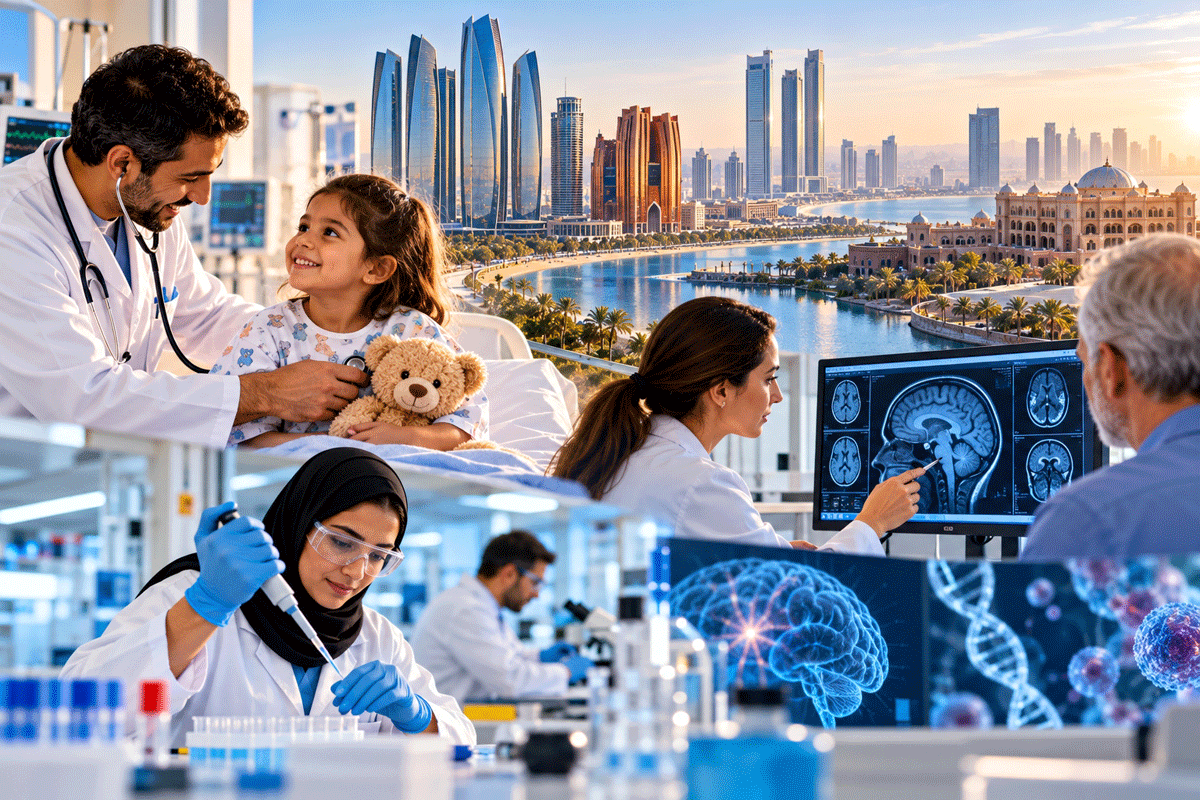
Collaborations with US and UK medical providers strengthen paediatric care, neurological diagnostics and advanced therapies as the emirate seeks to attract regional patients
Abu Dhabi is expanding its specialised healthcare capabilities through international medical partnerships, advanced diagnostics and research into innovative therapies. At the Abu Dhabi Future Health Summit, healthcare executives outlined developments in paediatric medicine, neurological care and cell-based treatments that could strengthen the emirate’s position as a regional destination for complex medical services.
Among the most significant initiatives is the collaboration between Sheikh Khalifa Medical City (SKMC) and Cincinnati Children's Global Health Consultancy. Launched in April 2025, the partnership has conducted 36 specialist clinics and treated more than 1,100 patients, according to figures presented at the summit. The programme is designed to expand local treatment capabilities while reducing the need for children from the United Arab Emirates to travel abroad for specialised care.
The initiative also has an international dimension. Its partners intend to develop Abu Dhabi into a referral destination for paediatric patients from other Gulf Cooperation Council countries. Alongside this programme, healthcare group M42 is working with British specialists to establish a dedicated brain and memory clinic, while the Abu Dhabi Stem Cells Centre is pursuing clinical research into advanced treatments for neurological disorders.
Paediatric partnership develops specialist capabilities
The collaboration between Sheikh Khalifa Medical City and Cincinnati Children's focuses on transferring medical expertise and developing sustainable specialist services in Abu Dhabi.
Dr Daniel von Allmen, Regional President of Cincinnati Children's Global Health Consultancy, explained that the objective extends beyond temporary visits by international physicians.
“The point of this whole relationship is not just to bring physicians in and have them leave, but really to build the capability and the capacity here to care for children here in Abu Dhabi and the rest of the UAE,” he said.
The programme includes knowledge exchange between medical teams in Abu Dhabi and the United States, alongside the introduction of specialised technologies and treatment approaches.
Areas of cooperation include complex cardiac and neurological procedures, liver conditions and paediatric oncology. Von Allmen also reported encouraging progress among four children who underwent complex brain procedures and were monitored for six months. The available information does not establish longer-term outcomes or provide sufficient clinical details to assess the effectiveness of those interventions.
Beyond strengthening domestic services, the partnership aims to attract children requiring specialised medical care from other GCC countries.
This represents an important development in regional patient mobility. Abu Dhabi is seeking to retain patients who might otherwise travel to established international medical centres while also developing services capable of receiving referrals from neighbouring countries.
New neurological clinic and diagnostic partnerships
Healthcare group M42 is developing a brain and memory clinic in the UAE through a partnership with UK-based Re:Cognition Health.
The planned facility will focus on neurological conditions, including Alzheimer's disease and other disorders affecting cognitive function. According to Dr Laila Abdel Wareth, Chief Executive Officer of M42's Diagnostics Cluster, the collaboration will combine the British provider's specialist experience with diagnostic capabilities available through M42.
These include advanced medical imaging and blood-based testing intended to support earlier identification and assessment of certain neurological conditions.
The announcement did not specify the clinic's opening date, treatment capacity or arrangements for international patients.
M42 is also pursuing cooperation with Exact Sciences in blood-based cancer detection. Abdel Wareth highlighted the difficulties associated with identifying cancers for which established screening options remain limited, particularly ovarian cancer.
Such technologies could eventually expand diagnostic services, although the announcement does not establish the clinical validation, availability or intended screening population of the tests under discussion.
The company is additionally sharing expertise in Alzheimer's testing with Cleveland Clinic Abu Dhabi, reflecting broader cooperation between specialised healthcare providers and diagnostic organisations.
Advanced therapies and medical research
The Abu Dhabi Stem Cells Centre (ADSCC) is pursuing research into advanced therapies, including treatments involving stem cells and genetic technologies.
Professor Angelo L. Vescovi, Professor of Cell Biology and a board member of ADSCC, highlighted developments in gene therapy, CAR-T cell therapy and bone marrow transplantation during the summit.
The centre is also investigating potential treatments for neurodegenerative disorders, including amyotrophic lateral sclerosis (ALS), Parkinson's disease and Alzheimer's disease.
One of its principal research objectives is to obtain authorisation for a Phase III clinical trial involving brain stem cell transplantation in patients with ALS.
The proposed study would follow earlier research that Vescovi described as promising. However, the trial has not yet received the authorisation being sought, and the reported preliminary findings should not be interpreted as confirmation of clinical effectiveness.
Advanced cellular therapies require rigorous evaluation of safety and efficacy before they can be considered established treatment options.
The summit also highlighted pharmaceutical manufacturing as part of Abu Dhabi's healthcare development strategy. UAE-based ADCAN Pharma is working with international partners on the local production of generic medicines and biosimilars, aiming to strengthen regional pharmaceutical supply capabilities.
Taken together, the initiatives illustrate Abu Dhabi's efforts to combine international clinical expertise, specialised medical infrastructure and research capabilities within its healthcare system.
For international healthcare markets, the most immediate significance lies in the development of specialist services that could alter regional referral patterns. While several projects remain at the planning or research stage, the established paediatric partnership provides an example of how international cooperation is already contributing to local treatment capacity.
Abu Dhabi's ability to attract more patients from neighbouring countries will ultimately depend on the availability of specialised services, documented clinical outcomes, international referral arrangements and the practical accessibility of care.
Image Credit: AI generated illustration