From Baden-Baden to Bad Kissingen, Germany’s historic spa destinations offer thermal bathing, rehabilitation services and health-oriented holidays
Germany has one of Europe’s most established traditions of spa medicine, with historic resort towns combining mineral springs, therapeutic bathing and specialised healthcare facilities. Today, these destinations attract visitors seeking relaxation, preventive health programmes, rehabilitation and, in some cases, medically supervised treatments.
The country’s spa landscape is particularly diverse. Some destinations are internationally recognised for their thermal baths and architectural heritage, while others have developed strong profiles in rehabilitation, respiratory health or therapeutic mineral-water treatments. This variety allows travellers to choose between traditional wellness holidays and more structured health programmes, depending on their individual needs.
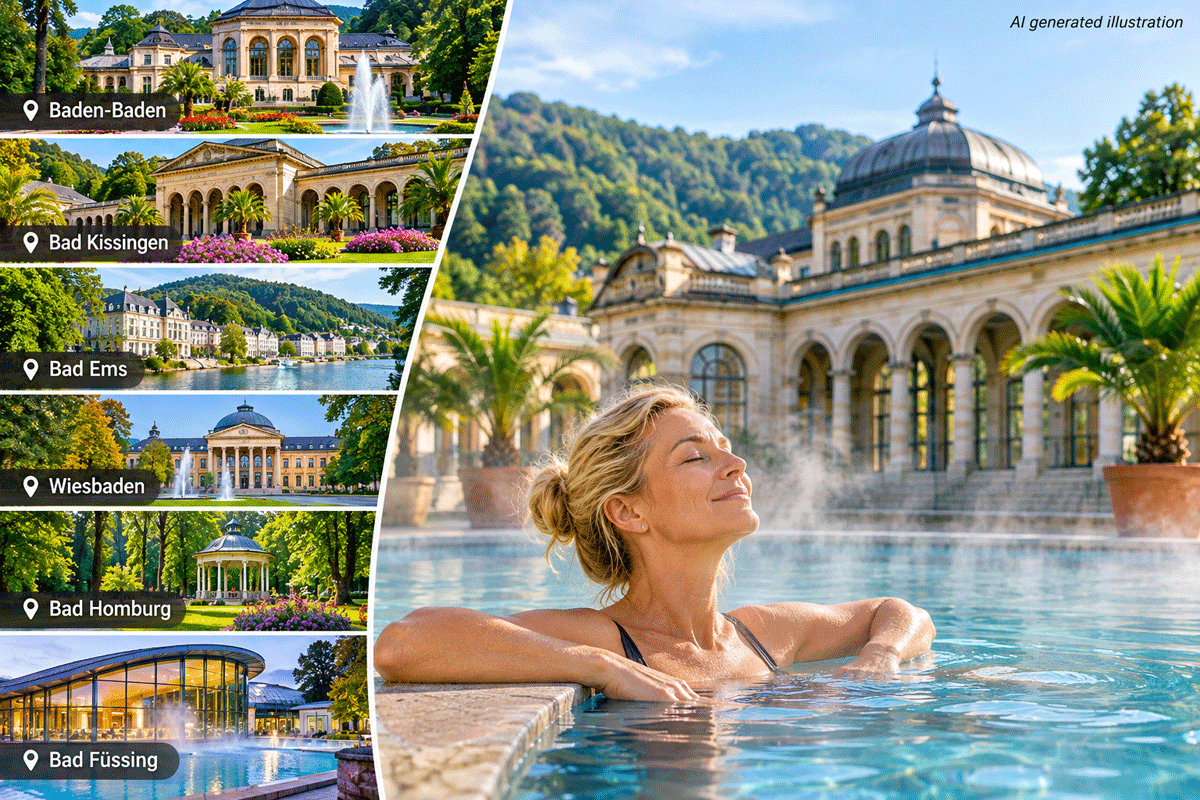
Among Germany’s most distinctive destinations are Baden-Baden, Bad Kissingen, Wiesbaden, Bad Ems, Bad Homburg and Bad Füssing. The selection reflects their historical importance, distinctive natural healing resources, healthcare infrastructure and appeal to international visitors rather than a formal ranking of medical quality. Four of these towns belong to the UNESCO-listed Great Spa Towns of Europe, underlining the international significance of Germany’s spa culture.
UNESCO Heritage and Historic Thermal Baths
Baden-Baden, on the edge of the Black Forest, is arguably Germany’s most internationally recognisable spa destination. Its bathing tradition dates back to Roman times, while the elegant Kurhaus, parks and grand hotels reflect its development into a fashionable European resort during the nineteenth century. Today, visitors can choose between the modern Caracalla Therme and the historic Friedrichsbad, which combines Roman and Irish bathing traditions in a sequence of 17 stations. Twelve thermal springs supply mineral-rich water reaching temperatures of up to approximately 68°C.
Bad Kissingen in northern Bavaria offers a different interpretation of traditional spa culture. Its mineral springs, historic drinking facilities, landscaped gardens and monumental Regentenbau recall the era when European aristocrats and political leaders travelled to the town for extended cures. The KissSalis Therme adds a contemporary wellness dimension, while the surrounding Rhön countryside provides opportunities for walking and outdoor recreation. The town remains associated with traditional drinking cures and medical rehabilitation.
Bad Ems, situated in the Lahn valley of Rhineland-Palatinate, completes Germany’s UNESCO spa trio. Its compact historic centre contains an exceptional concentration of nineteenth-century spa architecture. The town’s thermal mineral springs have long been associated with respiratory treatments, and the Emser Therme offers modern bathing and wellness facilities. The wooded hills surrounding the valley add an attractive setting for visitors combining thermal relaxation with gentle outdoor activity.
Urban Spa Culture and Medical Wellness
Wiesbaden, the capital of Hesse, combines the amenities of a major city with a longstanding thermal bathing tradition. Its hot mineral springs helped establish its reputation as an international resort in the nineteenth century. The historic Kaiser-Friedrich-Therme, opened in 1913, preserves an elaborate Art Nouveau bathing environment, while the Kurhaus and extensive parks reflect the city's cosmopolitan spa heritage. Its proximity to Frankfurt International Airport also makes Wiesbaden accessible to overseas visitors.
Bad Homburg, north of Frankfurt, offers another combination of traditional spa culture and contemporary wellness. The town developed around mineral springs and became a fashionable nineteenth-century resort. Its Kurpark, historic spa buildings and modern wellness facilities, including the Kur-Royal Day Spa, provide a setting for shorter restorative stays. Its location near Frankfurt makes it particularly suitable for international travellers seeking a spa experience without a lengthy onward journey.
Bad Füssing, close to the Austrian border in southeastern Bavaria, has a more pronounced focus on thermal bathing and health-related tourism. Unlike the historic aristocratic resorts, its modern development followed the discovery of thermal mineral water in the twentieth century. Three major bathing complexes — Therme Eins, Europa Therme and Johannesbad Therme — form the centre of its tourism offering.
The resort is particularly associated with musculoskeletal complaints and rehabilitation-oriented services. Its accommodation sector, therapy facilities and extensive walking and cycling opportunities support both short wellness breaks and longer health-focused stays. According to local tourism figures, Bad Füssing records around two million overnight stays annually, illustrating the scale of its health tourism economy.
From Traditional Cures to International Health Tourism
Germany’s spa towns demonstrate how historical therapeutic traditions can coexist with modern wellness and healthcare services. Their appeal extends beyond mineral bathing to include rehabilitation, preventive health programmes, physiotherapy, outdoor activity and cultural tourism.
The three UNESCO-listed destinations — Baden-Baden, Bad Kissingen and Bad Ems — are particularly notable for their architectural heritage and international history. Wiesbaden and Bad Homburg offer convenient urban spa experiences, while Bad Füssing stands out for its extensive thermal bathing infrastructure and rehabilitation-related services.
For international visitors, an important distinction is whether a destination primarily offers recreational wellness or medically supervised treatment. Access to rehabilitation programmes and prescribed therapies may depend on medical assessment, individual eligibility and insurance arrangements.
Although mineral springs remain central to the identity of these destinations, their therapeutic applications should not be confused with evidence that thermal bathing can cure particular diseases. The suitability of treatments depends on individual medical circumstances.
Germany’s established spa infrastructure nevertheless provides a strong foundation for health-oriented travel. By combining natural resources, medical services, accommodation and cultural attractions, its leading spa towns continue to serve visitors seeking experiences that extend beyond conventional leisure tourism.
Image Credit: AI generated illustration