Foreign visitor spending on medical and wellness services in the South Korean city rises by 83.5 percent, while hotels develop new experiences combining thermal bathing, meditation and outdoor activities
Busan is emerging as an increasingly important destination for international health and wellness tourism, supported by strong growth in foreign visitor expenditure and continued investment in specialised hospitality experiences. According to figures released by Korea Tourism Data Lab in September 2026, international visitors spent KRW 92.08 billion, approximately USD 68 million, on medical and wellness services in the South Korean coastal city between January and August. This compares with KRW 50.19 billion during the same period in 2025, representing an increase of approximately 83.5 percent.
Medical and wellness services accounted for 10.5 percent of total international tourism expenditure in Busan during the eight-month period. The figures cover both medical and wellness-related spending and therefore do not provide a separate measure of the city's spa tourism market. Nevertheless, they illustrate the growing economic importance of health-related services within Busan's international visitor economy and highlight opportunities for tourism businesses to diversify their offerings.
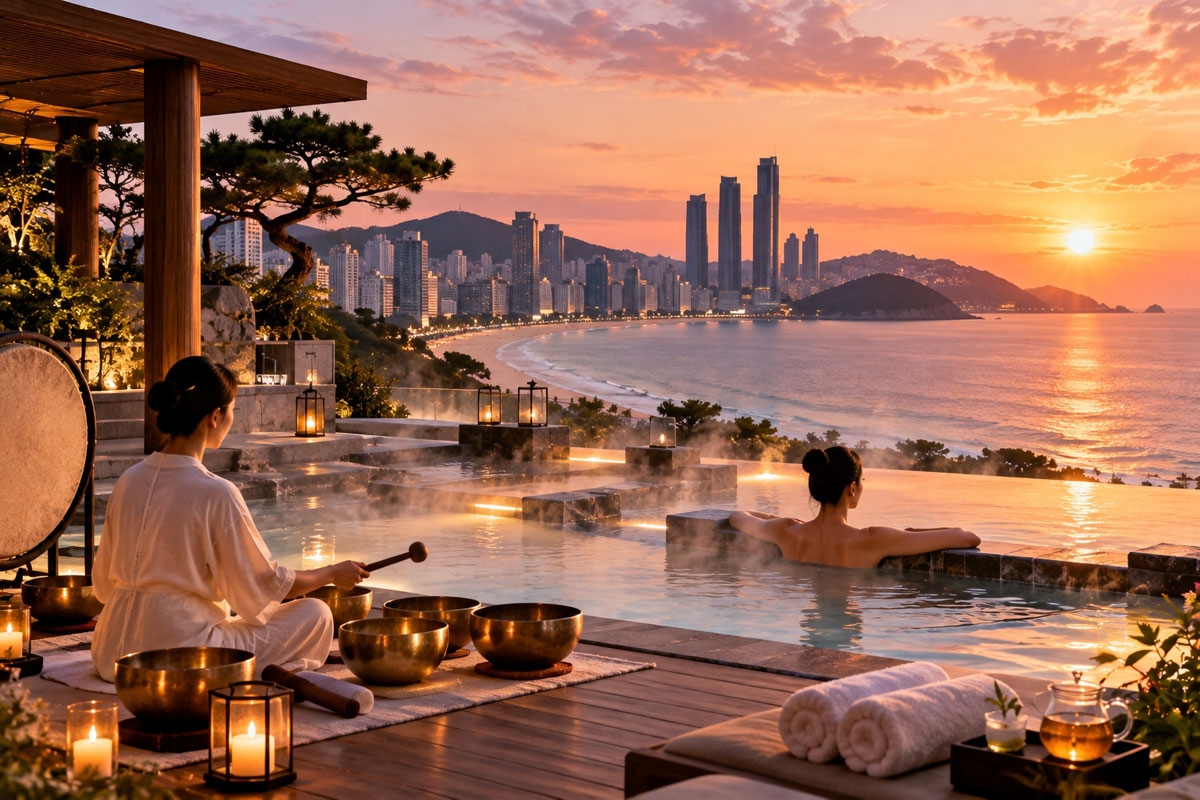
One example of this development is Paradise Hotel Busan, which has expanded its wellness activities through a programme combining outdoor thermal bathing with guided relaxation and mindfulness practices. The initiative, known as Spa-covery, is offered at the hotel's Cimer spa overlooking the Haeundae coastline. Developed in cooperation with AP Beauty, a luxury skincare brand belonging to South Korean cosmetics group Amorepacific, the concept brings together established spa facilities and organised wellness activities.
A Broader Approach to Hotel Wellness
The Paradise Hotel initiative illustrates how accommodation providers can extend their wellness offerings beyond conventional spa treatments. Instead of presenting individual services in isolation, the hotel is developing activities that integrate relaxation techniques, thermal facilities and the surrounding coastal environment.
The programme was introduced through a guided wellness session on October 2, 2026, combining gentle movement, meditation and the use of sound instruments with access to the hotel's outdoor spa facilities.
The concept is aimed at guests interested in experiences that complement conventional leisure travel with activities associated with relaxation and personal well-being.
Such programmes allow hotels to make greater use of existing facilities while creating additional reasons for guests to select a particular property. They can also provide opportunities for partnerships with specialised wellness providers and consumer brands.
For international tourism operators, these developments may offer new possibilities for packaging accommodation with organised activities rather than marketing spa access as a standalone amenity.
From Spa Facilities to Active Wellness
Paradise Hotel Busan has also introduced activities that extend beyond its thermal facilities.
Earlier in 2026, the property organised a running programme in cooperation with activewear company Vuori and offered recreational beach volleyball classes at Haeundae Beach.
The different formats reflect an approach to wellness hospitality that accommodates varying guest preferences. Some travellers may prioritise relaxation and quiet surroundings, while others prefer activities involving movement, outdoor recreation or guided group participation.
Combining these options can help hotels appeal to a wider range of visitors without positioning every wellness activity as a medical service.
The distinction is particularly relevant in health tourism. Recreational meditation, thermal bathing and sound-based relaxation experiences should not be confused with clinical treatment or medically supervised rehabilitation.
Although such activities may contribute to an enjoyable and restorative holiday experience, their inclusion in a hotel programme does not establish therapeutic effectiveness for specific medical conditions.
Health-Related Tourism Gains Economic Importance
The growth in foreign visitor spending provides an important context for the development of new wellness products in Busan.
The increase from KRW 50.19 billion to KRW 92.08 billion within one year represents an additional KRW 41.89 billion in expenditure on medical and wellness services during the January–August period.
However, the combined statistical category requires careful interpretation. It does not identify the respective contributions of medical treatment, rehabilitation, spa services or other wellness activities.
The expenditure increase therefore cannot be attributed directly to hotel wellness programmes or interpreted as evidence that recreational spa tourism alone has expanded at the same rate.
Nevertheless, the figures indicate that health-related services account for a substantial component of Busan's international tourism economy.
For the destination, this creates opportunities to strengthen connections between healthcare providers, hotels, wellness businesses and other tourism services, while developing products appropriate to the needs of different visitor groups.
Opportunities for Year-Round Tourism Development
Busan's coastal setting and established tourism infrastructure provide a foundation for developing wellness experiences throughout the year.
Outdoor activities can take advantage of the city's beaches and surrounding landscapes, while indoor spa facilities and structured programmes offer alternatives during less favourable weather conditions.
For hotels, combining these elements may support product differentiation and help reduce dependence on conventional seasonal leisure demand.
The commercial potential extends beyond individual properties. Wellness-oriented visitors may also generate demand for restaurants, cultural attractions, transport services and other local tourism businesses.
At the same time, the development of international health and wellness tourism requires clear communication about the services being offered. Recreational wellness experiences, preventive health services and clinical treatment programmes address different needs and should be marketed accordingly.
Paradise Hotel Busan's expansion into guided wellness activities provides an example of how hospitality businesses are adapting their existing facilities to changing visitor interests.
Alongside the substantial increase in foreign expenditure on medical and wellness services, such initiatives illustrate the range of opportunities available to Busan as it develops its position in the international health and wellness tourism market.
Image Credit: © AI generated illustration