Lusaka development combines specialist hospitals, medical training and hospitality as Zambia seeks to attract patients from across Southern Africa
Zambia is moving ahead with plans for a US$2 billion Medical City in Lusaka that is intended to reduce the country’s dependence on treatment abroad while establishing the capital as a destination for patients from across Southern Africa.
The project brings together specialist medicine, medical education and hospitality within a single development. A Memorandum of Understanding has been signed between the Zambian government and DIHAD Sustainable Project Management L.L.C. at the UAE-Zambia Business Forum in Abu Dhabi. Health Minister Professor Roma Chilengi signed for Zambia, while Eng. Khaled Al Attar represented DIHAD. President Hakainde Hichilema attended the signing ceremony.
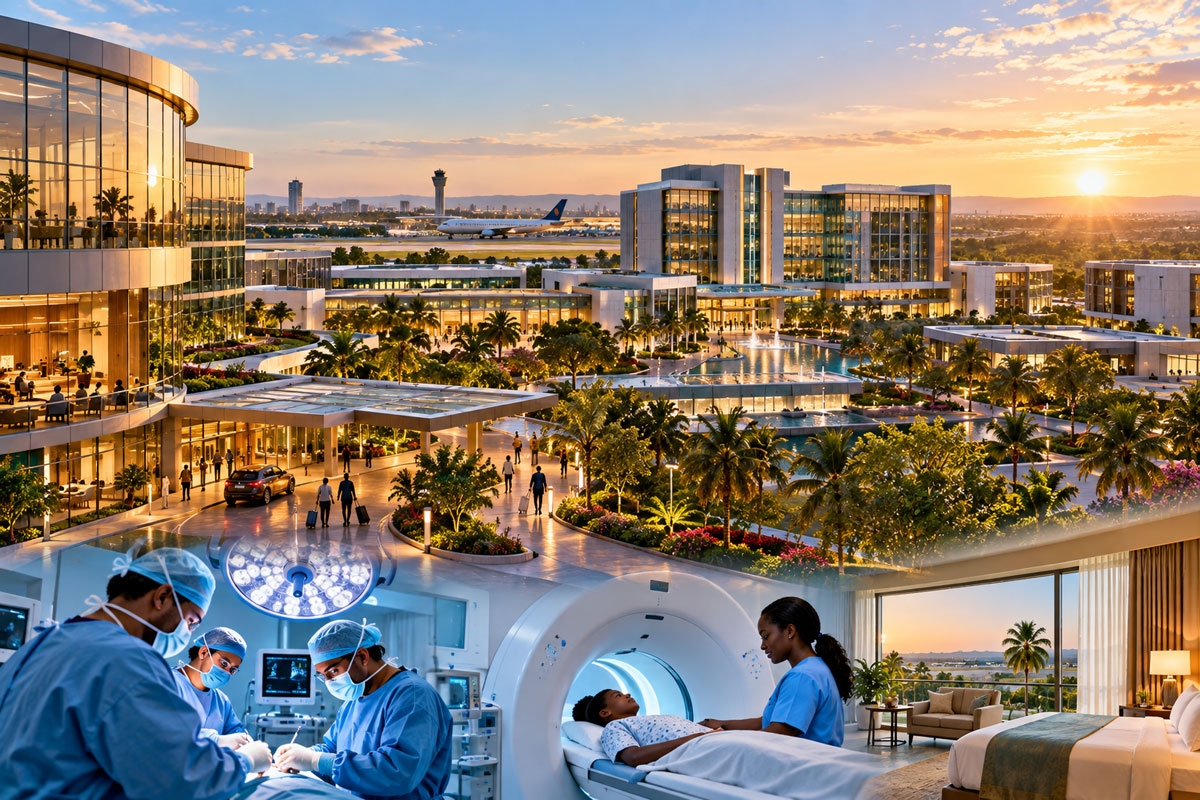
The Medical City is planned for Lusaka’s Airport City, creating a healthcare district in which hospitals and training facilities would be complemented by accommodation, commercial services and conference infrastructure.
Zambia targets regional patient flows
Health tourism is an explicit part of the strategy. Zambia currently sends patients abroad for complex procedures that cannot be adequately provided within the country, generating costs both for families and the public healthcare system.
“For years, Zambians have travelled abroad for complex treatment at great cost to families and Government. The Medical City will reverse that flow, keeping our patients at home and drawing patients from across the region,” Chilengi said.
If successful, the project would therefore address two patient flows simultaneously: retaining Zambian patients who currently travel internationally for treatment and attracting patients from neighbouring countries seeking specialist care.
Cardiac, transplant and cancer care at the clinical core
Two national specialist centres are planned as key components of the development. A National Paediatric Cardiac Centre is intended to provide treatment for children with heart conditions, while a National Renal Transplant and Kidney Disease Centre would provide dialysis and transplantation services.
The plans also envisage an expansion of Zambia’s existing radiotherapy capabilities into a broader oncology platform incorporating cancer diagnostics, treatment and research.
Further specialist areas are expected to include robotic surgery, neurosurgery, orthopaedics, maternal and child health and rehabilitation. The range of disciplines reflects the project’s ambition to provide complex treatments that currently contribute to outbound medical travel.
Medical education forms part of the project
Training is planned alongside clinical treatment. The Medical City concept includes a university and a medical school in addition to hospital facilities, with the aim of increasing Zambia’s domestic supply of medical specialists.
The government has indicated that the hospital and training facilities should be developed first. This would give the clinical and educational components priority over the wider commercial development.
Building specialist capacity locally could become important to the project’s longer-term health tourism ambitions. Advanced facilities alone cannot establish a regional treatment destination without sufficient physicians, specialists and other qualified healthcare professionals to operate them.
Hotels and conference facilities support health tourism model
The wider development is conceived as a self-contained district rather than a conventional hospital campus. Plans include three-, four- and five-star hotels as well as serviced hotel apartments.
A convention centre, auditorium and outdoor theatre are also envisaged, alongside offices, retail facilities, wellness and sports infrastructure, parks and residential accommodation.
This combination is designed to serve patients as well as accompanying relatives, healthcare professionals and conference visitors. The hospitality component is particularly relevant to Zambia’s intention to develop international and regional patient travel around the new medical facilities.
The government has also connected the Medical City with its broader Grow Zambia Agenda and its target of attracting five million tourist arrivals.
“This project directly supports the Grow Zambia Agenda and its target of five million tourist arrivals,” Chilengi said.
Financing remains a key next step
The US$2 billion figure represents the projected scale of the development rather than confirmation that the entire investment has already been financed.
The agreement signed with DIHAD is a Memorandum of Understanding, and further work will be required to secure partners and investment for the planning, financing and construction of the Medical City.
The project nevertheless represents a significant attempt to connect healthcare investment with tourism and hospitality development. If implemented as envisaged, Lusaka would gain specialist medical infrastructure specifically designed not only to reduce outbound treatment travel but also to compete for patients within the Southern African region.
Image Credit: © AI generated illustration