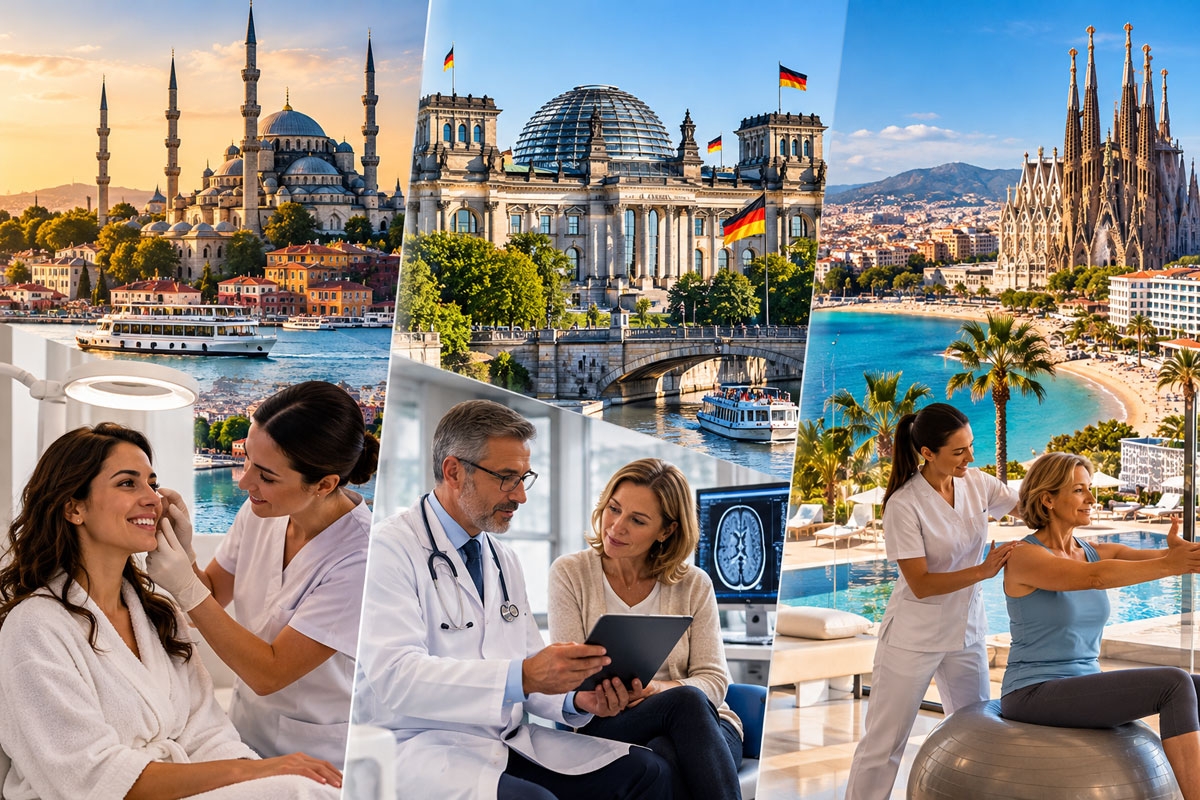
Three established destinations illustrate how medical expertise, international accessibility and tourism infrastructure are creating different opportunities in Europe's healthcare travel market
Europe's international health tourism market is developing along several distinct paths, with destinations competing through specialised medical services, established healthcare systems and increasingly sophisticated combinations of treatment, recovery and hospitality. Turkey, Germany and Spain illustrate three different approaches to attracting international patients and health-conscious travellers, offering insights into how healthcare providers and tourism businesses can position themselves in a competitive international market.
Turkey has developed a large international patient market built partly around competitively priced elective procedures and extensive tourism infrastructure. Germany attracts patients seeking specialised hospital treatment and advanced clinical expertise, while Spain combines private healthcare services with established leisure destinations and opportunities in rehabilitation and wellness travel.
Although differences in national reporting methods prevent a reliable comparison of total medical tourist arrivals, the three countries demonstrate how medical tourism is becoming an increasingly diversified segment of international travel.
Turkey: High Patient Volumes and Competitive Medical Services
Turkey has established one of Europe's most visible international health tourism industries, attracting patients from European countries, the Middle East and other international markets.
According to figures published by the Turkish healthcare promotion agency USHAŞ, based on data from the Turkish Statistical Institute, approximately 1.40 million visitors travelled to Turkey for healthcare services in 2025.
Health tourism revenue reached approximately USD 3.02 billion, remaining almost unchanged from the previous year despite a decline in visitor numbers from 1.51 million in 2024.
The figures suggest a shift in the market's economic structure. While patient volumes decreased by approximately 7.2 percent, average revenue per recorded health visitor increased.
Dental treatments, hair transplantation, aesthetic surgery and ophthalmological procedures are among the country's internationally promoted services. Major centres include Istanbul, Antalya, Ankara and Izmir, where private healthcare facilities operate alongside extensive hotel and transport infrastructure.
Turkey's competitive position is supported by international flight connections, established medical travel intermediaries and healthcare providers experienced in serving foreign patients.
For the tourism industry, medical travel generates demand extending beyond clinical services. Patients and accompanying relatives may require accommodation, airport transfers, translation assistance and suitable facilities during recovery.
The development of integrated treatment and travel packages has consequently become an important feature of the Turkish market.
However, maintaining international confidence also requires consistent medical standards, transparent pricing and reliable follow-up care, particularly for patients returning home shortly after treatment.
Germany: Specialised Medicine and International Patient Care
Germany occupies a different position in the European medical tourism landscape.
Rather than competing primarily through lower treatment prices, the country attracts international patients seeking specialised medical expertise, complex procedures and access to established hospital networks.
Research by the Bonn-Rhein-Sieg University of Applied Sciences found that approximately 182,200 patients travelled to Germany from abroad for medical treatment in 2022, generating an estimated EUR 880 million in healthcare revenue.
The study identified patients from 149 countries, although approximately three-quarters came from neighbouring European states.
Germany's international medical services include specialised cancer treatment, cardiovascular medicine, orthopaedics and other hospital-based disciplines.
Major university hospitals and specialist medical centres in cities such as Berlin, Munich, Hamburg and Heidelberg contribute to the country's international healthcare profile.
For medical travel facilitators, Germany represents a market in which clinical specialisation, treatment planning and continuity of care are particularly important.
International patients may require extensive coordination before arrival, including medical record assessments, treatment estimates and communication with specialist departments.
Accommodation providers and specialised patient service companies can support these journeys through longer-stay arrangements, accessible facilities and services for accompanying relatives.
Unlike conventional leisure tourism, demand for complex medical treatment is primarily determined by clinical needs and the availability of appropriate specialists.
This creates a distinct business environment in which healthcare quality and organisational reliability generally carry greater weight than traditional destination marketing.
Spain: Combining Healthcare with Mediterranean Tourism
Spain offers another model, combining an established private healthcare sector with one of Europe's largest international tourism industries.
The country welcomed approximately 96.8 million international tourists in 2025, according to official Spanish statistics, while international visitor expenditure reached EUR 134.7 billion.
These figures describe tourism overall rather than medical travel specifically. Nevertheless, they demonstrate the scale of the transport, accommodation and visitor services infrastructure available to support health-oriented tourism products.
Spain's medical tourism offering includes private hospital services, dental treatment, fertility medicine, rehabilitation and selected surgical procedures.
Barcelona, Madrid and established Mediterranean tourism regions provide different combinations of healthcare facilities, international accessibility and accommodation.
The country's warm-weather destinations also offer opportunities for wellness programmes, rehabilitation-oriented stays and longer visits combining healthcare services with leisure activities.
For hotels and resorts, this creates possibilities for cooperation with healthcare providers, particularly where suitable accommodation, accessible facilities and extended stays are required.
Spain's broader tourism strategy also emphasises diversification and reducing seasonality, objectives that can complement the development of wellness and health-related travel.
However, the country's large overall tourism market should not be confused with a correspondingly large medical tourism market. Comparable national figures on international patients travelling specifically for treatment remain limited.
Different Markets Require Different Tourism Strategies
The three destinations demonstrate that international health tourism cannot be treated as a single, uniform market.
Turkey's business model relies partly on high-volume international demand for planned procedures, supported by specialised clinics, medical travel intermediaries and established visitor infrastructure.
Germany's position is more closely associated with specialist hospital treatment, complex medical requirements and international patient coordination.
Spain offers opportunities to connect private healthcare, rehabilitation and wellness services with an extensive leisure tourism economy.
These differences influence the role of travel agencies, hotels, transport providers and destination management organisations.
Patients travelling for elective dental or cosmetic procedures may require relatively short stays and coordinated treatment packages. Those receiving complex hospital care often need more extensive logistical support, while wellness travellers may prioritise accommodation quality, climate, physical activity and lifestyle experiences.
For tourism companies, understanding these distinctions is essential when developing partnerships and identifying suitable customer segments.
Healthcare Quality and Patient Experience Become Competitive Factors
Across all three markets, international healthcare travel depends on more than the availability of medical services.
Transparent treatment information, qualified healthcare professionals, reliable patient communication and appropriate aftercare arrangements are fundamental considerations.
The relationship between healthcare providers and tourism businesses also requires clear responsibilities. Medical decisions must remain with qualified professionals, while travel companies can support accommodation, transportation and other non-clinical services.
As destinations seek to expand their international healthcare offerings, the ability to coordinate these different elements may become an increasingly important competitive advantage.
Turkey, Germany and Spain illustrate how diverse Europe's health tourism industry has become. Their contrasting approaches suggest that future development will depend not on a single model of medical travel, but on the ability of destinations to combine credible healthcare services with infrastructure and visitor experiences suited to clearly defined international markets.
Image Credit: AI generated illustration