
Thailand is linking preventive healthcare, longevity and tourism as scientific wellness develops into a growing segment of the country's health economy
Thailand is seeking to turn its established strengths in healthcare and tourism into a broader wellness economy focused increasingly on prevention and healthy ageing. The development reflects a shift from treating illness towards extending the number of years people can remain in good health.
Dr Tanupol Virunhagarun, CEO of Group 8 at Bangkok Dusit Medical Services, which includes BDMS Wellness Clinic, BDMS Wellness Resort and BDMS Silver, outlined this approach at the Destination Deluxe Wellness Summit 2026 in Bangkok. He described wellness as encompassing physical, mental and spiritual health and extending well beyond hospitals and spas into tourism, nutrition, housing and everyday life.
Healthy ageing changes the healthcare equation
Demographic change is adding urgency to the development. People over 60 now account for around 20% of Thailand's population, according to figures cited by Dr Tanupol. The central challenge is not simply increasing life expectancy, but ensuring that additional years are lived in good health.
The figures presented at the summit illustrate the gap. Global life expectancy was put at around 71 years, compared with a healthspan of approximately 61 years. In Thailand, the corresponding figures were about 75 and 65 years.
Dr Tanupol argued that longer lifespans are not necessarily translating into more years lived in good health. In his view, healthspan should therefore become an increasingly important measure when assessing the benefits of longevity.
For healthcare providers, this means addressing risks before disease develops. Dr Tanupol described the transition as a move away from reactive healthcare and towards prevention, particularly as lifestyle-related conditions place increasing pressure on healthcare systems.
Wellness economy heads towards $10 trillion
The transformation is also creating a substantial international market. Figures from the Global Wellness Institute cited at the summit put the global wellness economy at $6.8 trillion, with its value projected to approach $10 trillion by 2029. Annual growth was estimated at around 7.6%, with wellness tourism and wellness real estate among the rapidly expanding segments.
Thailand already has a significant position in this market. Its wellness economy was valued at around $42 billion annually, placing the country 24th worldwide and ninth in Asia-Pacific. Between 2022 and 2023, the country's wellness business grew by 28%, according to figures presented by Dr Tanupol.
Wellness tourism expanded particularly strongly, growing by 36.4% during the period, while wellness real estate increased by 22.9%.
Thailand seeks an integrated wellness ecosystem
Thailand is now attempting to connect healthcare more closely with its established tourism and hospitality industries. According to Dr Tanupol, a National Wellness Economy Board of Thailand has been established as part of efforts to develop the sector, with the ambition of positioning the country among the world's leading wellness destinations.
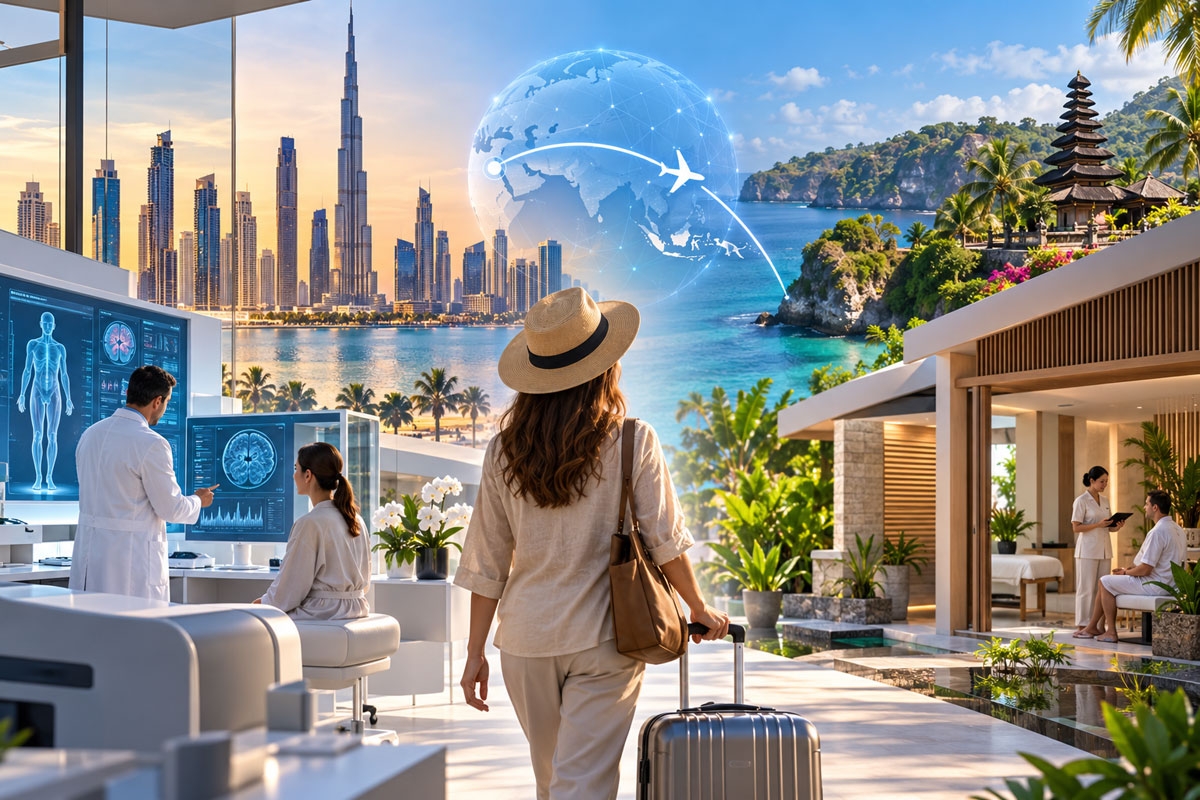
The concept extends beyond attracting travellers for conventional spa or relaxation holidays. Instead, the proposition increasingly combines travel with investments in personal health, prevention and long-term wellbeing.
Such an approach could bring healthcare providers, hotels, tourism companies, airlines, food businesses and property developers into a more closely connected ecosystem. It also reflects changing demand among wellness travellers for experiences promising longer-lasting health benefits rather than temporary relaxation alone.
Prevention becomes part of Thailand's tourism proposition
For international health tourism, the development opens a market between conventional medical travel and traditional wellness holidays. Travellers may not necessarily be seeking treatment for an existing illness, but instead travel for health assessments, prevention, longevity programmes and other services intended to maintain their health.
Thailand is well positioned to pursue this segment because its domestic challenge and its international tourism opportunity increasingly overlap. An ageing population is increasing demand for healthy ageing at home, while the country's established healthcare, hospitality and tourism infrastructure provides a platform for serving international wellness travellers as well.
The challenge will be turning these individual strengths into an integrated system. If healthcare, hospitality and tourism can be connected effectively, scientific wellness could develop from a specialist segment into another pillar of Thailand's international health tourism industry.
Image Credit: © AI generated illustration