
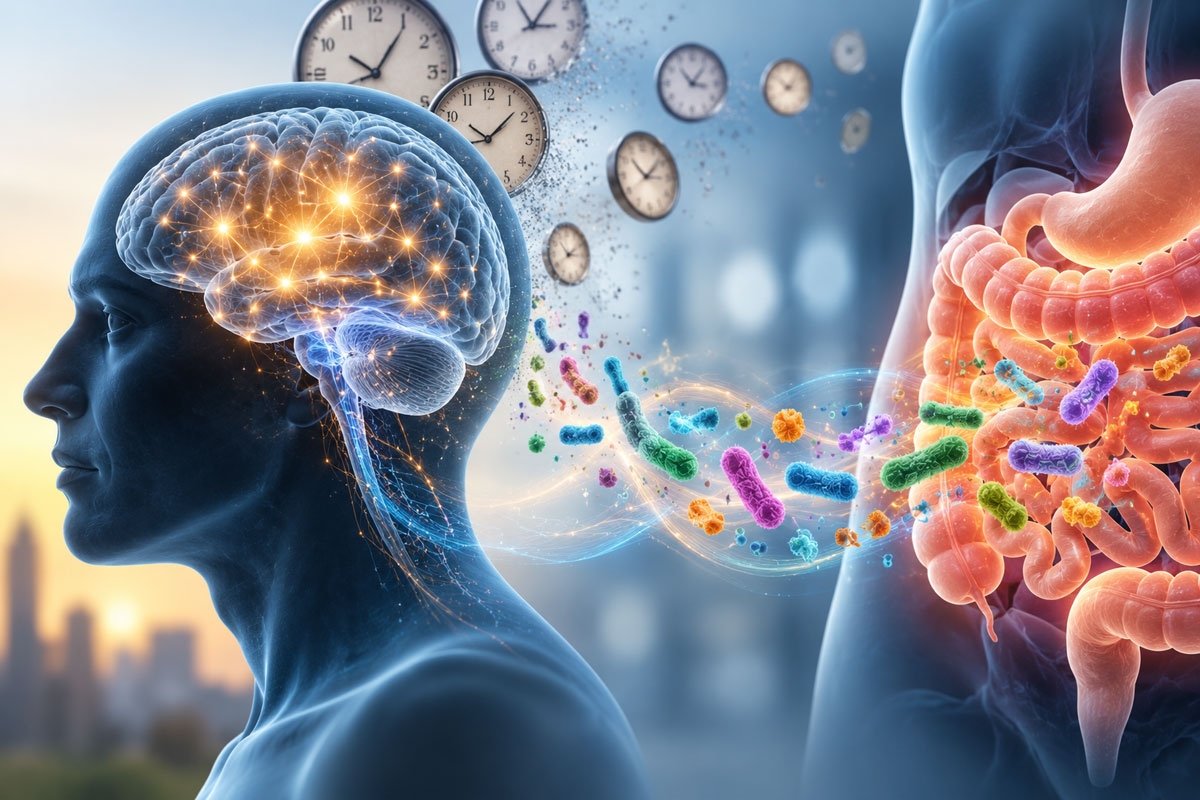
UCLA researchers find that signs of accelerated brain aging may emerge decades before symptoms and are associated with cognition, depression and the gut microbiome
Changes associated with brain aging may be detectable much earlier in life than previously assumed. A new study by UCLA Health has found links between the apparent biological age of the brain, cognitive performance, depressive symptoms and specific features of the gut microbiome.
The researchers analysed brain scans from nearly 1,500 adults across three separate groups. Rather than focusing primarily on older patients or people already diagnosed with neurological disease, the study examined whether subtle signs of accelerated brain aging could also carry significance in younger, generally healthy adults.
The findings suggest that a brain appearing older than a person's chronological age is associated with measurable differences in memory and executive function. In one group, researchers also identified connections between accelerated brain aging and bacteria and metabolic products in the gut, raising the possibility that the gut-brain axis could eventually become relevant to strategies aimed at maintaining cognitive health.
A Brain Aging Index measures the age gap
Researchers used resting-state brain scans to analyse communication between different regions of the brain. They then developed a computer model that estimated a participant's age from these communication patterns.
The difference between this estimated brain age and the participant's actual chronological age was defined as the Brain Aging Index, or BAI.
Across all three groups, participants with brains that appeared older than expected tended to perform worse in tests of working memory and executive function, including abilities related to concentration and organisation. They also reported more symptoms of depression.
The patterns consistently involved areas of the brain associated with memory and self-referential thought.
Gut bacteria and metabolites show associations with brain aging
In one of the study groups, the researchers went a step further by analysing stool samples. This allowed them to investigate whether the Brain Aging Index was associated with characteristics of the gut microbiome and its metabolic products.
A higher BAI was linked to specific gut bacteria and metabolites. These included certain fat molecules, a cholesterol-related compound and lower levels of the hormone estetrol.
The biological pathways implicated by the findings were associated with several fundamental processes, including immune function, blood vessel health, communication between brain cells and cellular energy production.
The study establishes associations rather than demonstrating that changes in the gut cause accelerated brain aging. Nevertheless, the findings provide researchers with potential biological pathways for further investigation.
Brain aging may begin long before old age
“Brain aging doesn’t suddenly begin when we get older but the biological signals may be detectable decades earlier,” said senior author Dr Arpana Church, co-director of the Goodman-Luskin Microbiome Center at UCLA Health.
“By linking these early brain changes with the gut microbiome and its metabolites, we are beginning to identify pathways that could ultimately help us understand who may be at risk and, importantly, where we might intervene to support healthier brain aging.”
The research could ultimately contribute to identifying people at increased risk of cognitive or mood-related decline earlier in life, before obvious symptoms develop.
Gut health could become a target for future prevention
The connection with the microbiome also raises a longer-term question: whether influencing gut biology could eventually contribute to healthier brain aging.
“This ultimately opens the door to exploring whether targeting gut health could one day support healthier brain aging,” Church said.
Such applications remain a subject for future research rather than an established treatment strategy. But if the associations can be confirmed and their mechanisms better understood, the findings could broaden approaches to healthy aging by shifting part of the focus from treating cognitive decline after it emerges towards identifying biological risk factors much earlier in life.
Image Credit: © AI generated illustration