New innovation lab in Bad Zwischenahn brings together spa destinations to rethink natural remedies, outpatient prevention, digital services and cooperation
Lower Saxony's spa towns and health resorts are exploring how traditional therapeutic expertise can be adapted to changing lifestyles and new expectations in preventive healthcare. At the first "Kurort-Lotse 2.0 – Innovationslabor" in Bad Zwischenahn, representatives from across the state's spa sector examined new approaches ranging from the use of natural remedies to digital health services and closer cooperation between destinations.
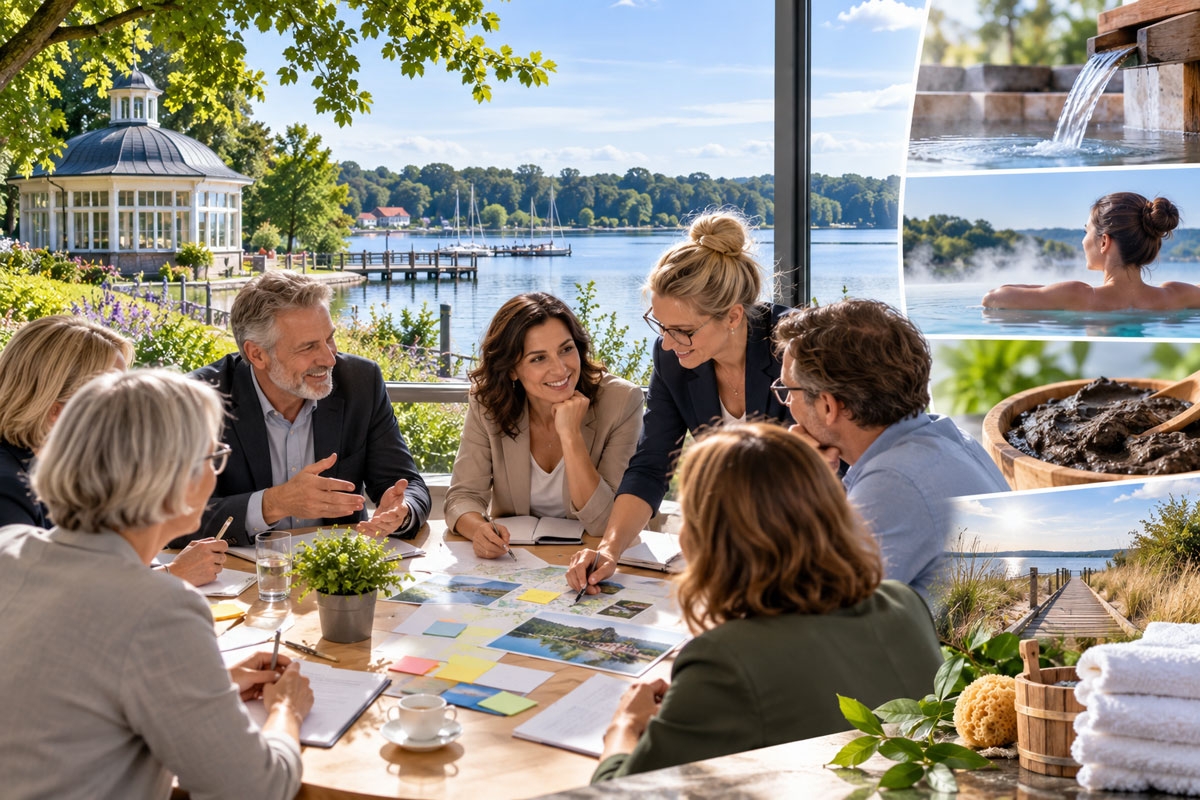
Organised by the Lower Saxony Spa Association, the new format builds on the existing Kurort-Lotse qualification programme but moves away from conventional training. Instead of primarily transferring knowledge, the innovation lab was designed as a space for participants to develop ideas collectively, challenge established assumptions and consider how spa medicine and preventive health stays could evolve.
Traditional spa expertise meets changing lifestyles
Lower Saxony's health resorts draw on a broad range of natural therapeutic resources, including Thalasso treatments, Kneipp therapy, peat, brine, sulphur and mineral springs. The discussion in Bad Zwischenahn focused on how these established assets could form the basis for services better suited to today's guests and their everyday lives.
"Health cures and preventive care still have enormous potential today. At the same time, we must continually ask ourselves whether our services still fit the realities of people's lives," says Dr Norbert Hemken, Chairman of the Lower Saxony Spa Association. "With their natural remedies and their medical and therapeutic expertise, our spa towns and health resorts have the best possible foundations for this."
The participants were encouraged to approach the subject without immediately applying regulatory, organisational or practical limitations. The guiding principle was to develop an idea first and examine its feasibility afterwards.
Innovation lab encourages ideas before limitations
"Following Kurort-Lotse, we are taking things a step further with Kurort-Lotse 2.0 and going into greater depth," explains Ilka Lemkemeyer, Managing Director of the Lower Saxony Spa Association and initiator of the format. "We wanted to create a space where, initially, anything could be considered. Instead of immediately ending an idea with 'That won't work because...', we asked: What would have to happen to make it work? That approach generated tremendous momentum."
A practical example demonstrated how traditional health expertise can be reconsidered from the perspective of contemporary target groups, individual needs and different life situations. Participants then developed their own concepts and expanded on ideas proposed by others.
The discussions covered the modernisation of natural therapeutic treatments, new models for outpatient preventive healthcare and ways of integrating health programmes more closely into guests' daily routines. Digital possibilities and new forms of cooperation between individual spa towns and health resorts were also explored.
Collaboration becomes part of the innovation process
One participant described the collaborative approach as a key difference from more conventional industry meetings.
"What made the day special was that we didn't stick to what we already knew. One thought led to another, ideas were picked up and developed further – and suddenly we arrived at solutions that probably none of us had considered before. This is exactly the kind of exchange we should continue."
That exchange is now set to continue. Participants agreed to meet again in approximately six months to develop selected concepts further. A small number of additional partners with complementary expertise and perspectives are expected to join the next round.
"It was important to us that participants didn't simply have an interesting day, but went home with concrete new ideas for their own destination," says Lemkemeyer. "The fact that this also created a desire to continue working together is, for us, the best possible outcome of this first innovation lab."
For Germany's health tourism sector, the initiative illustrates how traditional spa medicine and natural therapeutic resources are increasingly being examined alongside prevention, digitalisation and changing consumer expectations. Rather than abandoning the established identity of spa destinations, the approach seeks to determine how their existing medical and therapeutic expertise can be translated into health offers suited to future guests.
Image Credit: © AI generated illustration