Plastic surgeon Emmanuel De La Cruz applies principles of classical sculpture to advanced body contouring while emphasizing patient safety and individual anatomy
For Houston plastic surgeon Emmanuel De La Cruz, body contouring begins with a three-dimensional understanding of the human form. Before surgery, he studies how light and shadow define muscular structures, how the waist transitions into the hips and how relatively small changes can alter the proportions of the torso.
The double board-certified plastic and reconstructive surgeon and founder of De La Cruz Plastic Surgery has spent years studying classical portrait and figurative sculpture. He now applies principles such as anatomy, proportion, form, light and shadow to aesthetic surgery.
“Sculpture changed the way I see the human body,” De La Cruz said. “You stop seeing an abdomen, a waist or a hip as separate structures. You begin seeing how every contour flows into the next. That three-dimensional understanding is incredibly important in body contouring.”
Body contouring goes beyond fat removal
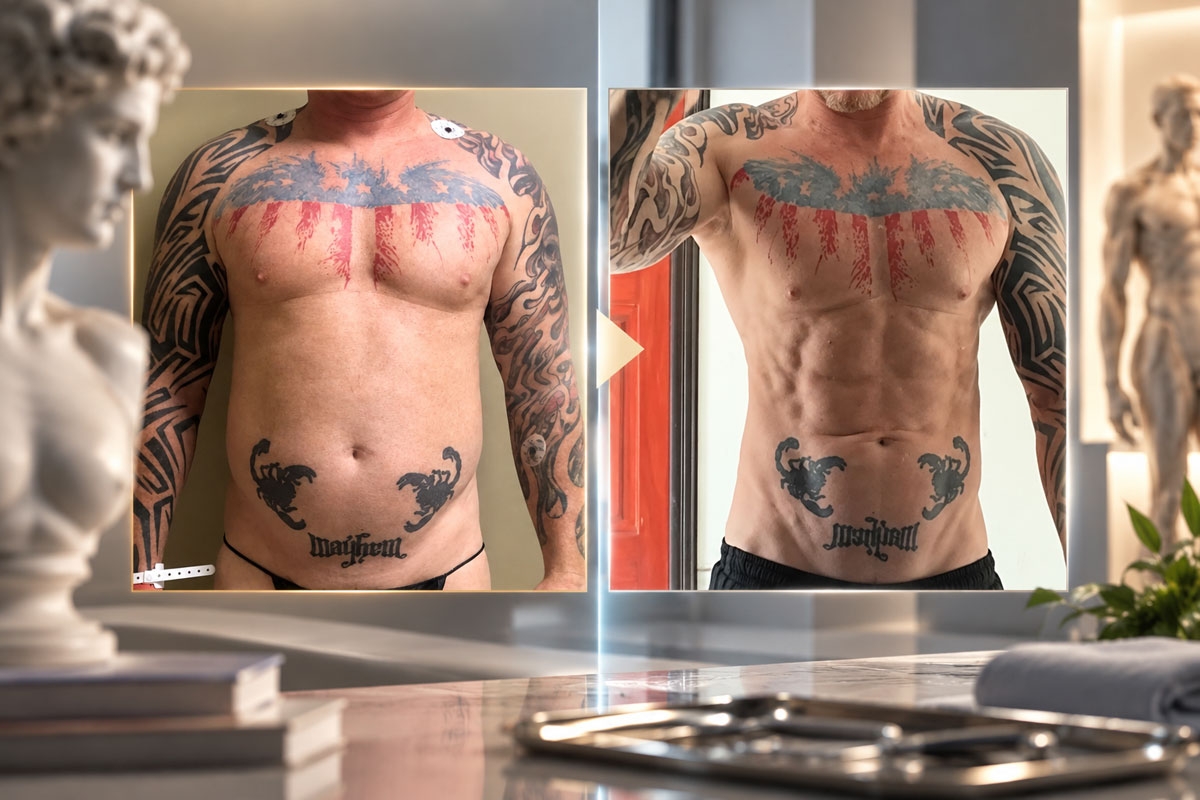
De La Cruz argues that modern liposuction should not be understood simply as removing the largest possible amount of fat. High-definition body contouring instead involves selectively modifying the thickness of fat layers while taking the underlying muscular anatomy and the patient's natural proportions into account.
“If you remove fat without understanding the anatomy underneath it, you may make someone smaller, but that doesn't necessarily mean you've created a better shape,” he said. “Body contouring is about proportion. Sometimes a few millimeters in the right location can be more important aesthetically than removing another liter of fat.”
His practice uses techniques including VASER-assisted and power-assisted liposuction as well as, when appropriate, energy-based technologies designed to complement surgical body contouring.
Despite advances in equipment, De La Cruz cautions against placing too much emphasis on technology. “A device is a tool. It doesn't select the patient, understand anatomy, manage fluid shifts or recognize a developing complication. Technology can enhance what we do, but the surgeon and the surgical team remain responsible for the operation.”
Safety becomes crucial in extensive procedures
Alongside his clinical work, De La Cruz has examined the safety of large-volume liposuction, particularly in overweight patients. His peer-reviewed article “Lipoplasty in the Overweight Patient,” published in Clinics in Plastic Surgery, discusses patient selection and perioperative considerations for larger procedures.
These include fluid management, prevention of hypothermia, measures against venous thromboembolism and postoperative monitoring. De La Cruz stresses that assessing the safety of liposuction requires looking beyond individual figures such as the volume of fat removed.
“People naturally focus on how many liters were removed or how many hours an operation lasted, but surgical safety is much more complex than that,” he said. “You have to consider the patient, the magnitude of the operation, anesthesia, fluid management, temperature control, VTE prevention, the surgical facility and the level of postoperative monitoring together.”
As procedures become more extensive and physiologically demanding, he believes the medical infrastructure surrounding the patient becomes increasingly important.
“The right patient, the right procedure, the right surgical and anesthesia team, and the right facility all have to come together,” De La Cruz said.
Individual anatomy instead of a signature look
Social media can quickly turn particular waistlines, silhouettes and body shapes into aesthetic trends. De La Cruz believes plastic surgery should resist the resulting pressure toward standardized results.
“I don't believe in giving everyone the same look,” he said. “Every person walks into my office with different anatomy, proportions and goals. My responsibility is to understand what is already there and determine how surgery can enhance it—not erase their individuality.”
He summarizes the approach as “Not one look. Your look.”
Technology meets an understanding of human form
Artificial intelligence, advanced imaging and increasingly sophisticated surgical technologies are changing aesthetic medicine. De La Cruz nevertheless expects the understanding of anatomy and proportion to remain fundamental.
“We have extraordinary technology available to us today, and it will continue to improve,” he said. “But plastic surgery is still an art grounded in anatomy. You need science to operate safely, technology to expand what is possible, and an artistic understanding of proportion to know when you've done enough.”
For De La Cruz, the combination of science, surgical technology and an understanding derived from sculpture offers a model for the further development of aesthetic surgery.
Image Credit: © AI generated illustration with material courtesy of De La Cruz Plastic Surgery