
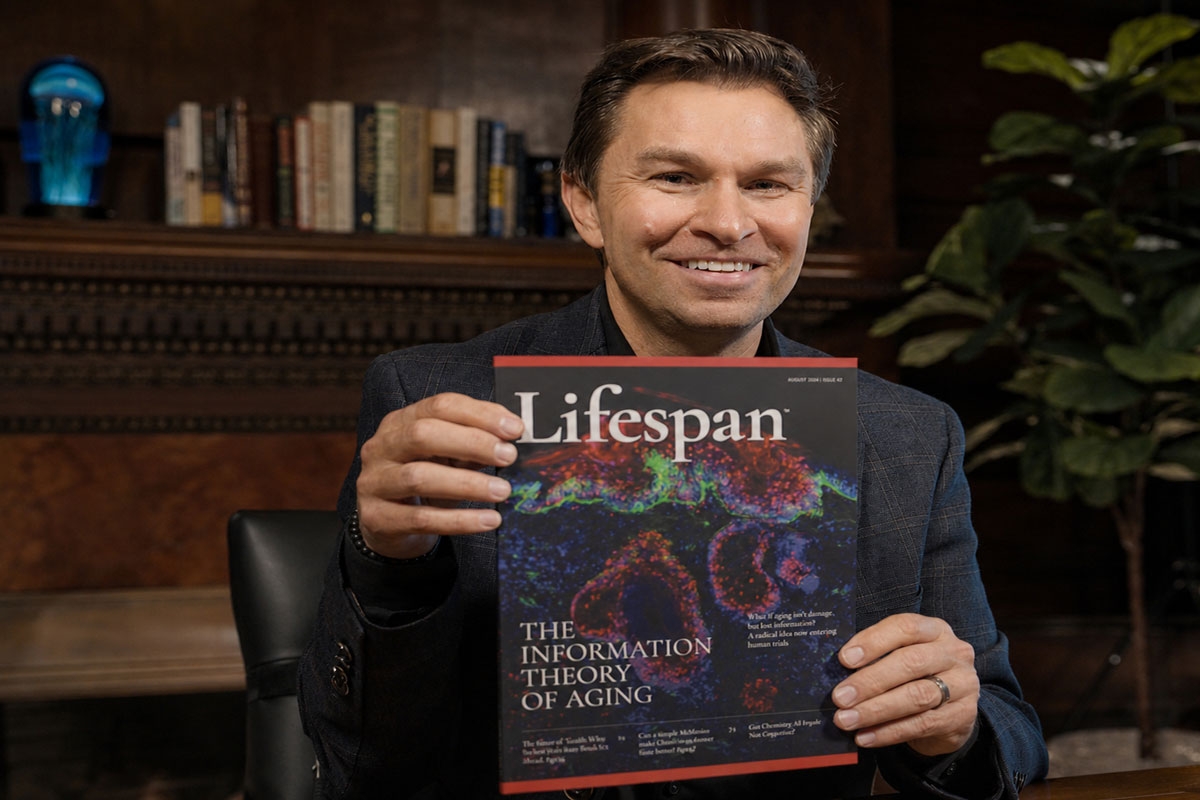
Harvard geneticist David Sinclair brings together scientific journalism, education and research funding with the new Lifespan platform
Geneticist and aging researcher Dr. David A. Sinclair has launched Lifespan Group and its flagship science platform, Lifespan. The new venture aims to make findings from longevity research accessible to a wider audience while also supporting scientific work in the field. Sinclair announced the project on “The Joe Rogan Experience.”
The launch comes as research into the biology of aging is increasingly moving from laboratories toward clinical applications. Sinclair, Professor of Genetics at Harvard Medical School and author of the international bestseller “Lifespan,” is also currently featured in a “National Geographic” cover story focusing on his work leading a human clinical trial related to longevity research.
Science instead of quick health claims
At the heart of Lifespan is an effort to provide scientifically grounded information about aging and research into extending healthy human lifespan. The platform combines evidence-based journalism, educational resources and an international membership community.
According to the company, peer-reviewed research will be translated into accessible language while retaining the scientific context needed to assess its significance. The approach addresses a growing challenge in the longevity field, where rapidly advancing research increasingly competes for attention with conflicting health advice, misinformation and claims that may run ahead of the available evidence.
“We are entering a period where discoveries in the biology of aging are moving from the laboratory into everyday life, but public understanding has not kept pace,” Sinclair said. “Lifespan was created to bridge that gap by giving people direct access to the science and the scientists shaping the future of health.”
Magazine puts scientists behind the stories
The launch includes “Lifespan Magazine,” a publication whose articles are written by scientists and other experts in the field. The editorial team and contributing writers for both the magazine and the accompanying Lifespan show include active longevity researchers.
The aim is not simply to report new findings, but to explain their scientific context, the strength of the available evidence and the questions that remain unresolved.
“Scientific discoveries rarely fit into a headline,” said Kathleen Fitzgerald, Director of Partnerships at Lifespan and former Head of YouTube Programs. “People deserve to understand what the evidence shows, where it is strongest, and where important questions remain.”
Fitzgerald said the platform is intended to translate complex research into practical information that can support better-informed decisions about healthy aging.
Successful podcast provided the foundation
The project builds on “Lifespan with Dr. David Sinclair,” whose first season reached number one in Apple’s Health & Fitness podcast category, according to the company. The series introduced millions of listeners to research into aging and longevity.
Lifespan has also recruited Emmy Award-winning producer, director and cinematographer Daniel Salazar III, a former NASA producer. He will oversee the company’s creative direction across film, video and digital media, with a focus on bringing researchers and their work to an international audience.
Research funding is part of the concept
Lifespan is designed not only as a science communication platform but also as a vehicle for supporting research. The company backs the nonprofit Lifespan Foundation, which aims to help close gaps in government research funding.
One focus is supporting early-career scientists working on aging and longevity. The foundation also intends to contribute to the development of therapies targeting biological mechanisms associated with age-related diseases.
The commercial platform operates on a membership model. Members receive early access to podcast episodes, access to “Lifespan Magazine” and its archive, detailed show notes and scientific references, as well as conversations with longevity researchers. Additional offerings include a book club and Ask Me Anything sessions with Sinclair.
The project therefore combines science communication, community building and research support at a time when longevity is attracting growing public attention while many of its potential medical applications remain the subject of ongoing research.
Image Credit: © Lifespan