
Global wellness tourism spending is projected to reach $1.38 trillion by 2029 as hotel groups increasingly integrate fitness, sleep and recovery into the guest experience
Wellness tourism is moving deeper into mainstream hospitality as hotels expand beyond traditional spas and fitness centres towards integrated concepts combining physical recovery, exercise, relaxation and personalised services.
The shift is taking place in a rapidly growing market. Global wellness tourism expenditure reached $893.9 billion in 2024, according to the Global Wellness Institute (GWI), which forecasts spending of approximately $1.38 trillion by 2029.
That represents projected annual growth of 9.1% over the coming years. Wellness tourism has also recovered considerably faster from the pandemic than tourism overall, providing hotel operators with a substantial market for products designed around health and well-being.
Wellness travel exceeds pre-pandemic levels
GWI recorded approximately 1.24 billion wellness tourism trips worldwide in 2024, compared with 932.2 million in 2019.
Spending has risen even faster. Global wellness tourism expenditure in 2024 reached 136% of its 2019 level, while the number of trips reached 133%. Across tourism as a whole, the corresponding recovery levels were 110% for expenditure and 101% for trips.
Average expenditure on a wellness tourism trip reached $721 worldwide in 2024, compared with $340 across tourism overall.
The figures cover both domestic and international travel and include primary wellness travellers, whose main motivation is well-being, as well as travellers who incorporate wellness activities into a trip undertaken primarily for another purpose.
Hotels move recovery beyond the traditional spa
The growth of the market is changing how wellness is incorporated into hotels. Rather than relying exclusively on conventional spa treatments or gym facilities, some hospitality companies are integrating recovery and performance services more directly into the guest journey.
Sleep, physical recovery, fitness, nutrition and stress reduction are becoming areas in which hospitality and the wider wellness economy increasingly overlap.
Hilton provides a recent example with Signia Restore, a new integrated wellness concept scheduled to debut at Signia Hilton Indianapolis, which is accepting reservations for January 2027.
The concept combines fitness facilities with dedicated physical and mental recovery environments and personalised guidance from a wellness concierge.
Cold therapy, saunas and robotic bodywork
Signia Restore will divide its recovery facilities into physical and mental recovery zones.
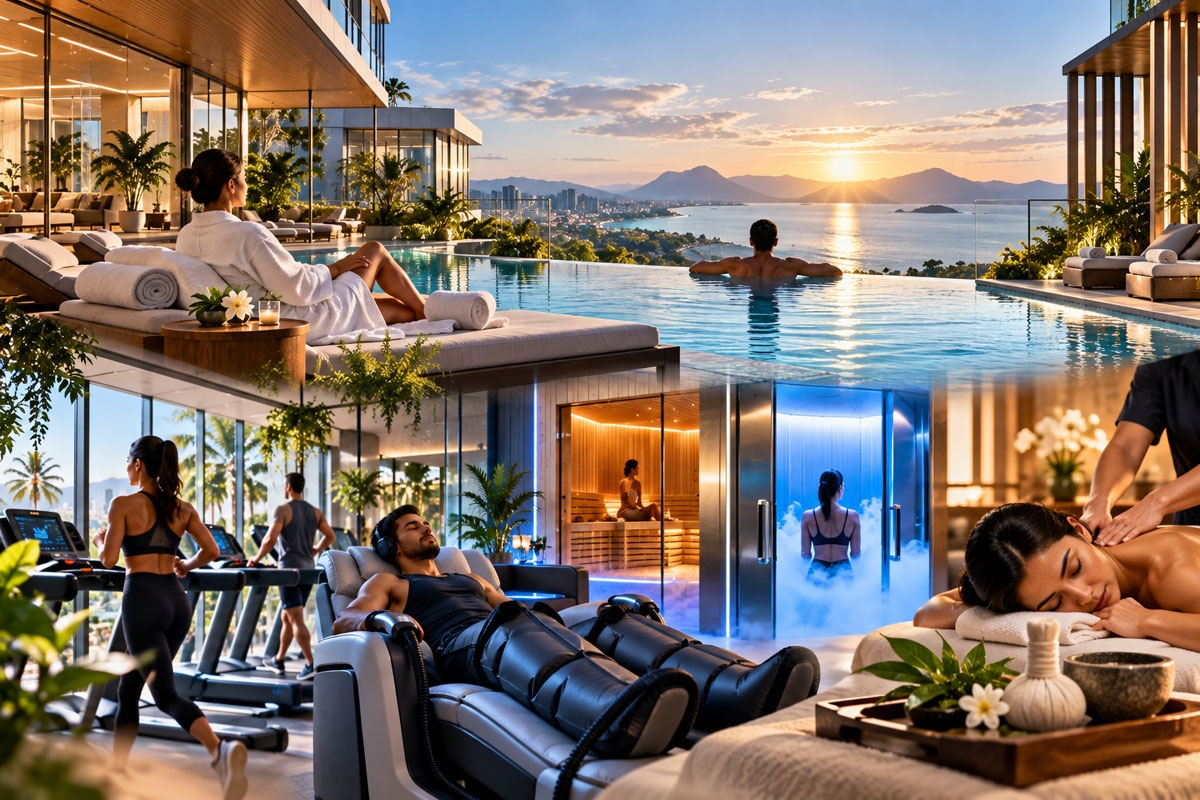
Planned facilities include infrared halotherapy and red-light sauna treatments, a hybrid sauna, sensory showers and a cold-therapy room. Other equipment will include air-compression and percussive-therapy systems.
The Indianapolis property is also expected to offer robotic bodywork and a multimodal wellness system combining technologies including red and near-infrared light, vibroacoustics and guided breathing.
Alongside the recovery facilities, guests will have access to strength and cardio equipment and functional training areas. Nutrition, hydration and other wellness products will form part of a dedicated retail component.
“At Hilton, we see wellness as an increasingly important part of how guests want to travel, whether they are on the road for business, attending a major event or simply looking to feel their best while away from home,” said Amanda Al-Masri, vice president, wellness, Hilton.
Wellness also enters meetings and incentive travel
The concept is not limited to leisure guests. Signia Restore plans to offer private group use for executive retreats, leadership meetings, incentive programmes and team events.
Following the Indianapolis debut, Hilton expects the concept to expand to selected Signia Hilton properties internationally.
The approach illustrates how wellness services are beginning to intersect with several hospitality segments at once, from leisure and business travel to meetings and incentives.
Wellness and medical tourism remain distinct markets
Despite increasing overlap between hospitality, prevention and personal well-being, wellness tourism should not be confused with medical tourism.
GWI defines wellness tourism as travel associated with maintaining or enhancing personal well-being. Medical tourism, by contrast, involves travel primarily to receive medical treatment.
The distinction becomes increasingly relevant as hotels introduce technologies and services associated with recovery, sleep, fitness and longevity. While such offerings can bring hospitality closer to the wider health economy, they do not necessarily constitute medical services.
What is changing is the role wellness plays within the travel product itself. With global wellness tourism expenditure projected to approach $1.4 trillion by the end of the decade, recovery and well-being are developing from supplementary hotel services into a more integrated part of the hospitality experience.
Image Credit: © AI generated illustration