
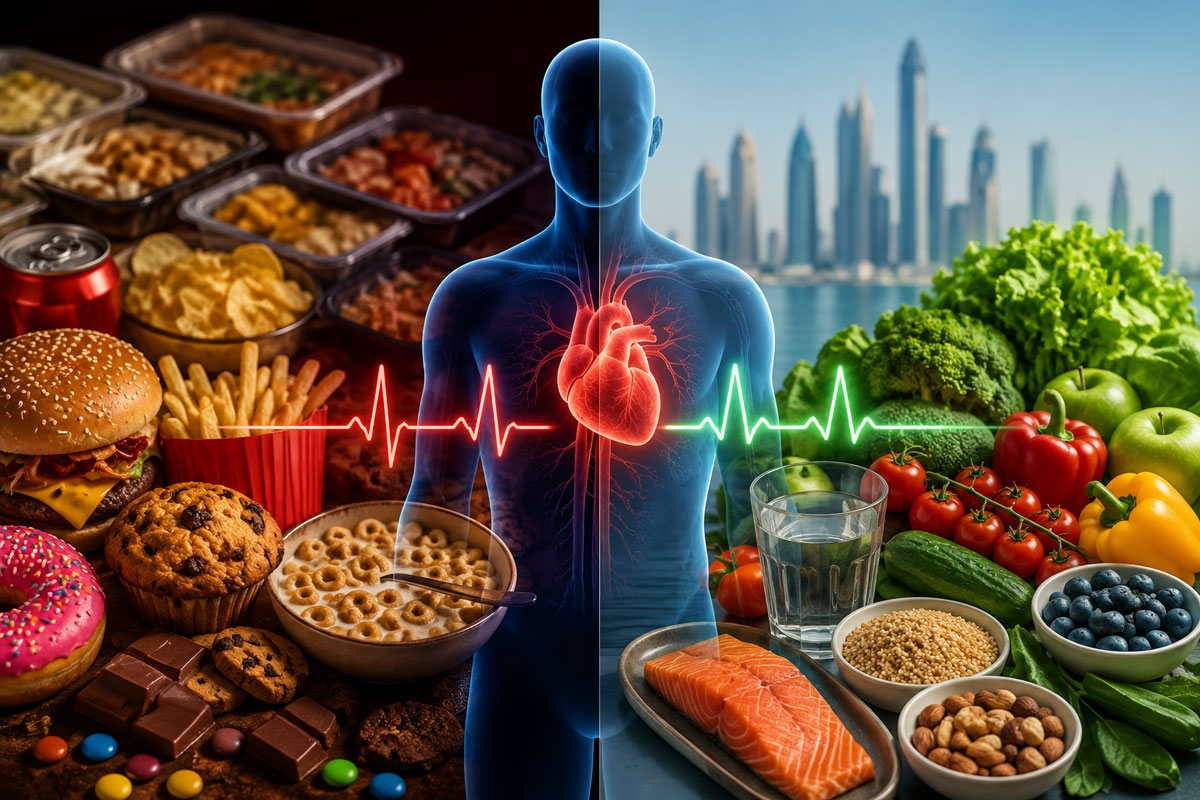
A Canadian study linking ultra-processed foods to a substantial share of cardiovascular deaths has renewed concern among UAE doctors over diets dominated by ready meals, sugary products and other highly processed foods
Cheap, convenient and designed for long shelf lives, ultra-processed foods have become a routine part of diets in many high-income countries. Doctors in the UAE are warning that this convenience may carry a considerable long-term health cost, particularly as cardiovascular disease already accounts for around 40 percent of deaths in the country.
Their concerns follow a Canadian study estimating that ultra-processed foods, or UPFs, could contribute to as much as 38 percent of cardiovascular deaths and 37 percent of deaths from coronary heart disease and stroke. Researchers estimate that more than 8,300 lives could potentially be saved in Canada if consumption of these foods were reduced by half.
Risk factors can develop at a young age
Ultra-processed foods include many industrially manufactured products such as ready meals and some breakfast cereals. They are often high in sugar, unhealthy fats or salt and can displace less processed foods from the diet.
Dr. Wesam Wahid Labib Fahum Khalil, a cardiology specialist at Medcare Royal Speciality Hospital in Dubai, said the widespread availability and affordability of such products was particularly concerning for younger consumers.
“Young people are increasingly at risk because ultra-processed foods are widely available, affordable, heavily marketed, and fit into busy lifestyles,” said Dr. Khalil.
“Frequent consumption from childhood or adolescence can lead to weight gain, insulin resistance, and high blood pressure early in life. Although cardiovascular disease usually develops over many years, these unhealthy dietary habits accelerate the process.”
The issue has particular relevance in the UAE, where cardiovascular disease is the leading cause of death. Abu Dhabi tightened its approach to unhealthy diets in February by banning fast-food advertising as part of efforts to address obesity, diabetes and other chronic diseases.
Canadian study estimates substantial health burden
The research, published in “The American Journal of Preventive Medicine” and presented at the World Obesity Federation’s International Congress on Obesity in Mexico, examined food consumption among Canadians aged over 20.
Ultra-processed foods accounted for approximately 43 percent of their average daily energy intake. Using comparative risk assessment modelling, the researchers estimated that between 23 and 38 percent of cardiovascular disease events in Canada in 2019 were attributable to UPF consumption.
The model drew on nationally representative dietary data from 2015, Canadian cardiovascular health statistics and 2019 data from the Global Burden of Disease Study.
“Ultra-processed food consumption may account for a substantial and potentially preventable contributor to the burden of cardiovascular disease,” said Dr. Virginie Hamel from the Centre for Public Health Research at Montreal University.
“These findings reinforce the need for clinical and public health interventions aimed at reducing UPF intake as a key component of cardiovascular disease prevention.”
UAE doctors see similar patterns in patients
While the Canadian research used statistical modelling and therefore does not establish that ultra-processed foods directly caused individual cases of cardiovascular disease, doctors in the UAE say the findings correspond with patterns they encounter in clinical practice.
Dr. Fiji Antony, Head of Department and Chief Clinical Dietitian at NMC Specialty Hospital in Al Nahda, Dubai, said patients whose diets contain large quantities of ultra-processed foods frequently present with several established cardiovascular risk factors.
“These findings are consistent with what we see clinically, as patients with diets high in ultra processed foods often have higher rates of obesity, diabetes, hypertension, abnormal cholesterol levels and cardiovascular disease,” she said.
“While this study uses modelling and cannot prove causation, its results align with current evidence linking higher ultra processed food intake to increased heart disease and stroke risk.”
Antony said encouraging people to replace such products with minimally processed and whole foods remained an important strategy for reducing cardiovascular risk.
Taxes and warning labels could influence consumption
The researchers point to a combination of food taxes, restrictions on marketing, reformulation targets and prominent nutritional warnings on packaging as possible ways of reducing UPF consumption.
Experience from other countries suggests such policies can influence purchasing habits. In Chile, front-of-package nutritional warnings were associated with a reduction of around a quarter in purchases of high-calorie foods. In Mexico, a 10 percent tax on sugar-sweetened beverages was followed by a reported 6.3 percent reduction in ultra-processed food consumption.
The UAE introduced its own tax on sugary drinks in 2020. A subsequent World Health Organization review reported that sales of sugary beverages declined from 7.4 percent to 5.9 percent.
The Canadian researchers argue that their findings could also be relevant to other affluent countries, including the UAE, because the risk estimates used in their modelling were derived from studies conducted in comparable high-income populations. With cardiovascular disease already placing a heavy burden on the UAE, reducing dependence on ultra-processed foods could therefore become an increasingly important element of preventive health policy.
Image Credit: © AI generated illustration