A Florida International University study has found substantial differences between calorie expenditure reported by popular smartwatches and measurements obtained using clinical laboratory equipment
Smartwatches may be useful for monitoring exercise, but users should be cautious about relying on their estimates of calories burned, according to new research from Florida International University (FIU).
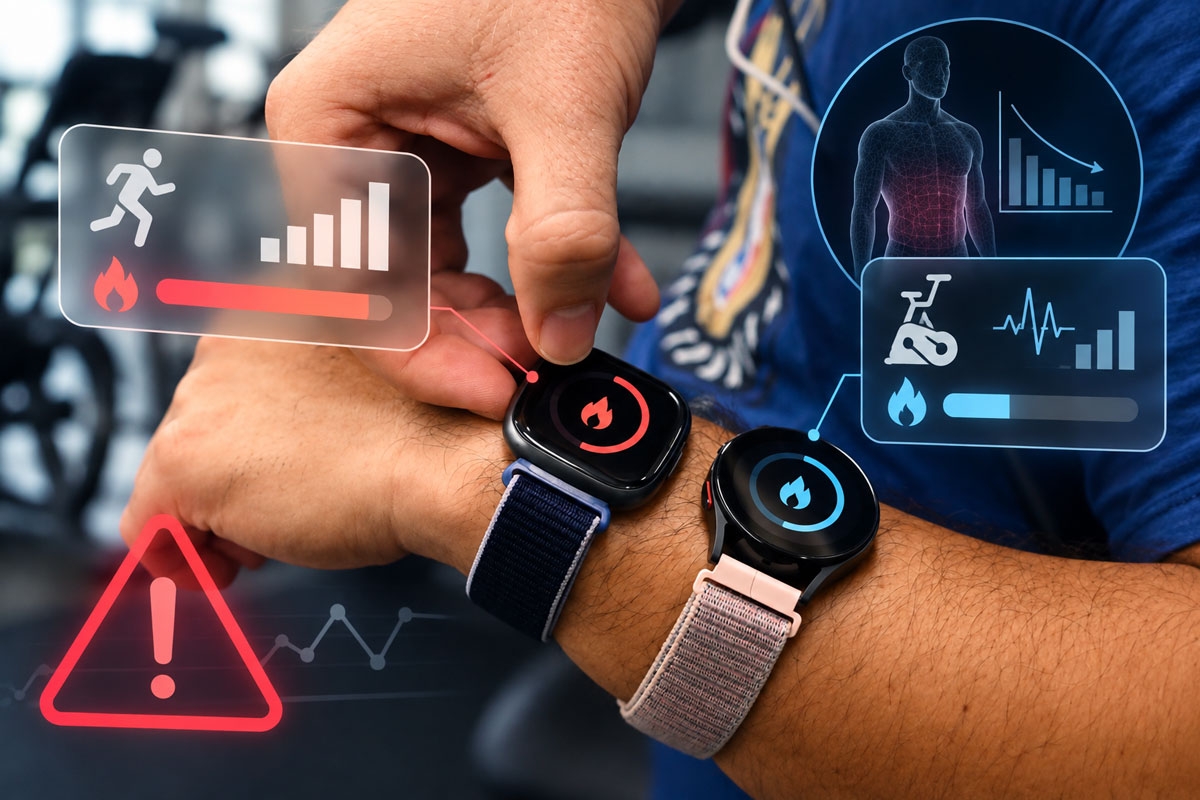
Researchers compared four widely used devices – the Apple Watch Series 8, Fitbit Sense 2, Samsung Galaxy Watch 5 and Garmin Forerunner 955 – with clinical-grade equipment measuring participants' actual energy expenditure.
The study, published in PLOS One, found typical errors of approximately 15 to 25 percent, while average discrepancies for some of the poorer-performing devices were considerably higher.
Apple Watch delivered the most accurate results
Among the devices evaluated, the Apple Watch produced the most accurate calorie estimates. Garmin and Samsung showed the greatest tendency to overestimate energy expenditure.
The differences can become significant for users who rely on smartwatch data when managing their weight. A displayed calorie expenditure of 500 calories, for example, could in some circumstances correspond to an actual expenditure closer to 350 calories.
The researchers therefore caution against treating calorie figures displayed by wearable devices as precise measurements.
Accuracy declined as body fat increased
The study involved 58 adults completing a controlled workout on a recumbent exercise bicycle. Participants alternated between moderate and vigorous exercise intensity while wearing one of the smartwatches.
Their actual energy expenditure was simultaneously measured using a COSMED K5 metabolic analyser, equipment used in clinical and research laboratories.
Researchers found that the accuracy of smartwatch calorie estimates generally decreased as participants' body fat percentage increased.
The team has not established precisely why this occurs. One possible explanation involves the algorithms manufacturers use to convert physiological and activity data into estimates of energy expenditure and the populations used to develop those algorithms.
Fitbit results affected by technical problems
The researchers were unable to reach similarly firm conclusions about the Fitbit Sense 2 because of technical problems encountered during testing.
During some sessions, the device generated implausibly low calorie values, while in others it failed to provide a measurement. A substantial amount of Fitbit data therefore had to be excluded from the analysis.
The researchers consequently caution against interpreting the study as providing a reliable assessment of Fitbit's comparative accuracy.
Calorie estimates better used as a guide
Despite the limitations identified, the FIU researchers do not suggest that smartwatches are without value for exercise and health monitoring.
Instead, users are advised to regard estimated calories burned as an approximate upper limit rather than an exact measurement. People using wearables as part of a weight-management programme may benefit from making conservative assumptions rather than automatically compensating for all calories their device says they have burned.
At the same time, the researchers warn against excessively reducing food intake to compensate for possible measurement errors, as sufficient nutrition remains important for exercise and recovery.
Personal trends may provide more useful information
Other measurements provided by smartwatches may be more useful than individual calorie estimates. Heart rate, time spent within different heart-rate zones and changes in personal activity patterns over longer periods can provide meaningful information about exercise habits.
The researchers therefore recommend focusing on trends rather than attaching too much importance to the calorie figure produced by an individual workout.
FIU researchers are now extending their work to examine how accurately smartwatches estimate energy expenditure during traditional strength-training exercises.
Image Credit: © AI generated illustration using material courtesy of Florida International University