The Ulaanbaatar tourism expo highlights health-related travel as Mongolia's traditional wellness resources meet growing demand for cross-border medical services
Health tourism was among the sectors represented at ITM Mongolia 2026, the international tourism exhibition held in Ulaanbaatar from October 23 to 25. The event attracted more than 20,000 visitors and brought together tourism businesses and representatives from countries including China, South Korea, India, Japan, Russia and the United Arab Emirates. Alongside nature-based and cultural tourism, exhibitors presented health-related travel as part of a broader effort to diversify tourism products and strengthen international cooperation.
The exhibition provides a timely opportunity to examine Mongolia's position in the regional health tourism market. The country has a tradition of therapeutic mineral springs, sanatoriums and traditional medicine, offering potential for wellness and rehabilitation-oriented travel. At the same time, Mongolia is an established source market for international medical tourism, with substantial numbers of residents travelling abroad for specialist healthcare.
These two dimensions point to different development opportunities. Mongolia could strengthen its appeal as a destination for nature-based wellness and traditional health retreats while participating more actively in regional healthcare networks. However, the exhibition's reported health tourism activities did not establish specific new hospital partnerships, investment commitments or international patient programmes.
Traditional medicine and mineral springs offer tourism potential
Mongolia's traditional medicine heritage provides a possible foundation for developing more specialised wellness travel. Practices associated with Traditional Mongolian Medicine include herbal preparations, massage and other therapeutic approaches, although their clinical effectiveness varies and requires evaluation according to the specific treatment and condition.
A 2026 academic conference paper by a researcher at the Mongolian National University of Medical Sciences examined how traditional medicine might be incorporated into higher-value wellness tourism. The paper identified cultural heritage and locally rooted practices as potential differentiators for the country, rather than presenting evidence of an established international market.
Mongolia also has mineral-spring and sanatorium traditions that could support relaxation and rehabilitation-oriented tourism. Developing these resources for international visitors would require investment in accommodation, accessibility, professional training and service standards. Mineral-water treatments should not be presented as proven therapies for particular diseases without appropriate clinical evidence.
The country's Ministry of Education has meanwhile reported the introduction of a traditional medicine training programme for the 2026–2027 academic year. Although primarily an educational initiative, it illustrates continuing institutional interest in preserving and developing this field.
South Korea demonstrates the scale of outbound demand
Mongolia's role as a source market for medical tourism is considerably easier to quantify. Official South Korean medical tourism statistics recorded 35,586 patients from Mongolia in 2025, compared with 25,731 in 2024 and 22,080 in 2023.
The 2025 figure represents an increase of approximately 38 percent over the previous year, highlighting the importance of Mongolia within South Korea's international patient market.
In September 2026, the Korea Tourism Organization held a medical tourism roadshow in Ulaanbaatar and Dalanzadgad, targeting opportunities for cooperation with Mongolian businesses and prospective patients. The initiative included particular attention to workers in the mining industry and customers in the financial sector.
According to figures reported in connection with the event, Mongolian medical visitors to South Korea spent an average of approximately KRW 9.88 million per person, compared with KRW 6.73 million across international medical tourists generally. The comparison suggests that Mongolia is a commercially significant source market despite its relatively small population.
China is another important destination for Mongolian patients. A Mongolian survey covering overseas medical expenditure in 2018 and 2019 identified China and South Korea as the principal destinations, although comprehensive and regularly updated statistics covering all outbound medical travel remain unavailable.
The contrast is significant. While Mongolia is exploring opportunities to develop its own health-related tourism products, established overseas healthcare providers are already competing for Mongolian patients.
The ITM Mongolia exhibition therefore highlights a market with two distinct dimensions: potential inbound demand for traditional wellness and nature-based retreats, and demonstrated outbound demand for specialised medical services.
Whether the country can convert its natural and cultural resources into a stronger international health tourism offering will depend on investment, medical credibility, transport connections and the development of services that meet the expectations of foreign visitors.
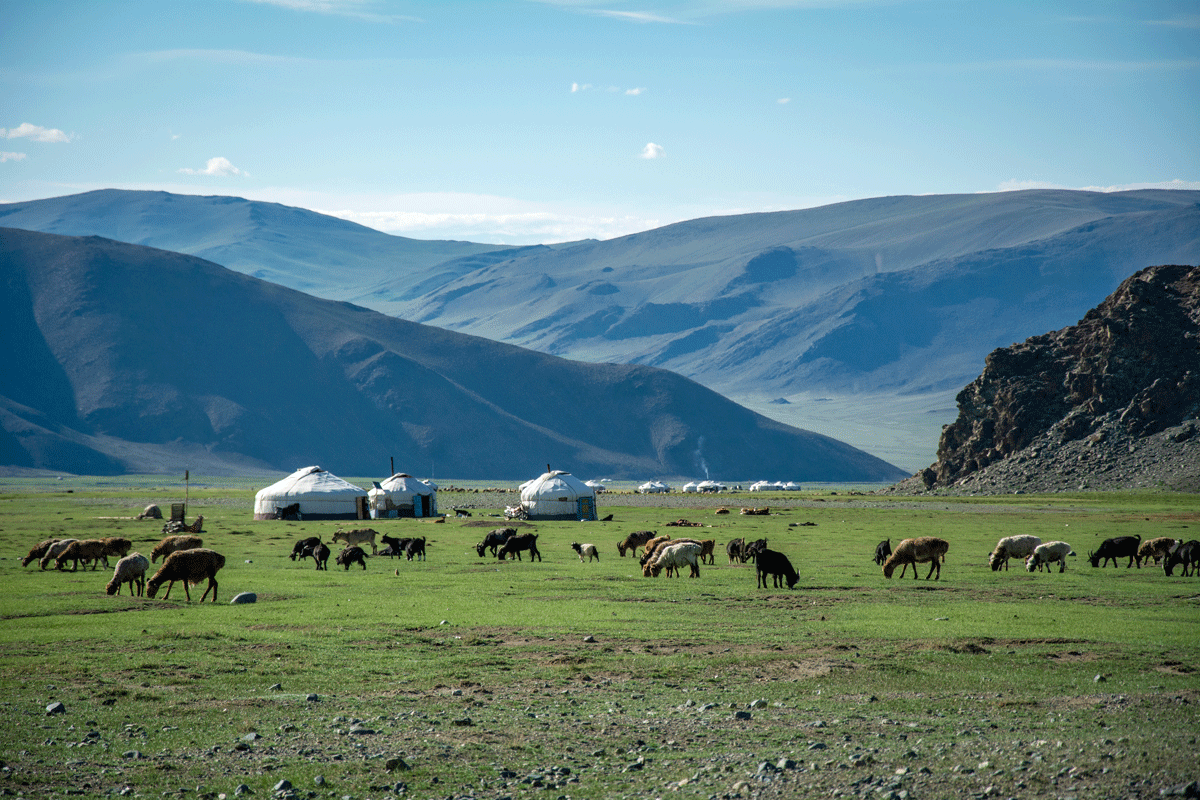
Image Credit: Ger camp in Mongolia © Wirestock Creators / Shutterstock.com