
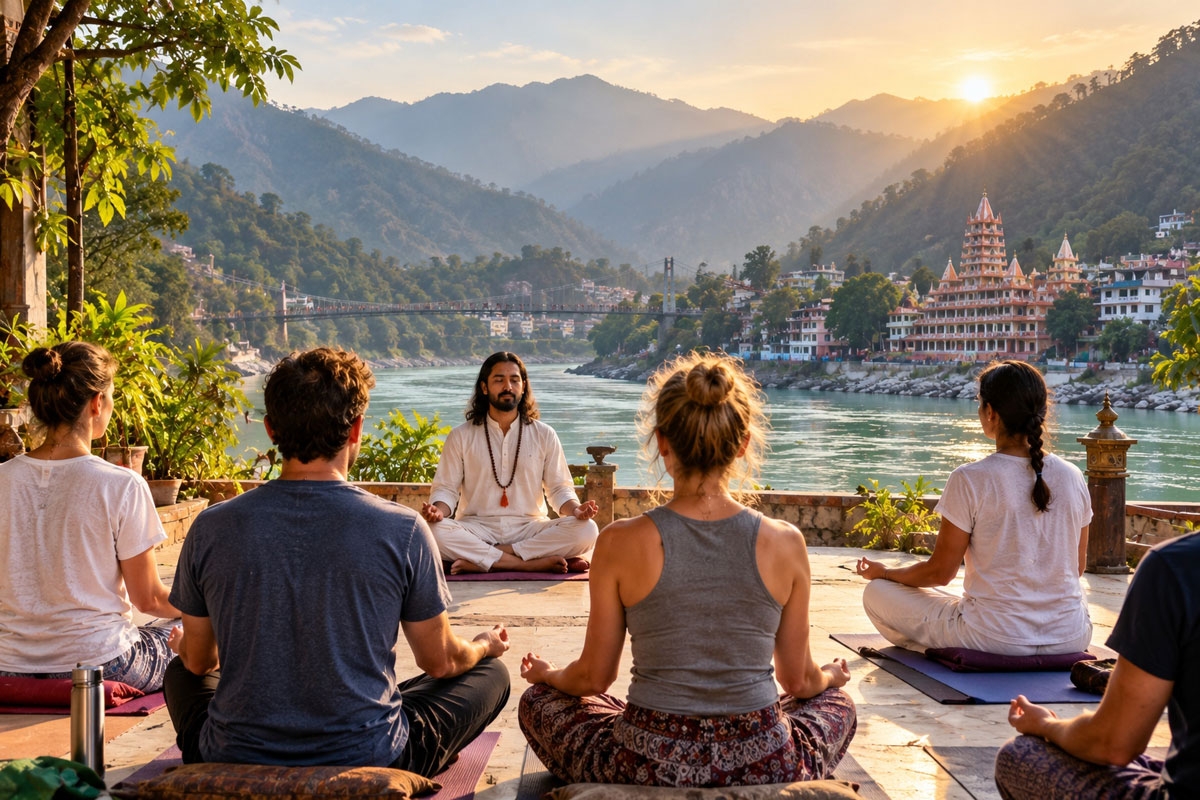
The Himalayan destination combines yoga, mindfulness and spiritual traditions as international interest in stress reduction and mental wellbeing grows
Rishikesh, in the northern Indian state of Uttarakhand, has developed into an established destination for international travellers seeking meditation, yoga and spiritual experiences. Situated along the Ganges at the foothills of the Himalayas, the city offers a broad range of retreats combining traditional Indian practices with programmes focused on relaxation, stress management and mental wellbeing.
International visitors can choose between short introductory courses, week-long meditation retreats and longer residential programmes. Many combine guided meditation with breathing exercises, yoga sessions, vegetarian meals and periods of silence. Some follow established spiritual traditions, while others adopt a more secular approach aimed at travellers interested primarily in mental and physical relaxation.
For the international wellness tourism sector, Rishikesh illustrates the growing overlap between spiritual travel and health-oriented holidays. Unlike conventional medical tourism, meditation retreats generally do not involve clinical treatment. Their appeal lies instead in structured opportunities to disconnect from everyday routines, develop mindfulness skills and explore practices that may contribute to psychological wellbeing.
From spiritual traditions to wellness programmes
Rishikesh has long attracted visitors interested in Hindu philosophy, yoga and meditation. Its international reputation expanded considerably during the twentieth century, particularly after the Beatles visited Maharishi Mahesh Yogi's ashram in 1968.
Today, traditional ashrams operate alongside yoga schools, meditation centres and wellness retreats serving international guests. Programmes differ substantially in their approach, duration and intensity. Some emphasise spiritual instruction and traditional meditation techniques, while others offer structured schedules combining mindfulness practice with physical exercise and relaxation.
Seven-day retreats are among the formats available to international travellers. A typical programme may include morning meditation, yoga classes, guided breathing exercises, periods of personal reflection and evening sessions devoted to relaxation or philosophical discussion.
The residential format is an important part of the experience. Participants spend several days away from their normal environment, often following a regular daily schedule with limited digital distractions. Accommodation ranges from simple ashram rooms to more comfortable retreat facilities catering to international wellness travellers.
For specialist tour operators, these programmes represent a distinct travel product that can be combined with cultural experiences and longer journeys through northern India. However, the quality of instruction, accommodation standards and level of individual support can vary considerably between providers.
Scientific research supports selected health benefits
The growing interest in meditation as a wellness activity is supported by research suggesting that certain mindfulness practices can contribute to improved psychological wellbeing.
According to the US National Center for Complementary and Integrative Health (NCCIH), studies indicate that structured mindfulness programmes may help reduce symptoms of anxiety and depression. Research also suggests potential benefits for people experiencing insomnia, although results vary according to the techniques used and the quality of individual studies.
A review of 18 studies involving 1,654 participants found that mindfulness meditation improved sleep quality compared with educational interventions. Its effects, however, were not significantly different from those associated with established approaches such as cognitive behavioural therapy or exercise.
These findings provide a scientific basis for some health-related applications of meditation, but they do not demonstrate that commercial retreats deliver equivalent results. Many clinical studies examine carefully structured programmes with defined methods and trained instructors, rather than the diverse residential experiences offered by tourism providers.
Meditation is also not entirely without risks. A research review covering more than 6,700 participants found that approximately eight percent reported adverse experiences, most commonly increased anxiety or depressive symptoms. Intensive meditation programmes may therefore require particular care when accepting participants with existing psychological conditions.
Uttarakhand develops its wellness tourism profile
Rishikesh forms part of Uttarakhand's wider positioning as a destination for yoga, traditional wellness practices and nature-based travel. The state's tourism authorities actively promote meditation centres, ashrams and wellness facilities, including Parmarth Niketan in Rishikesh and the luxury retreat Ananda in the Himalayas near Narendra Nagar.
The region also hosts the International Yog Festival, organised by the Uttarakhand Tourism Development Board. The event brings together yoga teachers, spiritual practitioners and international participants, reinforcing the destination's visibility within the global yoga and meditation community.
For international wellness travellers, the region offers a combination of structured programmes, established spiritual traditions and access to the Himalayan landscape. This creates opportunities for accommodation providers, retreat operators and specialist travel companies seeking to develop health-oriented experiences beyond conventional spa holidays.
At the same time, the distinction between wellness tourism and medical treatment remains essential. Retreats promoting stress management or improved sleep should communicate the limitations of their programmes and avoid presenting meditation as a substitute for professional healthcare.
Rishikesh's competitive position rests on a combination that is difficult to replicate elsewhere: a long-established meditation tradition, internationally recognised yoga institutions and a destination identity closely associated with spiritual practice. For the health tourism industry, its development demonstrates how traditional cultural practices can become part of contemporary wellness travel without necessarily becoming medical services.
Image Credit: © AI generated illustration