Almost as many Germans now exercise independently as hold a gym membership, pointing to a growing preference for flexible and digitally supported fitness routines
Germany's fitness habits are becoming increasingly independent of traditional gyms and sports clubs. New data from YouGov show that 19% of adults in Germany exercise independently, putting self-organized training surprisingly close to the 22% who currently hold a gym membership.
The figures point to a broader change in the way consumers approach physical activity. Exercise is increasingly something that can be integrated into everyday life without a fixed location or membership. For the wellness and health tourism industry, this development is particularly relevant as guests accustomed to organizing their own workouts may bring those habits with them when travelling.
Independent exercise attracts higher-income consumers
Self-directed training is not concentrated among consumers looking simply to avoid the cost of a gym membership. YouGov's data indicate that it is actually more common among higher-income groups.
Among consumers with household incomes exceeding 200% of the median, 23% exercise independently. The corresponding figure among people with lower incomes is 18%.
This makes independent fitness particularly interesting from a wellness tourism perspective. A significant part of the market consists of consumers with the financial resources to spend on equipment, digital services and potentially travel experiences incorporating fitness and preventive health.
Exercise extends far beyond the home
The term home workout only describes part of the trend. YouGov's figures show that self-directed fitness encompasses activities both indoors and outdoors.
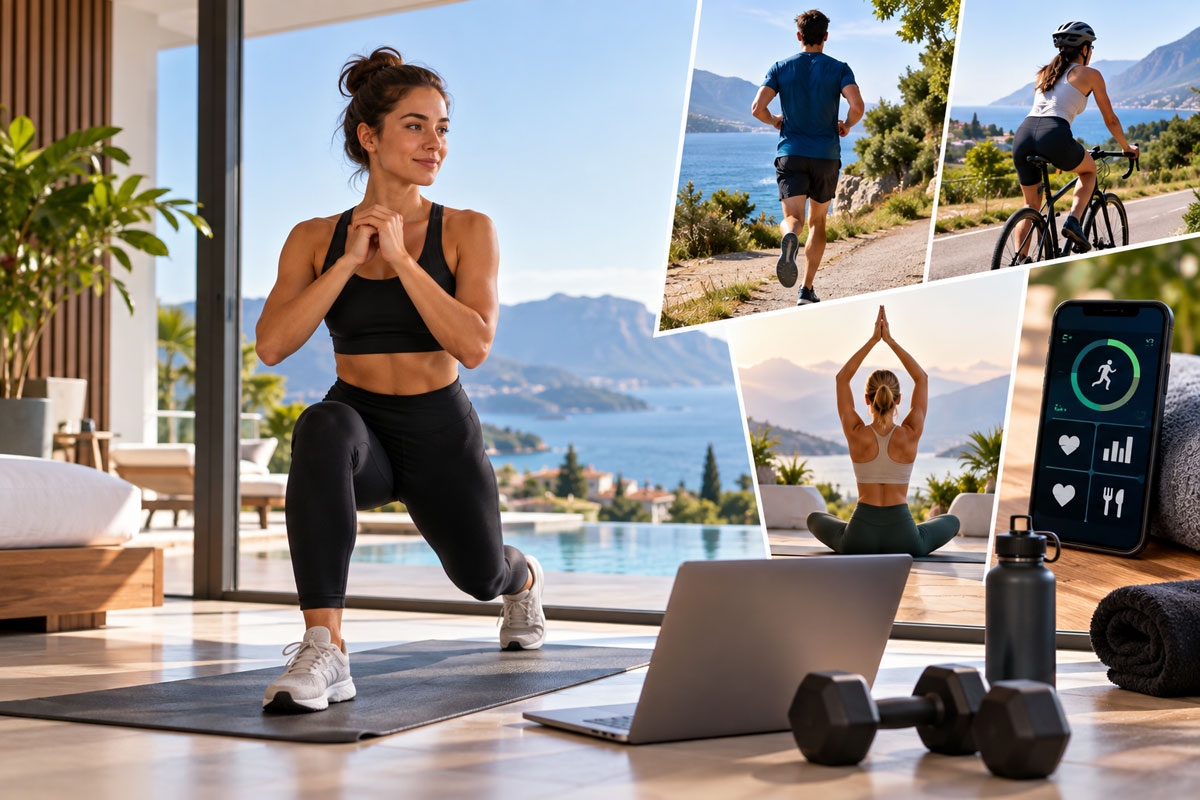
Bodyweight exercise without equipment is practiced by 38% of independent exercisers. Cycling follows at 35%, while 32% run or jog.
Equipment nevertheless plays an important role. Some 28% combine bodyweight training with equipment or weights, while 15% specifically practice weight training or weightlifting. Yoga is practiced by 17% of the group and Pilates by 10%. Spinning, which requires considerably more specialized equipment, accounts for 4%.
Overall, 74% of independent exercisers participate in at least one of the surveyed activities involving equipment or a sport typically associated with dedicated gear.
Fitness routines are increasingly digital
Another characteristic of the independent fitness market is its connection with digital technology. According to YouGov, 27% of people who exercise independently use a fitness app to monitor their progress. A further 12% use nutrition apps.
This combination of physical activity and digital monitoring could have implications beyond the conventional fitness industry.
Hotels, wellness resorts and health tourism providers increasingly encounter guests whose exercise routines do not depend on a particular gym or trainer. For these travelers, maintaining an established routine while away from home can become part of the overall experience.
Rather than requiring extensive traditional fitness facilities in every case, this could create opportunities for properties offering flexible workout spaces, outdoor exercise options or environments suitable for app-guided and individually organized training.
A changing environment for wellness tourism
The findings also fit a wider development in preventive health and wellness, in which consumers take a more active role in organizing their own routines.
For destinations and accommodation providers, the relevant question may therefore increasingly be how easily guests can continue those routines while travelling. Running routes, cycling opportunities, small functional training areas and suitable spaces for yoga or bodyweight exercises can complement conventional hotel gyms and structured wellness programs.
The YouGov results do not measure travel behavior or demand for wellness holidays, so they cannot establish a direct connection between home workouts and health tourism. They do, however, provide a detailed picture of a large consumer group whose approach to fitness is flexible, increasingly technology-supported and not tied to traditional sports facilities.
The findings are based on YouGov Profiles and BrandIndex data covering 52-week averages from August 2025 to August 2026. The underlying online surveys are weighted by age, gender and region and are representative of Germany's resident population aged 18 and over.
Image Credit: © AI generated illustration